A working session, not an unfinished concert
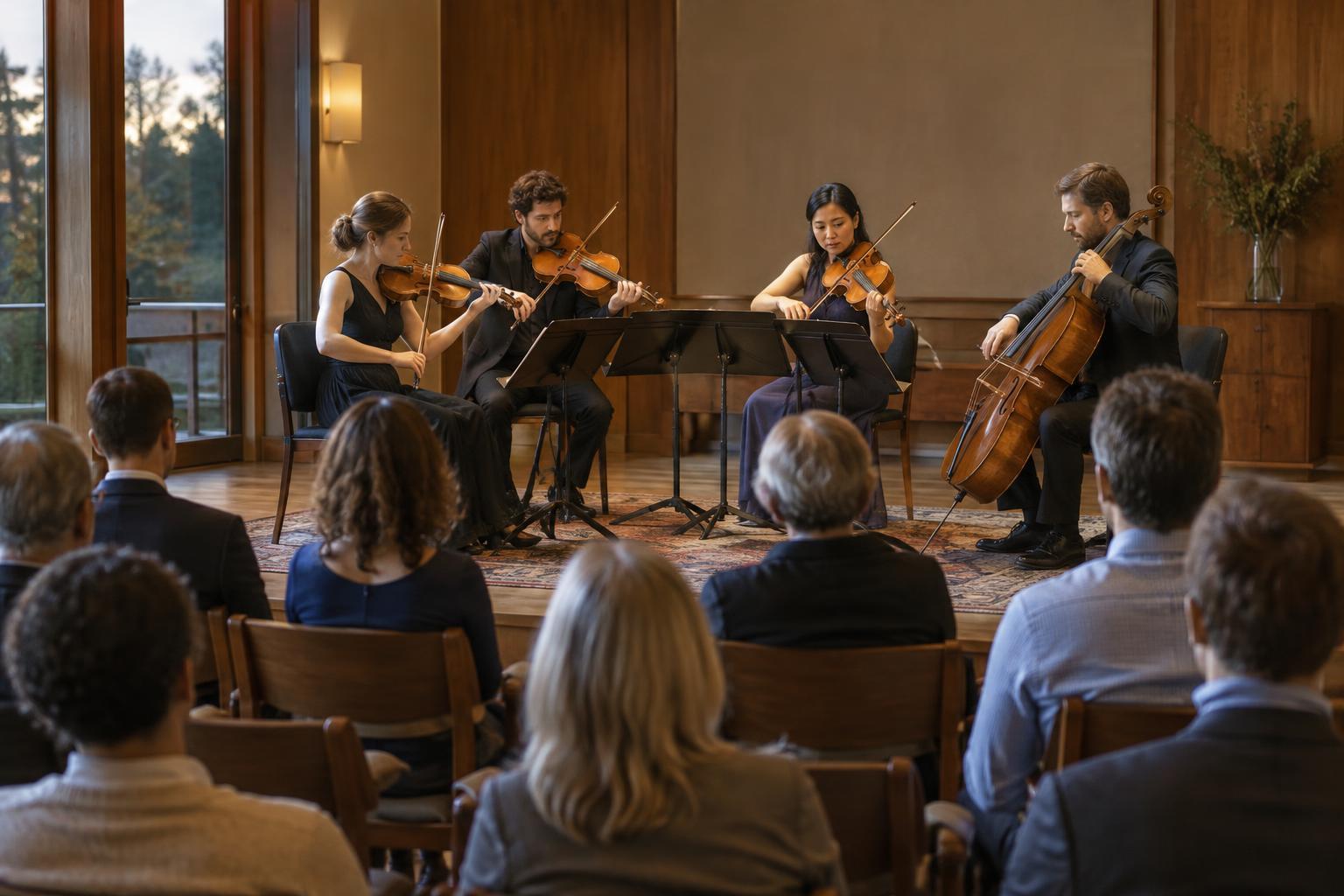
At a finished concert, musicians generally aim to carry the audience through a piece without interruption. An open rehearsal serves a different purpose: the musicians are still preparing, and listeners have been invited to observe some of that work. A passage might be played several times, while another movement receives only a quick run-through. The experience can be revealing, but it may not provide a complete performance of the music on the program.
“Open rehearsal” can describe several formats. You might encounter a full ensemble onstage, a small chamber group in a practice room, or a dress rehearsal that comes close to a concert. Some events include spoken explanations; others leave the musicians to work as they normally would. Read the event information for details such as entry times, seating and whether visitors may come and go.
Why the music stops and starts
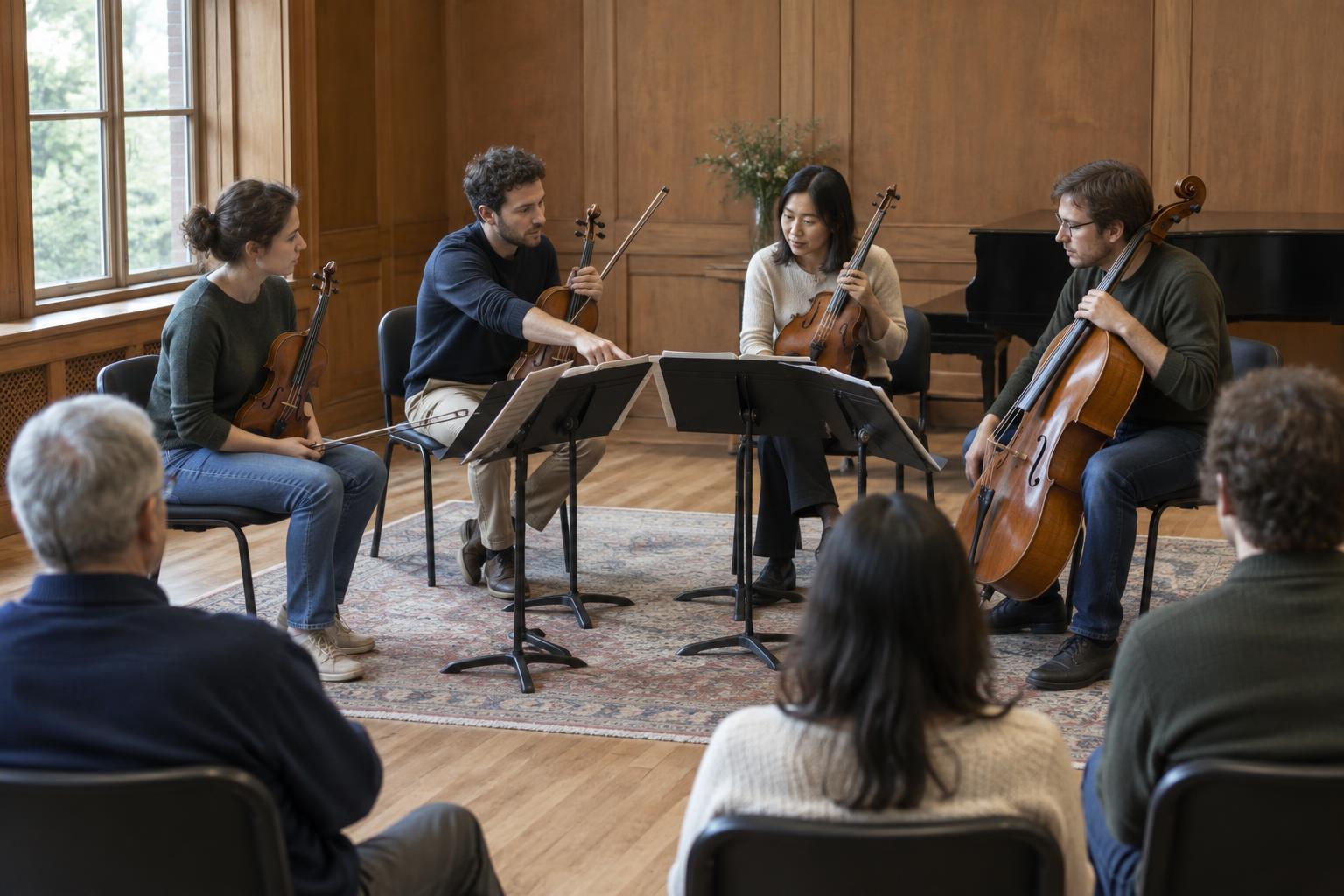
In a concert, a string quartet may make a change in energy sound effortless. In rehearsal, you may hear the steps behind that result. The players might stop to agree on a tempo, repeat a transition or adjust how one phrase leads into the next. A clarinetist may test how prominently a melody comes through; a pianist may try a lighter touch so another instrument remains audible.
Repetition is not necessarily a sign that something has gone wrong. It can be a way to compare possibilities. Listen for what changes between attempts: does a quieter opening make the next phrase feel more urgent? Does a shorter pause clarify the musical conversation? You do not need to know technical terms to notice these differences. An open rehearsal can make familiar music sound newly flexible.
The audience has a different role
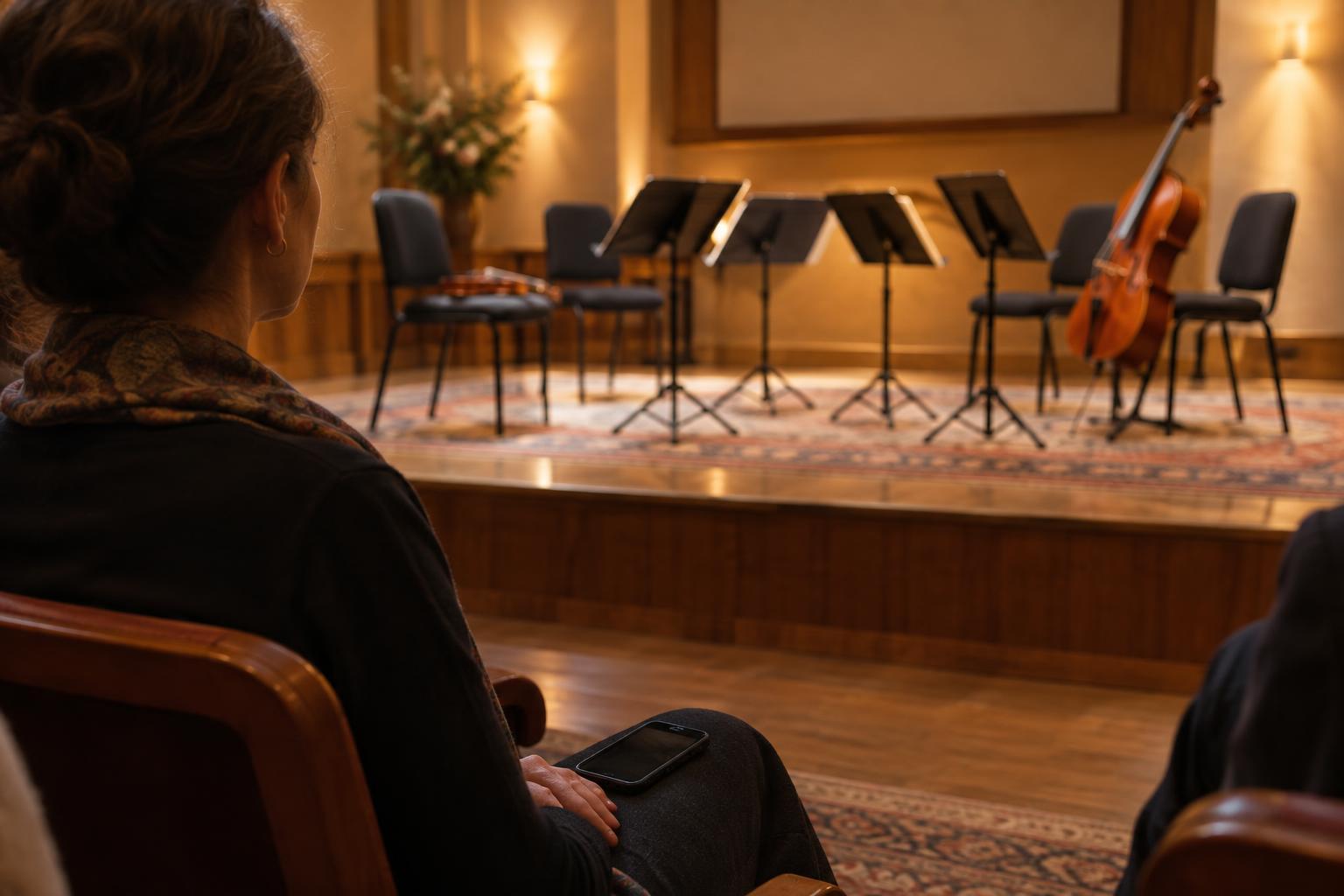
A rehearsal may feel less formal than a concert, but the performers still need a space in which they can listen closely. Keep conversation for a break or for after the session, and silence devices as you would at a performance. Follow any instructions about photography, audio or video recording rather than assuming that a public rehearsal permits them.
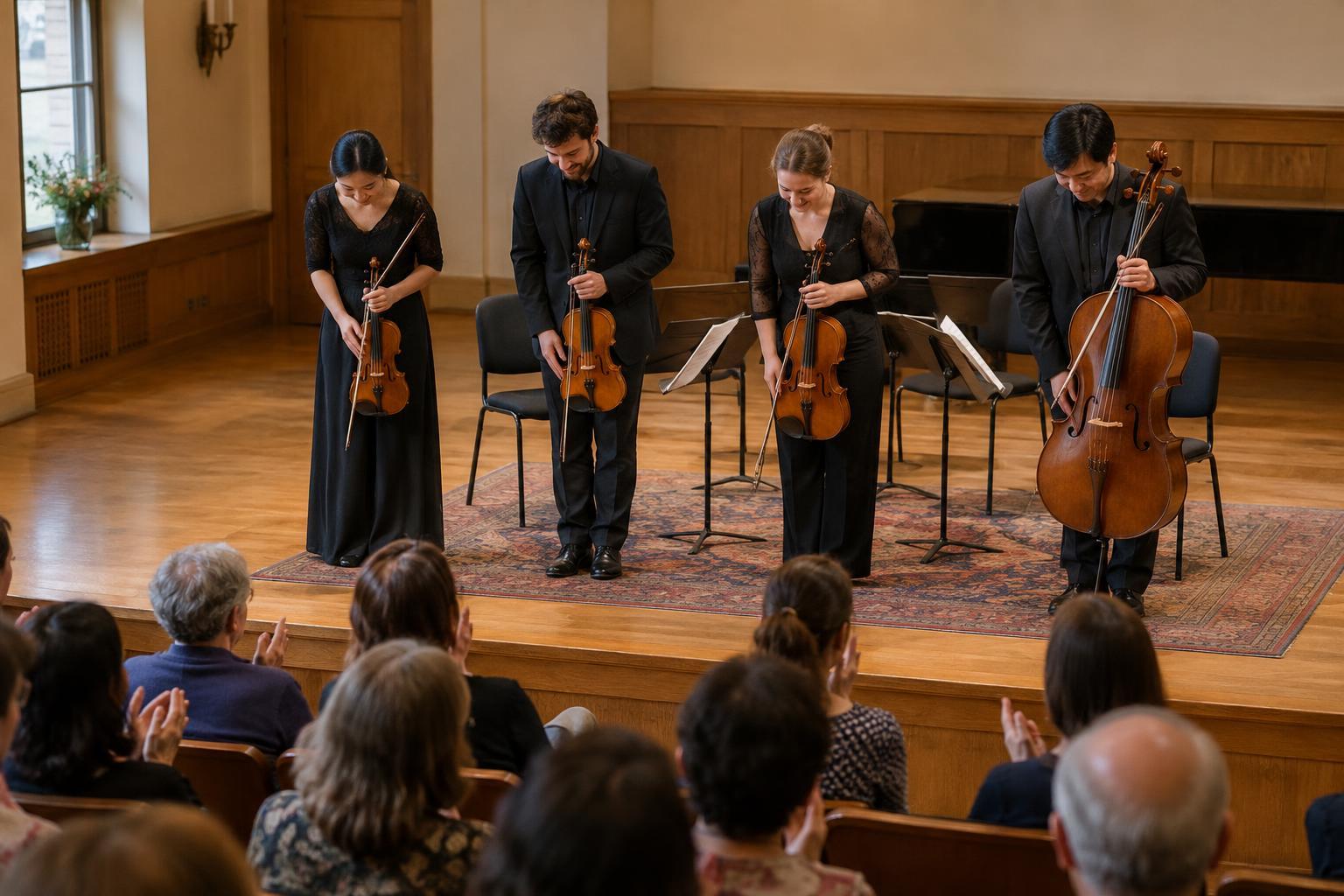
Applause can be less predictable. If the group finishes a complete piece and turns toward the audience, clapping may feel natural; after a short excerpt, quiet is often more helpful because the musicians may be about to speak or begin again. When unsure, take your cue from the event host and the room. If questions are invited, ask them at the designated time rather than interrupting the work.
How to listen without a concert’s arc
A concert builds momentum through the order and continuity of its pieces. A rehearsal may jump from the middle of one movement to the ending of another. Instead of waiting for a polished beginning-to-end account, choose one element to follow. In chamber music, you might notice which instrument introduces an idea, who answers it and how the group decides to bring the idea to a close.
It also helps to listen to the musicians’ communication. A glance, a breath or a small movement can help players enter together without a conductor. When they discuss a passage, their words may reveal competing but workable choices rather than a single correct solution. Even if a comment is too technical to follow, the next attempt often makes its practical meaning audible.
Make room for surprises
Open rehearsals can offer a close view of musicianship, but their plans may change. The group may spend longer than expected on a difficult section, pause to address a balance problem or decide not to play a piece in full. If you are hoping to hear a particular work straight through, a concert is the more suitable occasion.
Arriving on time and checking the venue’s guidance will help you settle in without disturbing a quiet passage. Beyond that, bring curiosity rather than expectations of perfection. The value of an open rehearsal lies in hearing how musicians listen to one another, make choices and gradually turn separate parts into a shared performance.