A dedication that shapes the listening experience
Tchaikovsky’s Piano Trio in A minor, Op. 50, bears the dedication “In Memory of a Great Artist.” The artist was Nikolai Rubinstein, a pianist and conductor who played an important part in Tchaikovsky’s musical life. Knowing this does not turn every phrase into a specific recollection. It does, however, offer a useful way into the work: the trio is less a portrait with a clear storyline than a long meditation on presence, change and loss.
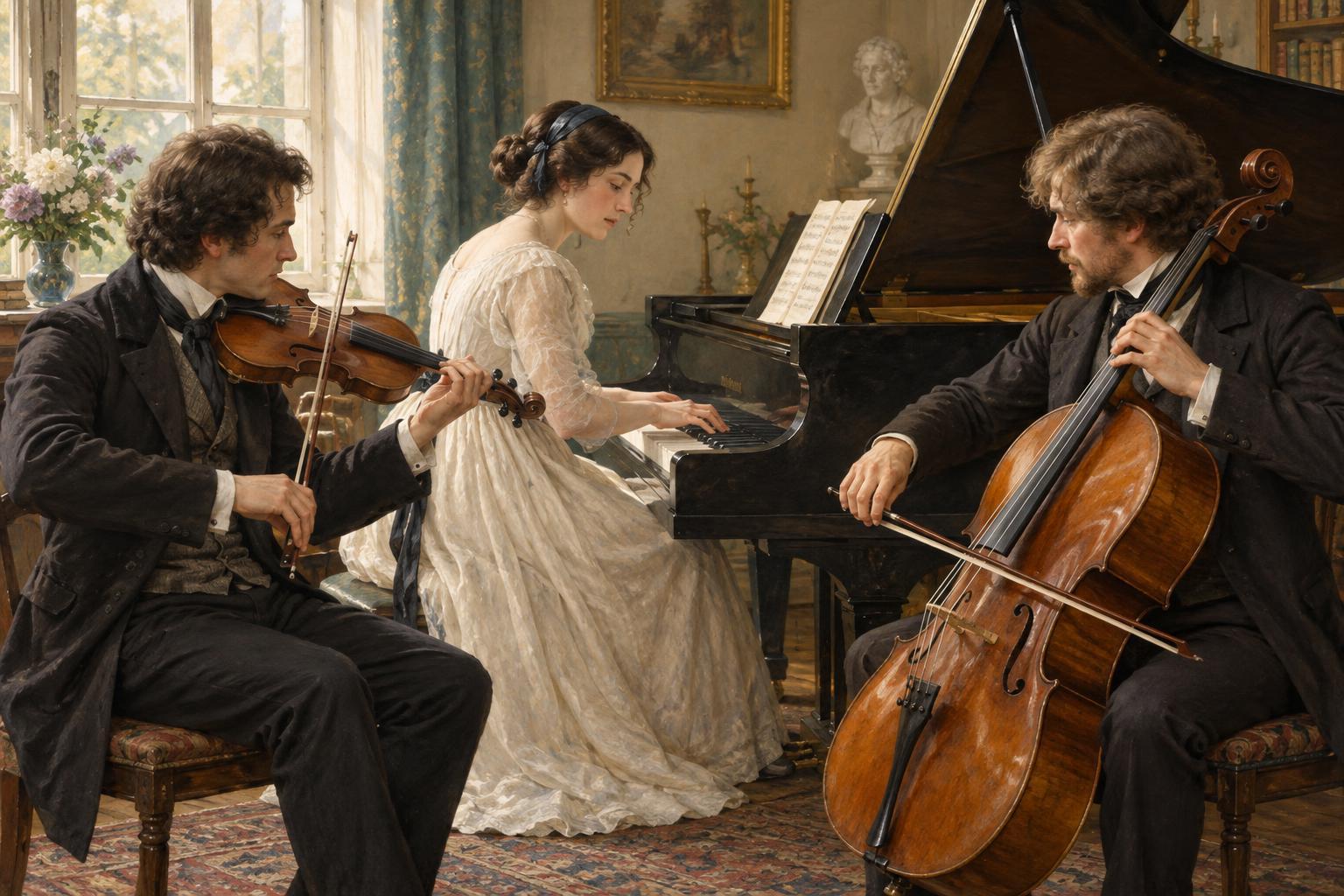
Its scale may surprise listeners who expect a piano trio to be a modest conversation among three players. The piano, violin and cello share an expansive piece that moves from sustained elegy to a varied, sometimes exuberant sequence of musical ideas. Those brighter moments are not interruptions to be explained away. A memorial can hold energy and affection alongside sorrow, and the trio draws much of its force from allowing those feelings to coexist.
The first part: a melody to remember
The work has two large parts. The first, marked Pezzo elegiaco, establishes its reflective character through an opening melody introduced by the cello. Rather than trying to follow every change of key or texture, listen for the melody’s broad, singing shape. Notice how the three instruments take turns supporting, extending or intensifying an idea. The piano can provide a spacious foundation one moment and become a powerful voice in its own right the next.
An elegy need not remain quiet. This first part swells toward more urgent passages, then makes room for tenderness again. Tchaikovsky’s long phrases encourage listeners to hear the movement in waves: an idea appears, gathers emotional weight and recedes. If the music seems to linger, that lingering is part of its character. It gives the performers time to make a phrase feel spoken rather than merely played.
For a first listen, choose one thread instead of trying to track all three instruments at once. Follow the cello’s singing line, then hear how the violin responds and how the piano alters the space around them. On another listen, pay attention to changes in density. When all three players become more active, the sound can feel almost orchestral; when it thins, an individual line may suddenly seem exposed.
The second part: variations as changing memories
The second part begins with a theme and unfolds through a series of variations. A variation keeps some connection to its theme while changing its rhythm, texture, character or distribution among the instruments. You do not need to identify every transformation to enjoy the design. First, get acquainted with the theme’s outline. Then ask a simple question as each new passage begins: what has changed, and what still feels familiar?
The variations create striking contrasts. Some feel intimate or playful; others have the momentum of a dance or a more imposing public gesture. Heard through the work’s dedication, these shifts can suggest the many ways a person might be remembered, though the music does not prescribe a single interpretation. A lively variation need not mean grief has disappeared. Its vitality makes the eventual return to mourning more affecting.
This is also a rewarding place to listen to the trio as chamber music rather than as a piano piece with two accompanying strings. The piano’s range and weight are unmistakable, but the violin and cello continually change the character of familiar material. Listen for moments when one instrument introduces an idea and another makes it sound newly lyrical, restless or restrained.
Why the ending changes what came before
As the variations build toward a forceful conclusion, the work can seem to be moving beyond its elegiac beginning. Tchaikovsky does not leave it there. The opening lament returns near the end, and the music closes in the manner of a funeral procession. Because the melody is now familiar, its return carries the weight of everything heard between its appearances.
That return is a helpful key to the trio’s overall shape. The piece does not move in a straight line from sadness to consolation. Instead, it makes space for activity, warmth and grandeur before confronting loss once more. When listening, allow the contrasting sections to retain their different moods rather than searching for one emotion that explains them all. The ending is powerful partly because the music has let other possibilities sound real.
You can approach Op. 50 without knowing its formal details. Remember the opening melody, listen for how the variations remake a theme, and notice what happens when the first mood comes back. Those three landmarks provide a path through a large work—and leave room for your own response to its memorial character.