A trio worth hearing on its own terms
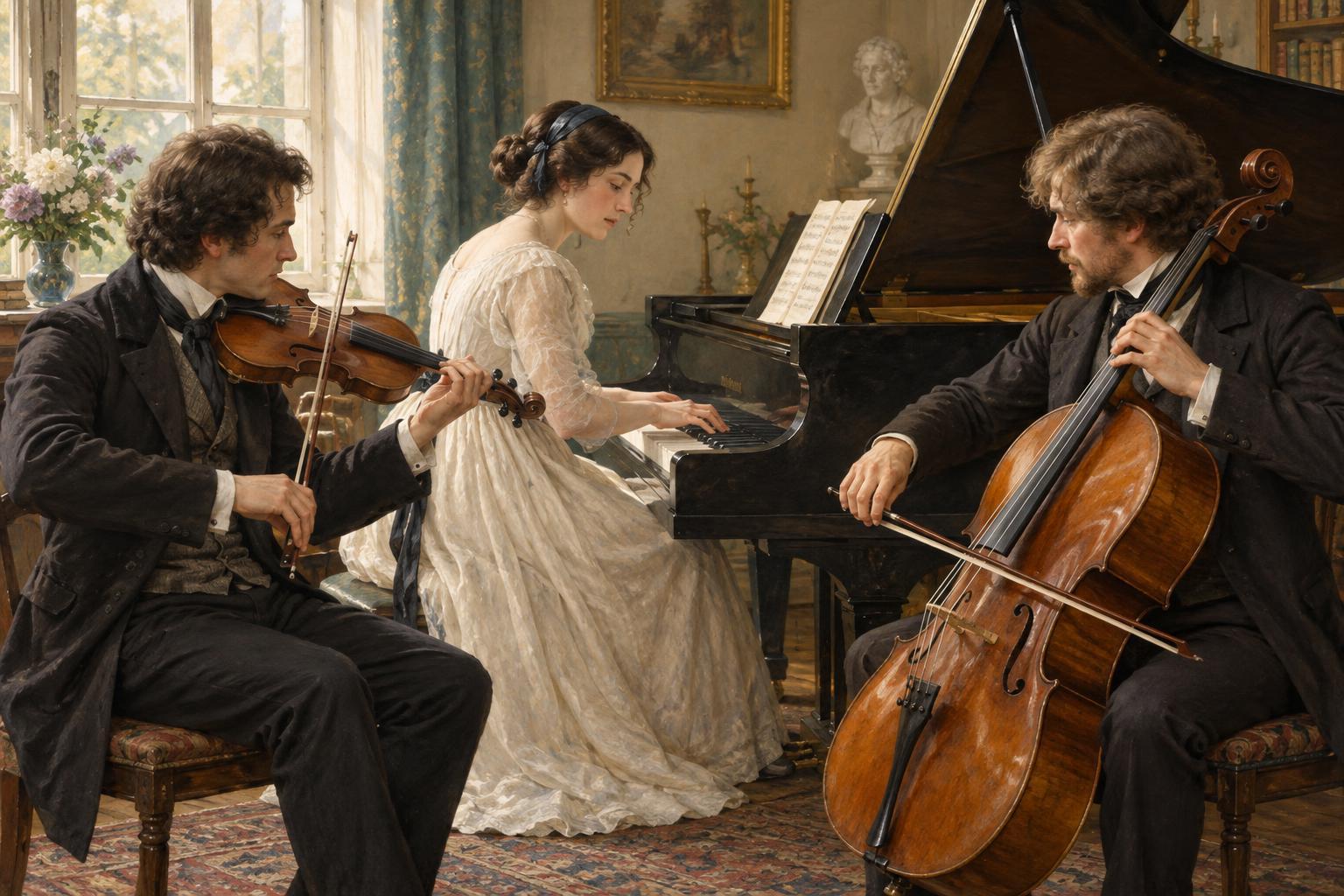
Fanny Mendelssohn’s Piano Trio in D minor, Op. 11, is written for piano, violin and cello. That familiar combination can produce an impressive range of sound: a piano can suggest an entire musical landscape, while the strings can sing, answer one another or add rhythmic urgency. In this trio, listening to how those roles change is a useful way into the music, even if you do not know its forms or musical terminology.
Fanny Mendelssohn is sometimes introduced primarily through her relationship to her brother Felix. The family connection is part of her story, but it need not be the main lens for hearing this work. The trio rewards attention to its own ideas: the momentum of its opening, the space given to lyrical expression and the way familiar sounds take on new energy as the piece unfolds.
Following the four movements
The first movement begins with a strong sense of motion. Try listening first for the broad contrast between forceful passages and more singing ones, rather than attempting to identify every theme. Notice, too, what happens when an idea moves between instruments. A phrase that feels urgent at the piano may sound more exposed when a string player takes it up. Those changes of voice help the movement feel like a conversation rather than a piano part with accompaniment.
The slower second movement offers a different kind of attention. Here, it can help to follow the length of a melodic line: where it rises, where it rests and how the other instruments support it. You do not need to decide whether the violin, cello or piano is the “lead” throughout. Much of the pleasure of chamber music lies in hearing an instrument step forward briefly, then make room for another.
The third movement is marked “Lied,” the German word for “song.” It is an invitation to listen for a songlike shape without expecting anyone to sing. Hear how the melody is phrased and how the accompaniment affects its character. The finale then restores a stronger sense of forward travel. After the contrasting middle movements, its movement and changes in texture can make the trio’s return to a more animated sound especially satisfying.
What the instruments are doing
A piano trio is a useful setting for hearing the difference between texture and melody. At one moment, the piano may supply rippling activity beneath a string line; at another, it may state the most prominent idea while violin and cello add warmth or tension. The cello is not confined to a bass role, and the violin need not carry every tune. Listen for moments when the two strings seem to join forces, then for moments when they pull in different directions.
On a first hearing, choose one instrument and follow it for a minute or two, even when it is not prominent. On a second hearing, switch your attention. This simple exercise can reveal details that are easy to miss when all three parts blend together. It also makes the trio’s more dramatic moments clearer: intensity often comes not just from volume or speed, but from several distinct lines becoming active at once.
A way to listen without a score
You can approach the whole work by asking three questions at each change of mood. Which instrument draws your ear? Does the music feel as though it is pressing ahead or pausing to reflect? What has changed since the last time you heard a similar idea? These questions provide a path through a substantial piece without turning listening into a test.
If the trio feels densely packed at first, listen to one movement at a time, then return to the complete work. The opening may make more sense after you have heard the lyrical middle movements; the finale may feel different when you remember the restraint that came before it. Familiarity need not mean catching every detail. It can be as simple as recognizing a shift in character and becoming curious about how three musicians bring it about together.