Why these movements are easy to confuse
In a string quartet or another multi-movement chamber work, a minuet or scherzo often provides a change of pace between more expansive movements. Both can be built around three main spans: an opening section, a contrasting section traditionally called the trio, and a return of the opening music. If you listen only for that broad outline, the two forms can seem nearly identical.
The most useful distinction is not a rigid rule about where the movement appears or how fast it must go. It is the way the music treats its pulse. A minuet draws on the idea of a graceful dance in triple meter. A scherzo, whose name suggests a joke or playful turn, often makes the beat more energetic or less predictable. Composers can blur these qualities, so the labels are a starting point for listening rather than a promise of what you will hear.
Finding the minuet’s dance step
A minuet commonly has three beats to a measure. Try counting “one, two, three” while listening, with a gentle emphasis on “one.” Even when the tune is elaborate, you may sense a recurring step and a balanced exchange between phrases. That balance can make the music feel poised rather than hurried.
Do not expect every minuet to sound delicate or every beat to be equally clear. A performer may shape a phrase across the bar line, and an instrument may enter between strong beats. Instead of forcing your count onto each note, listen to the bass or to repeated chord changes. They may reveal where a new measure begins. Once you find the larger pulse, notice how the melody moves with it or leans away from it.
Hearing the scherzo’s rhythmic games
Many scherzos also use triple meter, which is why counting three beats does not settle the question. The difference often lies in how those beats are handled. A brisk tempo, clipped gestures, abrupt pauses or accents in unexpected places can make a familiar three-beat pattern feel restless. A composer might group notes so that you momentarily hear two larger pulses against the underlying three, or make a light beat sound stronger than the first.
For a simple listening test, establish the beat, then ask what the music does to your expectations. Does it encourage a steady dance step, or does it repeatedly interrupt, disguise or push against that step? A scherzo need not be comic in an obvious sense; its playfulness may be rhythmic rather than cheerful. Likewise, a powerful or shadowy passage can still be a scherzo if it treats timing and accents with that kind of agility.
Following the trio and the return
The trio is a contrasting middle section found in many minuets and scherzos. The name is historical and does not mean that only three musicians must play. In a chamber work, you can often recognize its arrival without reading a score: the texture thins or thickens, a new melody takes over, or the mood and articulation change. The underlying meter may remain the same even as the surface feels different.
After the trio, the opening material usually returns. This return may be easy to spot when a distinctive tune comes back, but it can also be recognized by its rhythm, instrumental texture or pattern of accents. Listen for whether the return feels exactly as you remembered it. Hearing the contrasting section in between may make the opening sound different to you, even if the musical material is largely unchanged.
A practical way to listen through the whole movement
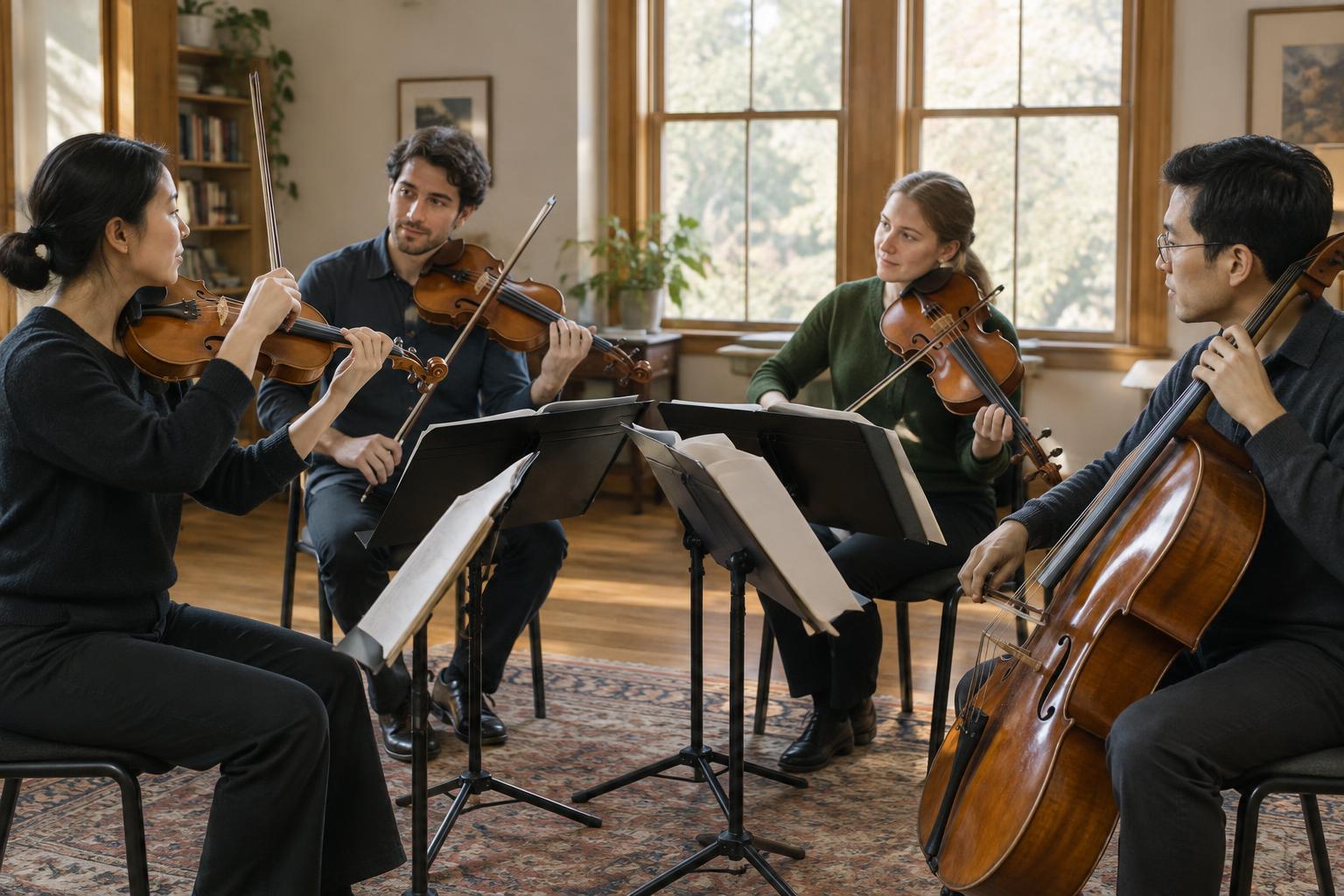
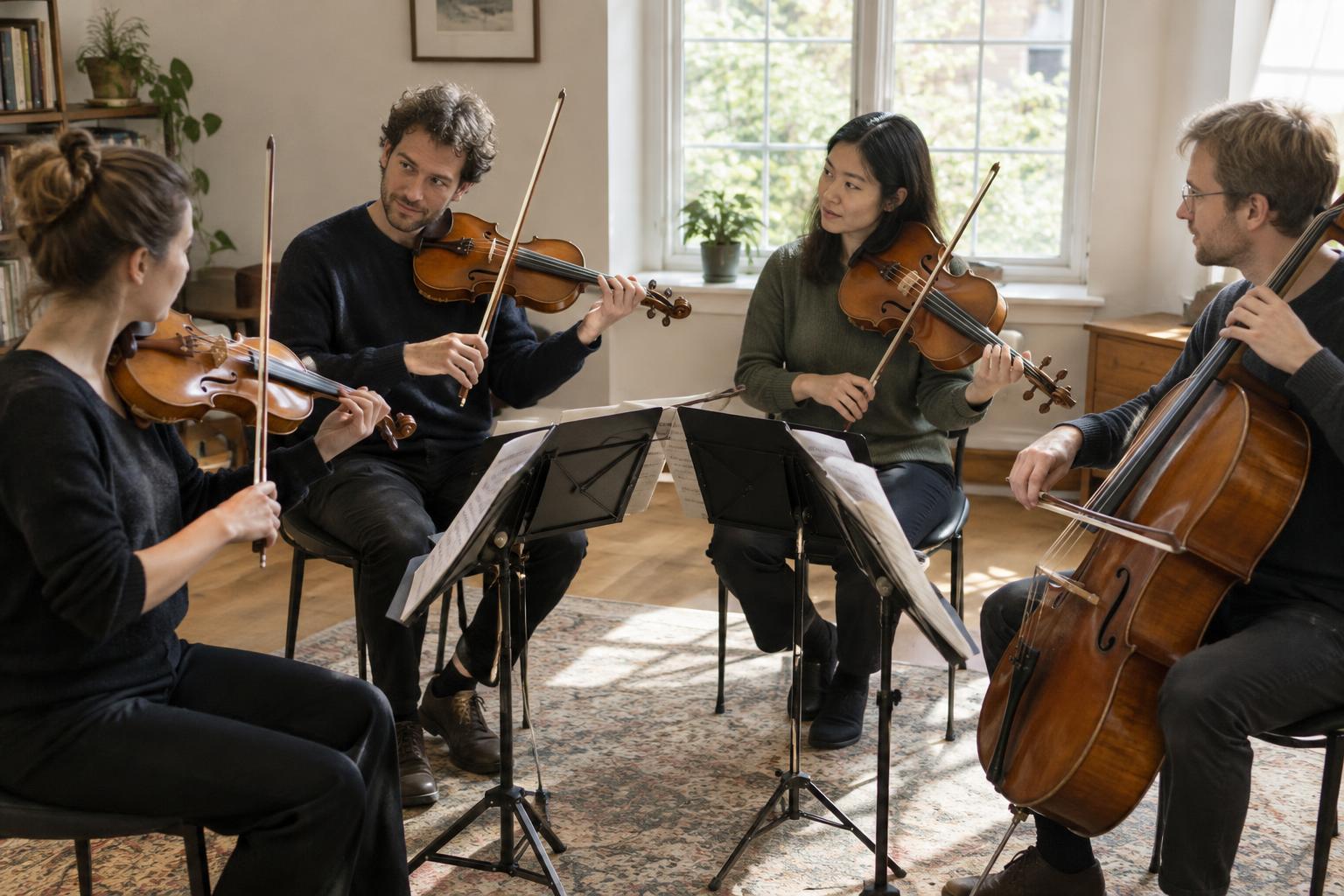
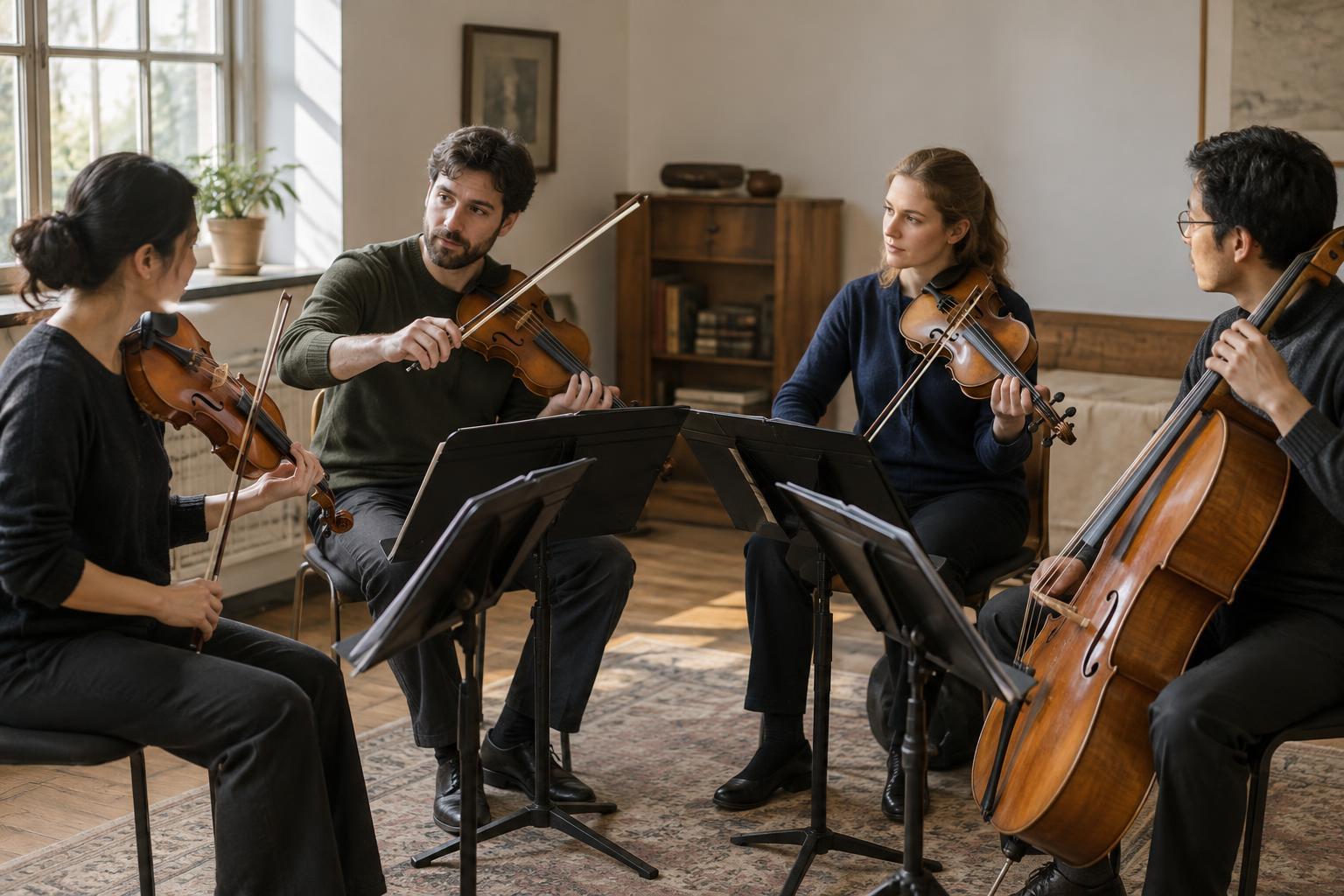
On a first hearing, set aside the labels and map three events: the opening idea, the moment a contrasting idea begins, and the return. On a second hearing, tap a quiet pulse and notice whether the music supports it or tries to unsettle it. On a third, follow one instrument. In chamber music, a rhythmic figure may pass from one player to another, changing its effect without changing its basic shape.
If you have a movement title, use it to test what you hear rather than to dictate it. A minuet can contain surprising accents, and a scherzo can have a smooth, dance-like trio. Recognizing that flexibility makes both more rewarding: their shared sectional design gives you a route through the movement, while their treatment of rhythm supplies its particular character.