Listen for punctuation, not a perfect map
When you hear an unfamiliar piece, you may lose track of where one musical thought ends and another begins. Phrase endings offer a way back in. A phrase is a span of music that sounds like a coherent gesture, rather like a sentence or part of one. Its ending might bring a firm arrival, a brief rest, or only a hint that the players are turning toward a new idea.
You do not need to count measures or identify chords to notice these moments. Start by asking a simple question: did that sound finished, or did it leave me waiting? A settled ending can feel like a period. A lighter pause may feel like a comma, inviting an answer. These comparisons are useful listening aids, not strict rules; composers can make an ending ambiguous, or lead straight into the next phrase without a break.
Notice what changes at the end of a thought
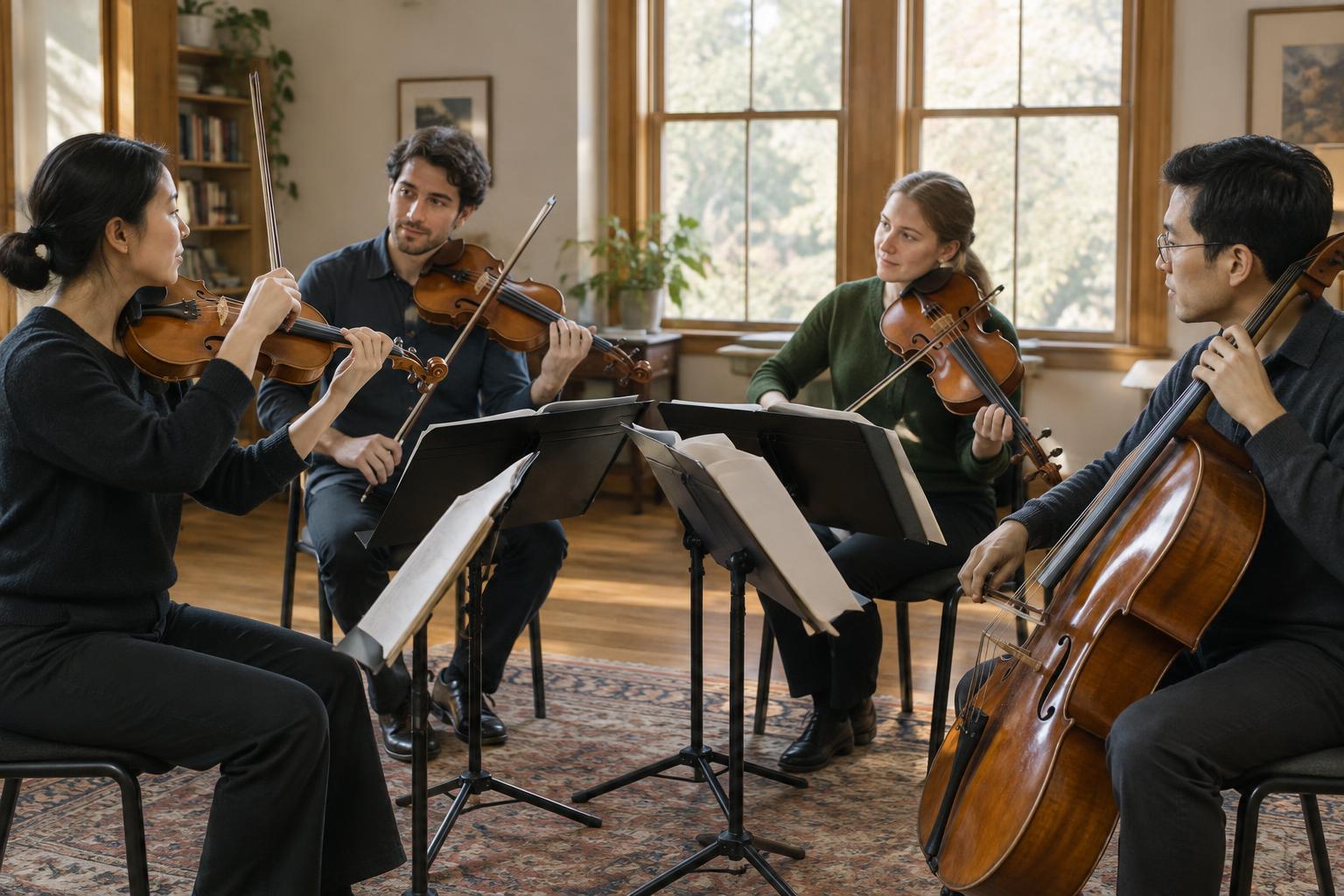
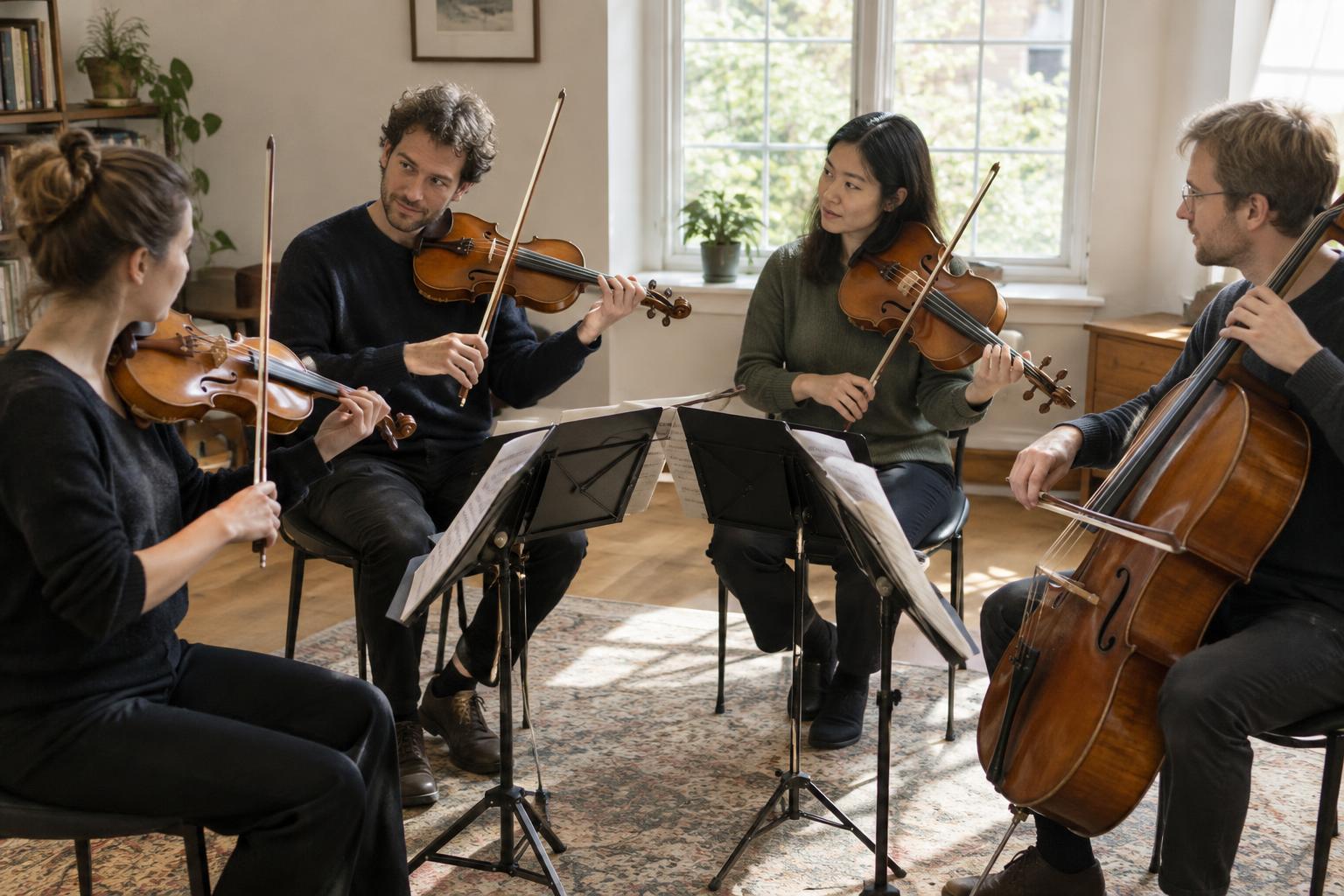
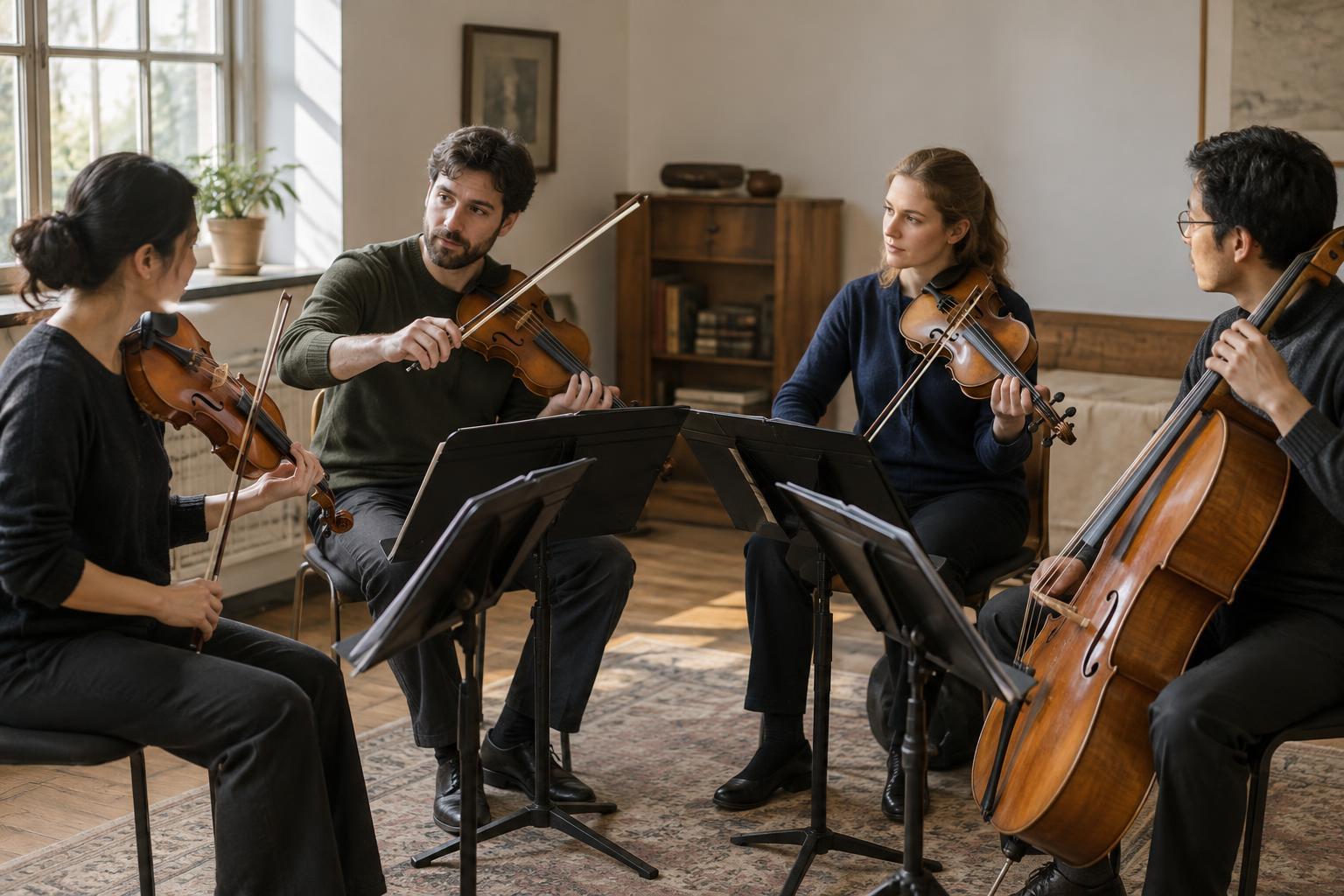
Several clues often gather around a phrase ending. A melody may slow its motion, reach a longer note, or come to rest after a run of shorter notes. The accompanying instruments may change their pattern, thin out, or land together with the melody. A player might take a breath, lift the bow, or leave a small silence. In a string quartet, the first violin may finish a line just as the cello begins the next one.
No single clue is reliable every time. A long note can occur in the middle of a phrase, and a strong chord can launch a new thought rather than conclude an old one. Listen for a combination of signals, especially the relationship between what came before and what follows. If the music repeats a similar shape after a pause or handoff, you have probably heard a useful boundary.
Use endings as landmarks when you lose your place
Try following one instrument for a short stretch of an unfamiliar recording. Hum its general contour if that helps; the exact pitches do not matter. When its line seems to arrive or pause, mentally mark that spot. Then listen for what happens next. Does the same instrument begin again, does another player answer, or does the group return to an earlier sound? Each ending gives you a chance to rejoin the music without needing to reconstruct everything you missed.
On a second listen, pay attention to endings that sound alike. A melody might ask a question, receive a more settled answer, and then begin a varied version of the exchange. Recognizing that pattern can make a passage feel familiar even before you know its form. If you use a score or a recording player, you can revisit a short span around one ending, but avoid stopping at every pause. The goal is to hear the music’s larger flow.
Distinguish arrival from continuation
Some phrase endings offer a strong sense of rest; others create an expectation of more music. You can hear the difference without knowing harmonic terms. After a strong arrival, imagine whether the piece could comfortably stop there. After a less settled one, notice whether you find yourself anticipating the next note or an answering phrase. The contrast can be especially clear when a short musical idea returns with a different ending.
Chamber music also plays with expectations. A phrase may seem ready to close, only for one instrument to slip in early and carry the momentum forward. The players may overlap, or a seemingly final chord may be followed by a quiet afterthought. Rather than treating these as mistakes in your mental map, enjoy them as part of the conversation. Your expected landing point still helped you hear what made the continuation surprising.
Build a simple listening habit
For a practical exercise, choose a short movement or a few minutes of a longer one. On the first listen, mark phrase endings only in your mind: “pause,” “arrival,” “handoff.” On the second, notice which endings feel conclusive and which seem to point forward. On the third, follow how the instruments share those moments. You may discover that one player prepares an ending while another prevents the texture from coming to a halt.
There is no need to agree with an imagined official set of boundaries. Different listeners may hear a long gesture as one phrase or as two connected phrases, particularly when there is no silence. What matters is that you are listening for shape rather than trying to catch every note. Once you can hear where a thought might end, an unfamiliar piece becomes easier to navigate: you have a series of places to pause, orient yourself, and listen for what comes next.