Two instruments, not simply an old and a new piano
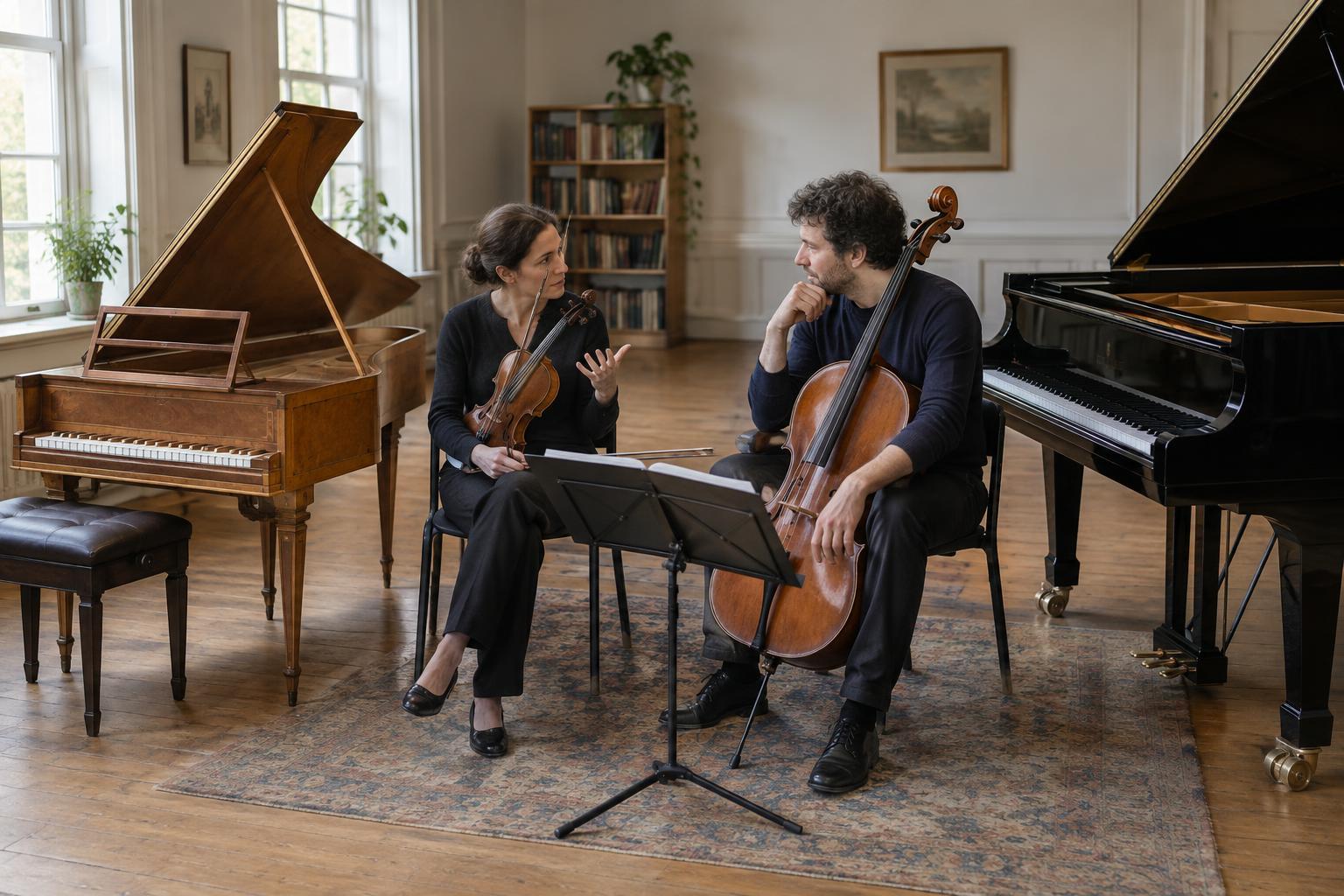
A fortepiano is an early piano of the kind associated with music from the late eighteenth and early nineteenth centuries. Like a modern grand, it uses hammers to strike strings, but its construction, action and sound differ. Fortepianos also vary considerably from one another: the instrument suited to a Mozart trio may not sound or feel like one associated with later Romantic music. “Fortepiano” is therefore a useful starting point, not a single fixed specification.
Modern grands generally offer a broader dynamic range, greater projection and longer sustain. A fortepiano often has a lighter touch, quicker decay and more distinct changes of color between registers. Neither instrument reveals the one true version of a chamber work. Each gives players a different set of possibilities—and different problems to solve together.
Balance becomes a shared decision
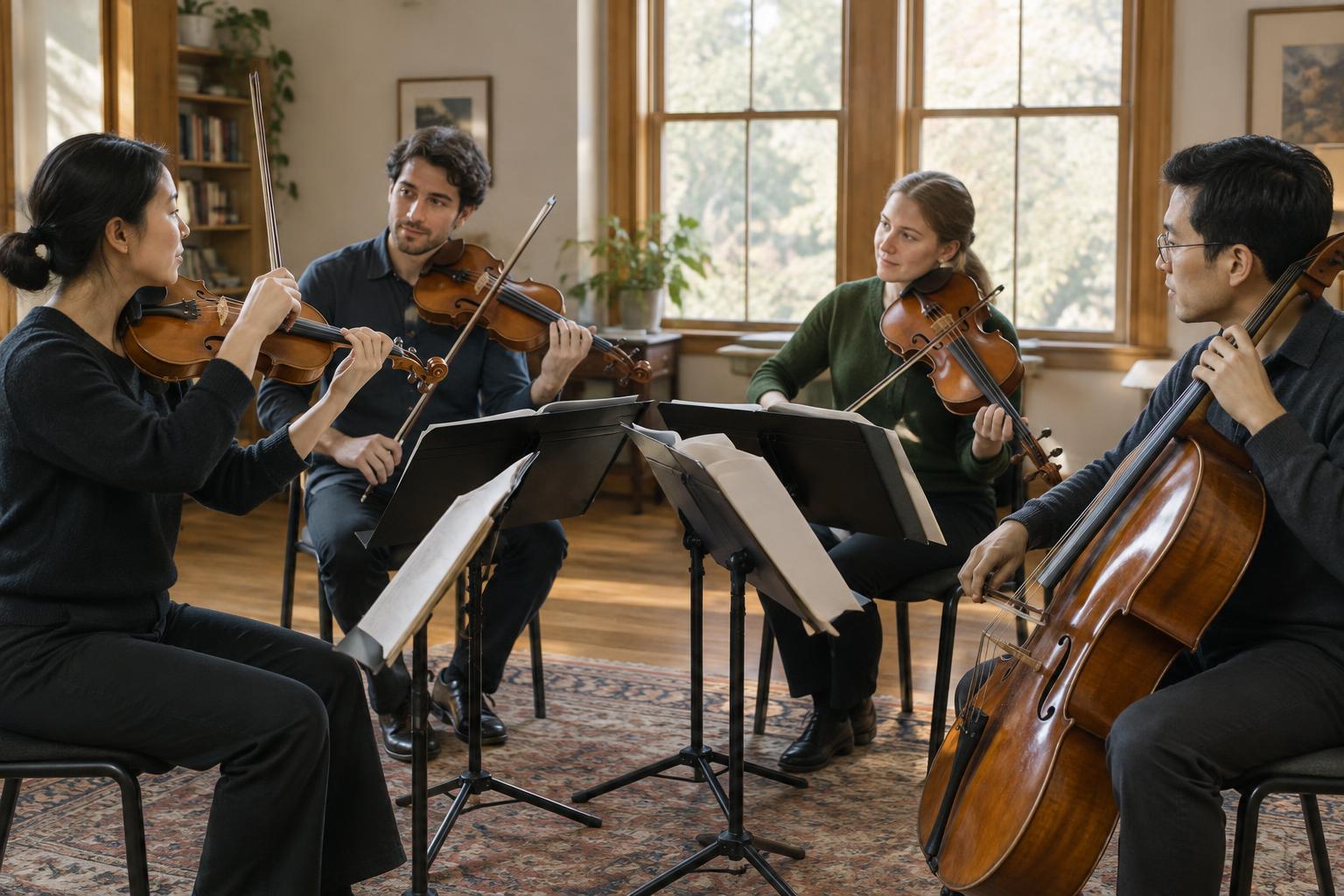
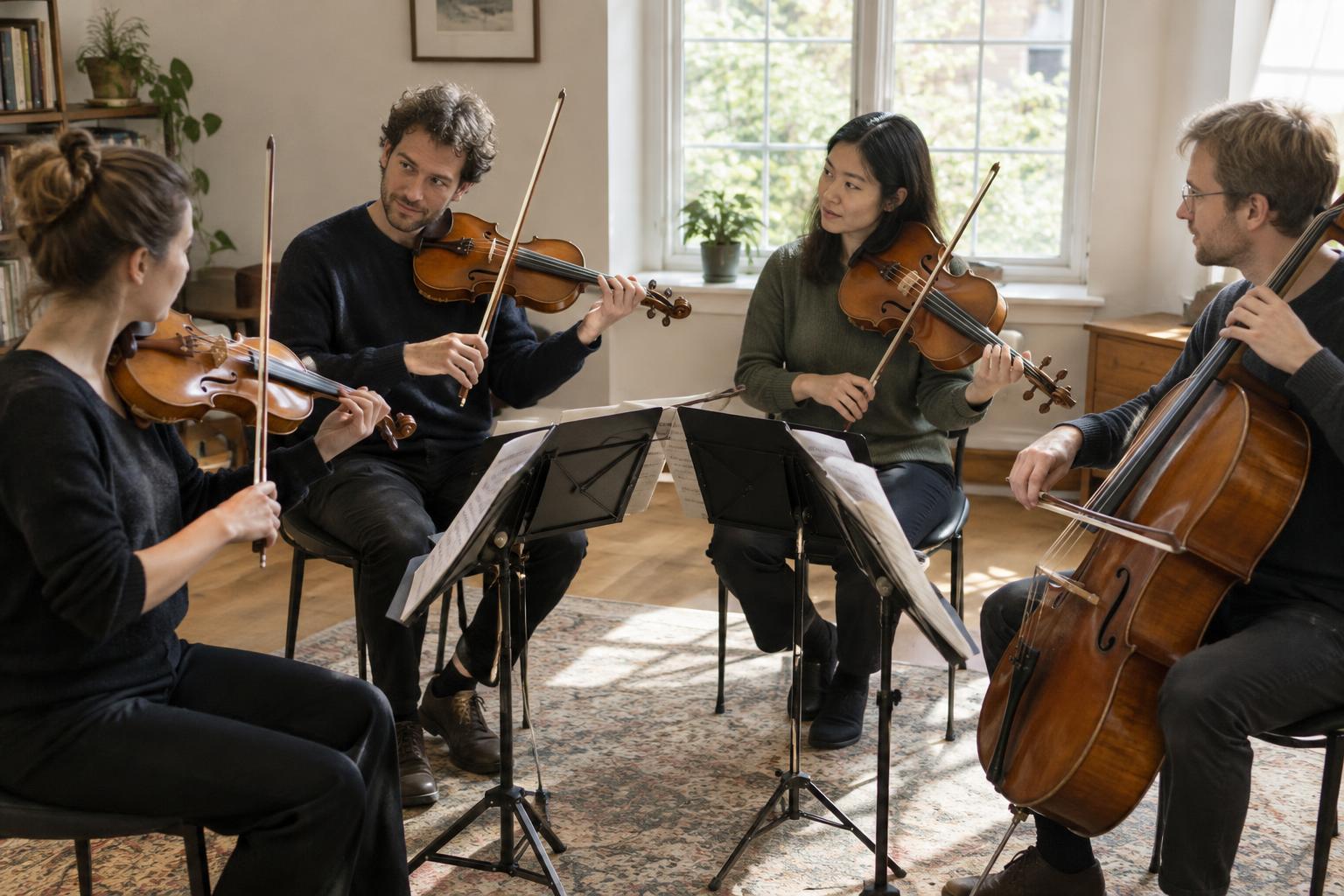
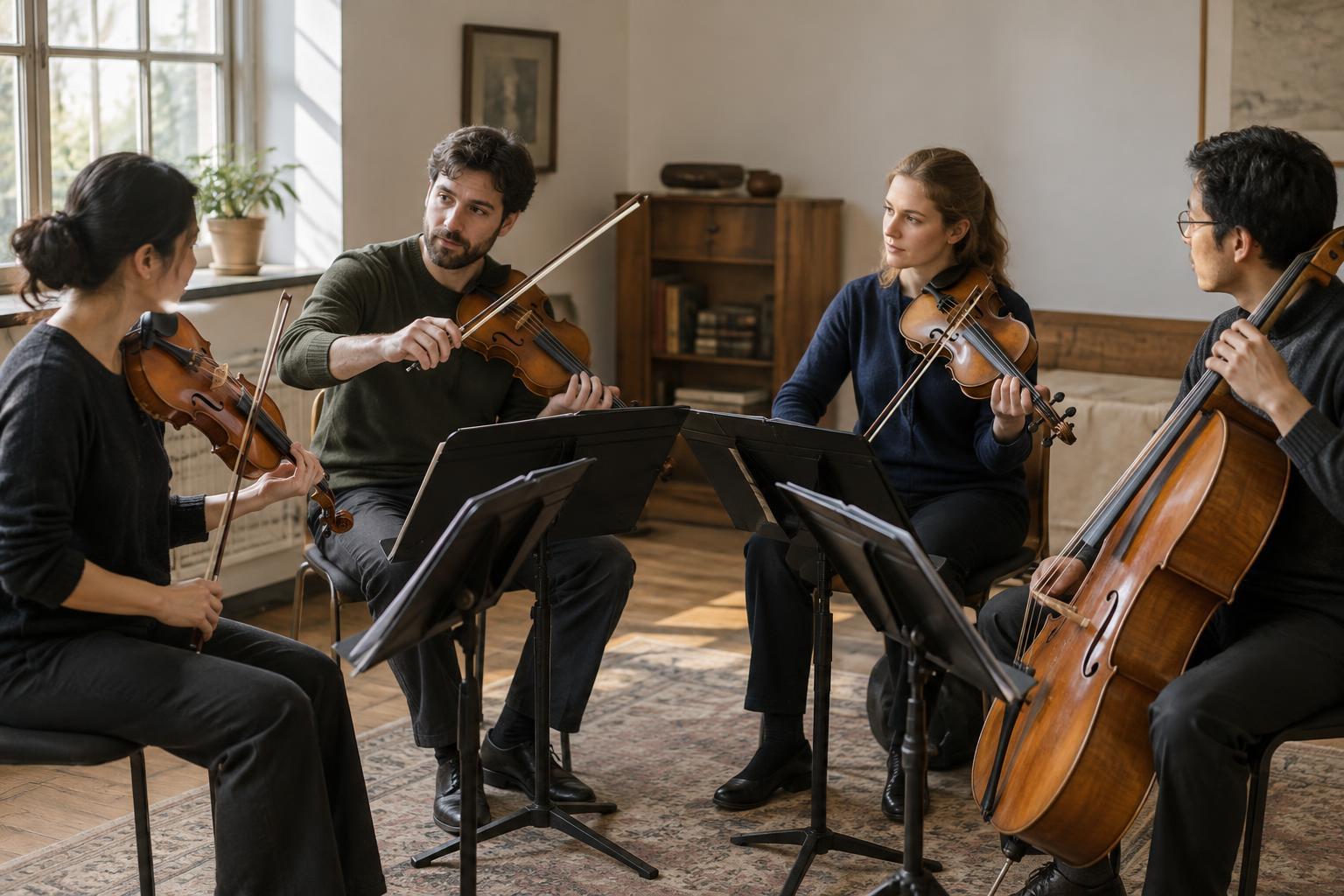
In a piano trio, the keyboard can fill a great deal of musical space. A modern grand’s bass and middle register may remain audible long after a note is struck, sometimes covering a cello line or the quieter detail of a violin phrase. The pianist might respond with a lighter left hand, shorter notes or less pedal. The string players may adjust their sound too, but balance works best when nobody assumes that one player must do all the accommodating.
A fortepiano’s quicker decay can make individual lines easier to distinguish, especially in passages where the instruments exchange short ideas. That clarity does not remove the need to listen. A string player can still overwhelm a delicate keyboard entrance, while a pianist can make an accented chord startlingly prominent. Players need to judge balance from the room, the instrument and the musical role of each line—not from a rule that the piano must always be quieter.
Touch, articulation and the shape of a phrase
Because a fortepiano key can respond differently under the fingers, a pianist may find that familiar gestures need reconsidering. An even run on a modern grand may call for a new touch on a lighter action. Short notes can sound especially clear, while a long melodic line may need careful pacing because the sound fades sooner. The pianist cannot rely on sustain alone to carry every connection from one note to the next.
Those changes matter to the whole group. In a passage of quick exchanges, strings can match the keyboard’s crisp releases rather than aiming for an unbroken legato. Where the piano melody decays, a violin or cello can take over its energy without playing louder. On a modern grand, the ensemble may instead allow more space around a resonant chord before beginning the next idea. Good articulation is not identical playing; it is a shared sense of where sounds begin, continue and end.
Pedals and resonance change the texture
A modern grand’s sustaining pedal can blend notes into a warm background, but it can also blur moving inner parts. Fortepianos may have knee levers or pedals with effects that differ from those of a modern instrument; the available controls depend on the particular piano. Pianists should learn what that instrument actually does rather than treating a pedal marking as a universal command.
For chamber players, the useful question is what the resonance contributes. Does it support a lyrical phrase, or obscure the moment when the cello changes harmony? Would a clean release make the violin’s answer more expressive? Trying a passage with less pedal can reveal how much connection the players already create through timing and touch. Adding resonance back then becomes a musical choice rather than a habit.
How to rehearse across the difference
If an ensemble moves between a fortepiano and a modern grand, begin by testing a few exposed passages rather than attempting to preserve every familiar detail. Play a soft entrance, a full chord, a quick exchange and a passage with sustained harmony. Then ask what each player can hear. A recording made from the listening area can help, since the balance at the keyboard may differ from the balance in the room.
Next, agree on a few practical adjustments: where the pianist should clear the texture, where strings should leave room for an attack, and where a phrase needs support as the keyboard sound fades. Check tuning and pitch expectations before rehearsing with a historical instrument, since setups can vary. The goal is not to make one piano imitate the other. It is to use the character of the instrument at hand to keep the musical conversation clear.