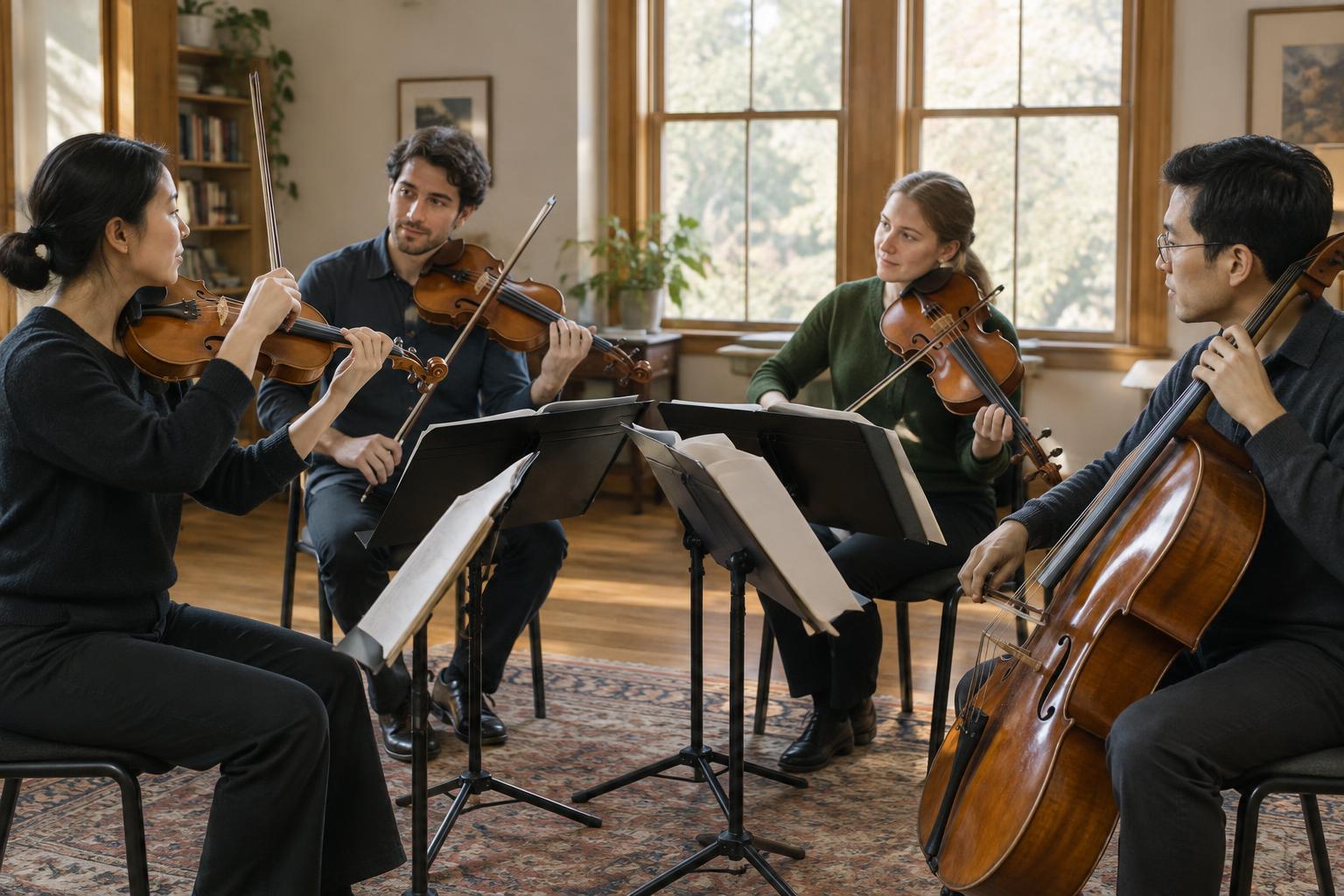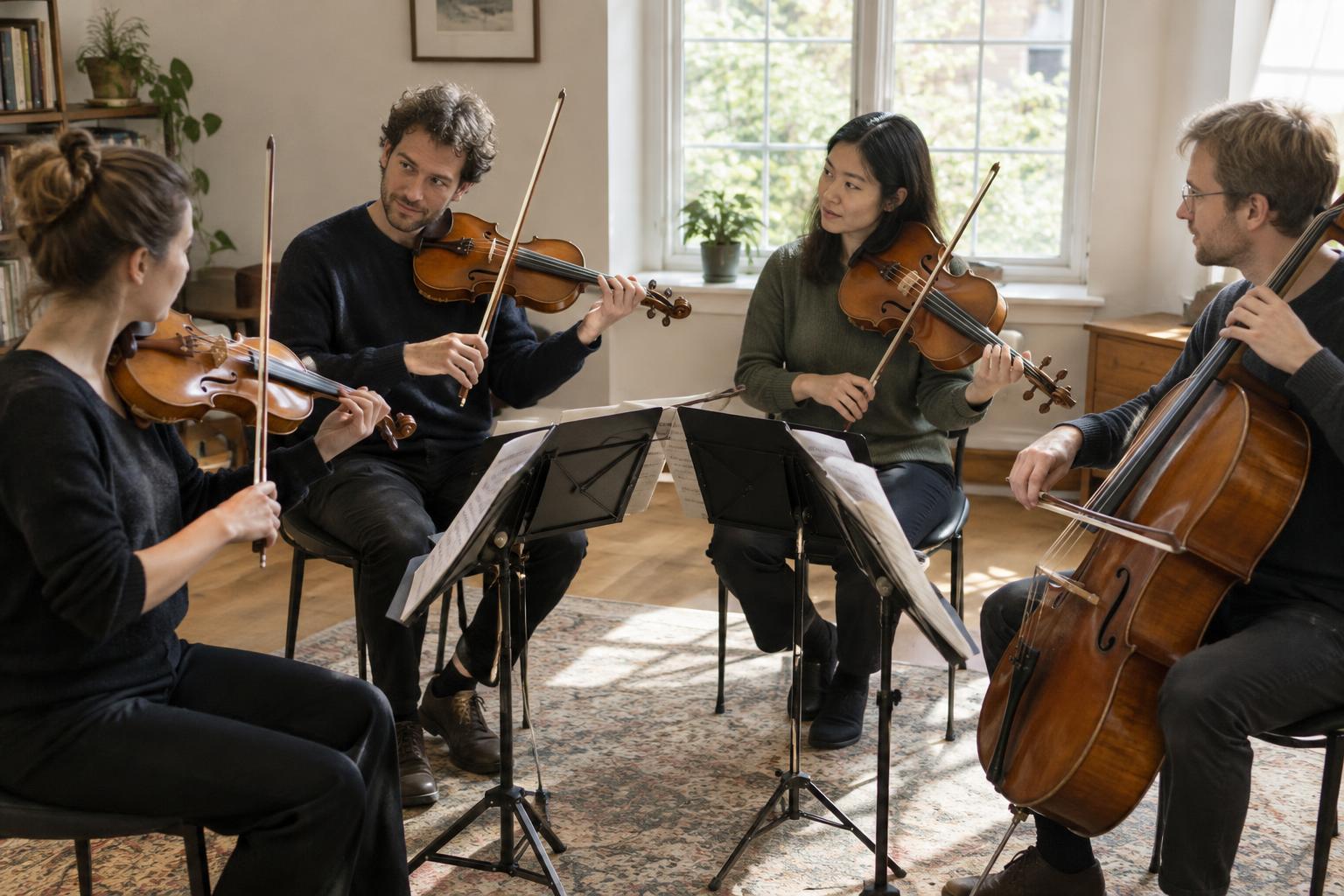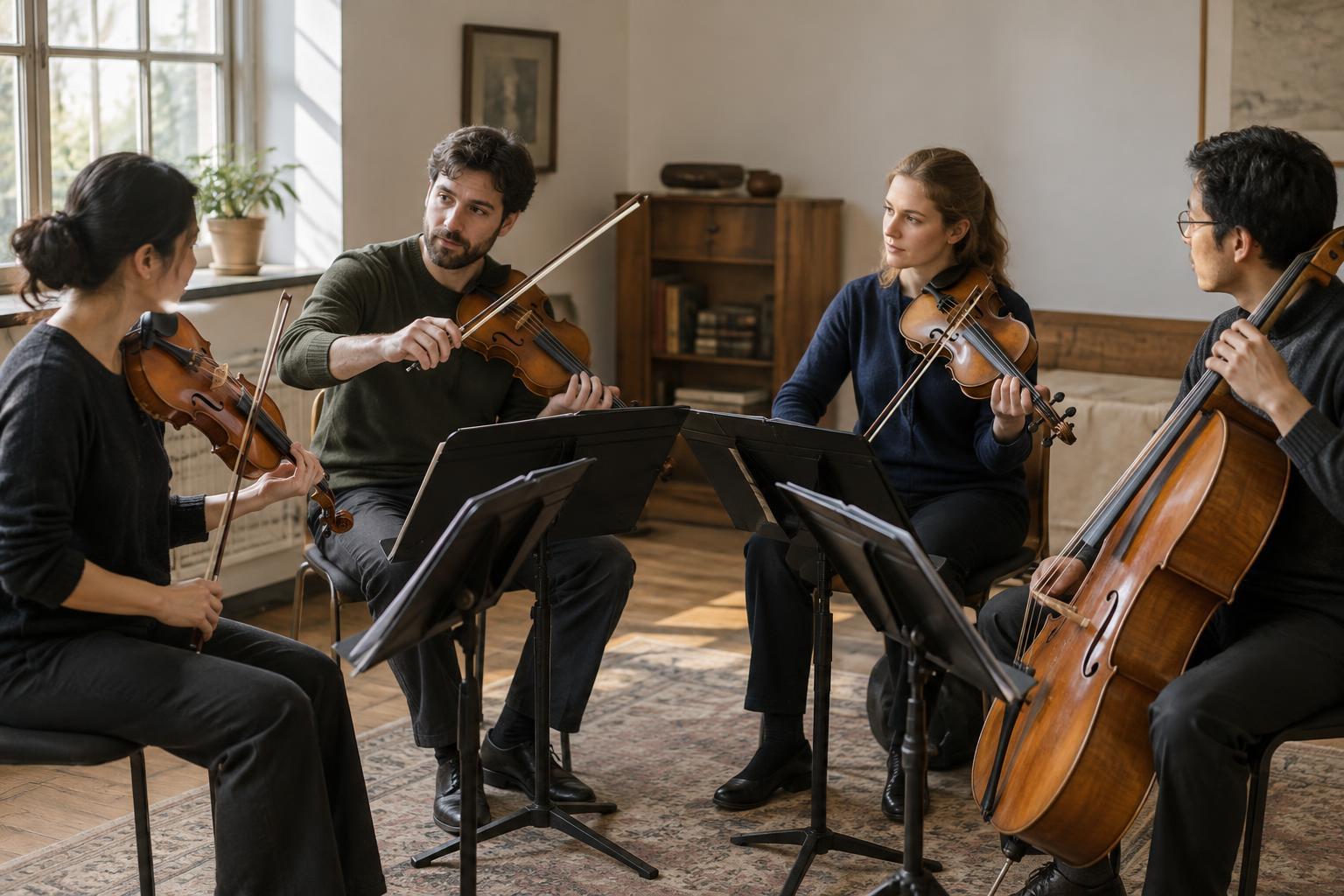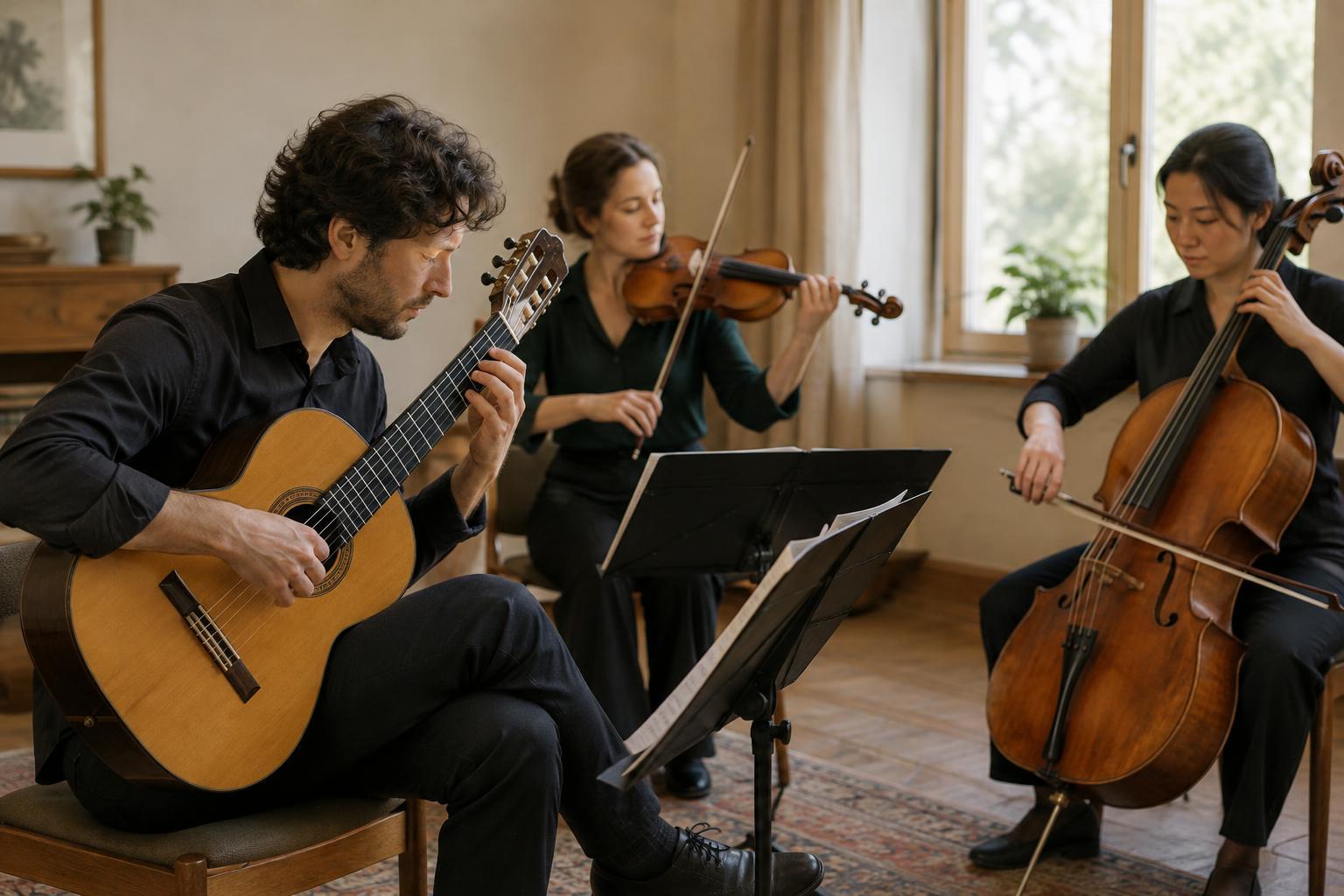
An intimate sound in a shared space
A classical guitar produces sound when a plucked string sets its wooden body vibrating. The note begins clearly, then fades rather than sustaining at a steady level. That quick rise and gradual decay are central to the instrument’s character: a guitarist can make a melody feel conversational, articulate a lively rhythm, or leave a soft chord hanging in the air. In chamber music, though, the same qualities can make the guitar harder to hear beside a violin, flute, clarinet, or cello.
Projection is not simply a matter of playing harder. A forceful pluck may make a sharper attack without making the rest of the note much louder. A guitarist instead considers where a phrase sits in the instrument’s range, how its notes are articulated, and what the other players are doing. A quiet line in an exposed passage may carry beautifully; the same line can disappear beneath dense, sustained playing. Balance belongs to the whole ensemble, not just to the guitarist.
How the right hand shapes the note
Most classical guitarists use the fingers and thumb of the right hand to pluck the strings. The point of contact, direction of movement, and balance between fingertip and nail can all affect the attack. Playing nearer the bridge generally gives a brighter, more focused sound; moving toward the fingerboard tends to produce a rounder one. These are colors rather than fixed volume settings, and players use them to help a line speak within the surrounding texture.
Two common strokes offer different kinds of emphasis. With a free stroke, the finger plucks a string and moves past it without landing on the next string, which is useful for chords and flowing patterns. With a rest stroke, the finger comes to rest against the neighboring string after the pluck, often giving a single-note melody a firmer presence. Neither is automatically better for projection: the musical context, tempo, and strings involved determine what works.
A guitarist can also distinguish melody from accompaniment on one instrument. In an arpeggio, for example, a thumb may play bass notes while the fingers bring out a higher tune. That control is valuable in a duo: the guitarist can preserve the rhythmic motion of the accompaniment without making every note equally prominent.
The left hand, resonance, and silence
The left hand chooses pitches by pressing strings against the frets, but it also determines how notes connect. A guitarist may let open strings ring under a moving line, hold a chord tone while other fingers change position, or release a note early to keep the texture clear. These small decisions affect how full the instrument sounds. Ringing notes can add warmth, while carefully placed silence can prevent one harmony from blurring into the next.
Techniques such as slurs, in which a left-hand finger sounds a note without a fresh right-hand pluck, create fluid gestures and shifts in emphasis. Vibrato can lend a sustained note motion and expression, although the guitar’s natural decay remains audible. Natural and artificial harmonics offer bell-like colors; they are often most effective when the ensemble leaves them room. Such effects reward attentive listening rather than sheer force.
Balance is an ensemble decision
In rehearsal, chamber players can adjust balance by changing more than their overall volume. A bowed instrument might use a lighter articulation during a guitar melody, while a wind player might shorten accompaniment notes or leave space between phrases. The guitarist may choose a brighter register, a clearer attack, or a different voicing of a chord. When the instruments trade foreground and background roles, these choices help the listener follow the exchange.
The room matters too. A resonant space may lend the guitar warmth but blur fast notes; a dry one may reveal detail while making the sound seem less expansive. Seating can affect what players hear from one another, so an ensemble may try modest changes in position during rehearsal. If amplification is used, its aim is often to support a natural blend rather than make the guitar sound like a different instrument.
What to listen for
When listening to chamber music with guitar, follow one short phrase through its handoffs. Does the guitar introduce a rhythm that another instrument continues? Does a fading plucked note make space for a sustained bowed or blown note? Notice whether a bright attack helps the guitar emerge, or whether a softer color draws you toward it during a quieter moment.
The classical guitar does not need to dominate an ensemble to be expressive. Its distinctive contribution often lies in the contrast between a precise beginning and a fading resonance. Once you hear how performers arrange other sounds around that shape, projection becomes more than a question of loudness: it becomes part of the chamber conversation.