Start with the ensemble, not the soloist
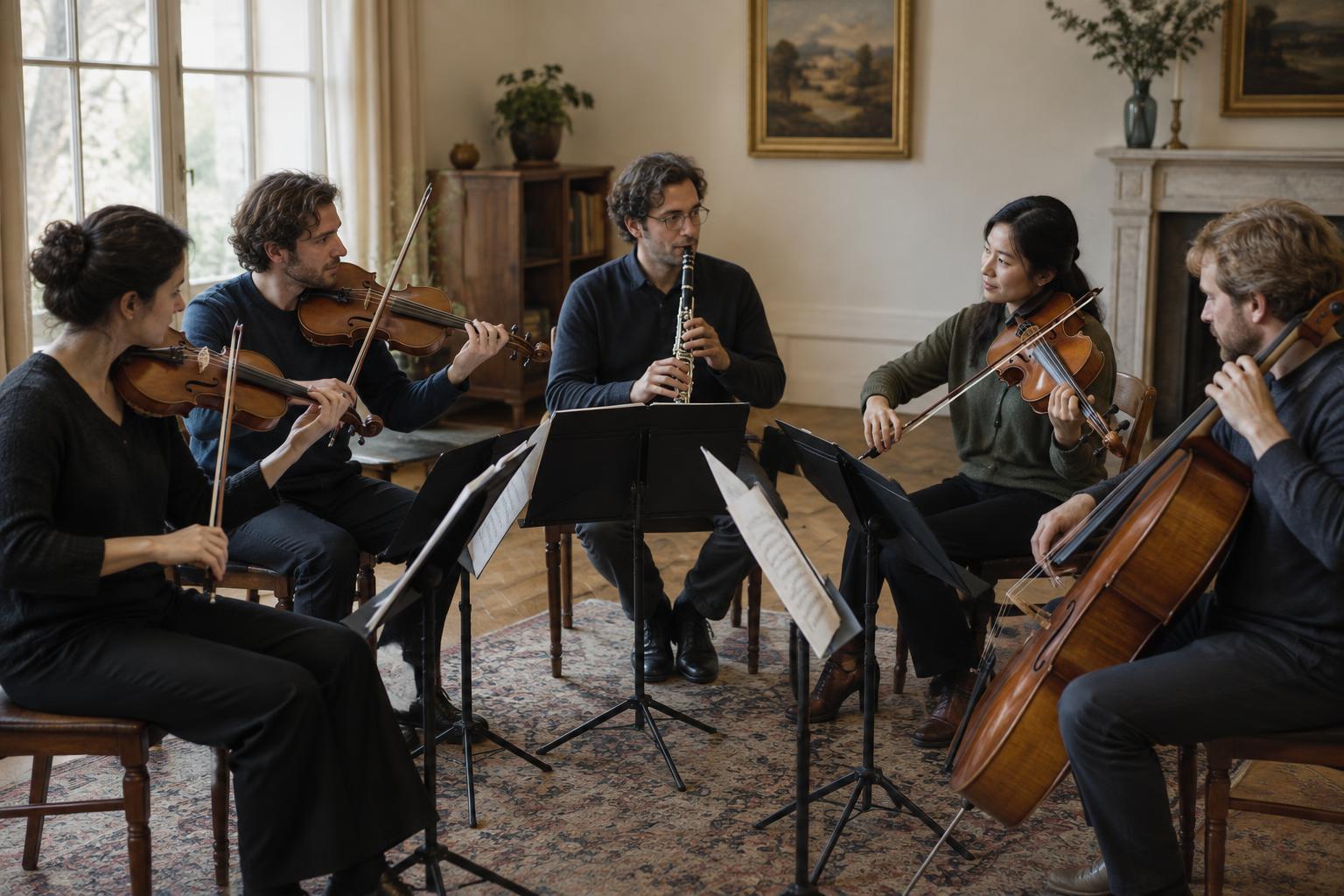
Mozart’s Clarinet Quintet in A major, K. 581, brings a clarinet together with two violins, viola and cello. It is tempting to hear the strings as accompaniment to a featured wind instrument. Instead, listen for how often the clarinet joins a texture already in motion, answers a phrase begun by a violin or steps back while the strings carry the idea forward. The work is a conversation among five players, even when one voice briefly draws the ear.
The clarinet’s range helps make those exchanges easy to follow. Its low notes can sound close to the warmth of the viola or cello; higher phrases can stand apart from the strings. On a first listen, try tracking the clarinet’s entrances. On a second, pay attention to what the other players were doing just before it entered. That small change of focus can make the piece feel less like a succession of melodies and more like a series of responses.
The opening Allegro: follow the handoffs
The first movement begins with the strings, establishing a shared sound before the clarinet becomes prominent. Rather than waiting for a single grand entrance, notice how musical material passes between instruments. A phrase may begin as a string-ensemble idea and return in a different balance, with the clarinet changing its color. The melody matters, but so does the identity of the player carrying it.
As the movement develops, listen for contrasts between passages that feel settled and passages that seem to press onward. You do not need to identify formal boundaries to hear this movement’s sense of departure and return. When familiar material comes back, ask what has changed: Is the clarinet leading, blending or answering? These are useful questions for any chamber work in which the same theme can be heard from more than one angle.
The Larghetto: leave room for the quiet details
The slow second movement gives the clarinet a sustained, singing role against restrained strings. Its pace makes it easier to hear details that can pass quickly in the Allegro: where a phrase takes a breath, how one note leads into the next and how little the accompanying players may need to do to change the mood. Try listening once without taking notes. Follow the line as you would follow a singer, paying attention to its pauses as well as its sound.
On another hearing, shift your attention to the strings. Their part is not merely a soft background; it provides the setting in which the clarinet’s phrases make sense. Notice moments when a string response feels like a continuation rather than a separate statement. If the movement seems simple at first, that change of perspective may reveal how carefully the five parts are balanced.
The Menuetto and variations: hear the group change shape
The third movement is a Menuetto with two contrasting trio sections. Listen for the effect of a familiar dance returning after each change of scene. One trio puts the clarinet aside while the strings play together; the other brings it back into a different relationship with them. This is a useful reminder that a quintet does not have to use all five players in the same way at every moment. A change in who plays can be as striking as a change in melody.
The finale is a theme with variations. Begin by getting to know the theme’s outline, then listen for what each variation brings forward: a new rhythmic energy, a different instrumental pairing or a fresh way of decorating a familiar phrase. There is no need to count variations on your first hearing. The pleasure lies in recognizing something you know while hearing it presented differently.
Make your own listening map
After hearing all four movements, write one sentence about the clarinet’s role in each. Was it a partner, a singer, a dancer or one voice in a changing group? Those descriptions need not be definitive; they simply give you something concrete to test on a repeat listen. You might also compare two passages where the clarinet enters after the strings and ask whether the entrance feels like an answer or a new beginning.
A small visual map can help you keep track of those observations. If you enjoy arranging listening notes on a page, browse Design Workflows · Bunny Design Studio for ideas about organizing a visual workflow. If you are sharing the piece with a listening group, browse Presentations · Bunny Design Studio for presentation ideas that could help you show the four movements without crowding the discussion. Then return to the music: the most useful map is one that helps you hear another exchange you missed before.