From a sustained tone to a fading sound
Most of the time, a violin, viola, cello or double bass player makes sound by drawing a bow across a string. The bow keeps feeding energy into the string, so a note can be held, shaped and made louder or softer while it sounds. In pizzicato, the player plucks the string instead. The finger gives it a single push and release; after that, the vibration begins to fade.
That difference changes the shape of a phrase. A bowed melody can flow through long notes, while pizzicato gives each note a more distinct beginning. The sound may seem crisp, warm, woody or resonant, depending on the instrument, the register and the way it is played. Plucking does not always mean playing quietly: a firm pizzicato can be emphatic. But even a strong pluck usually loses energy sooner than a bowed note.
What the player does differently
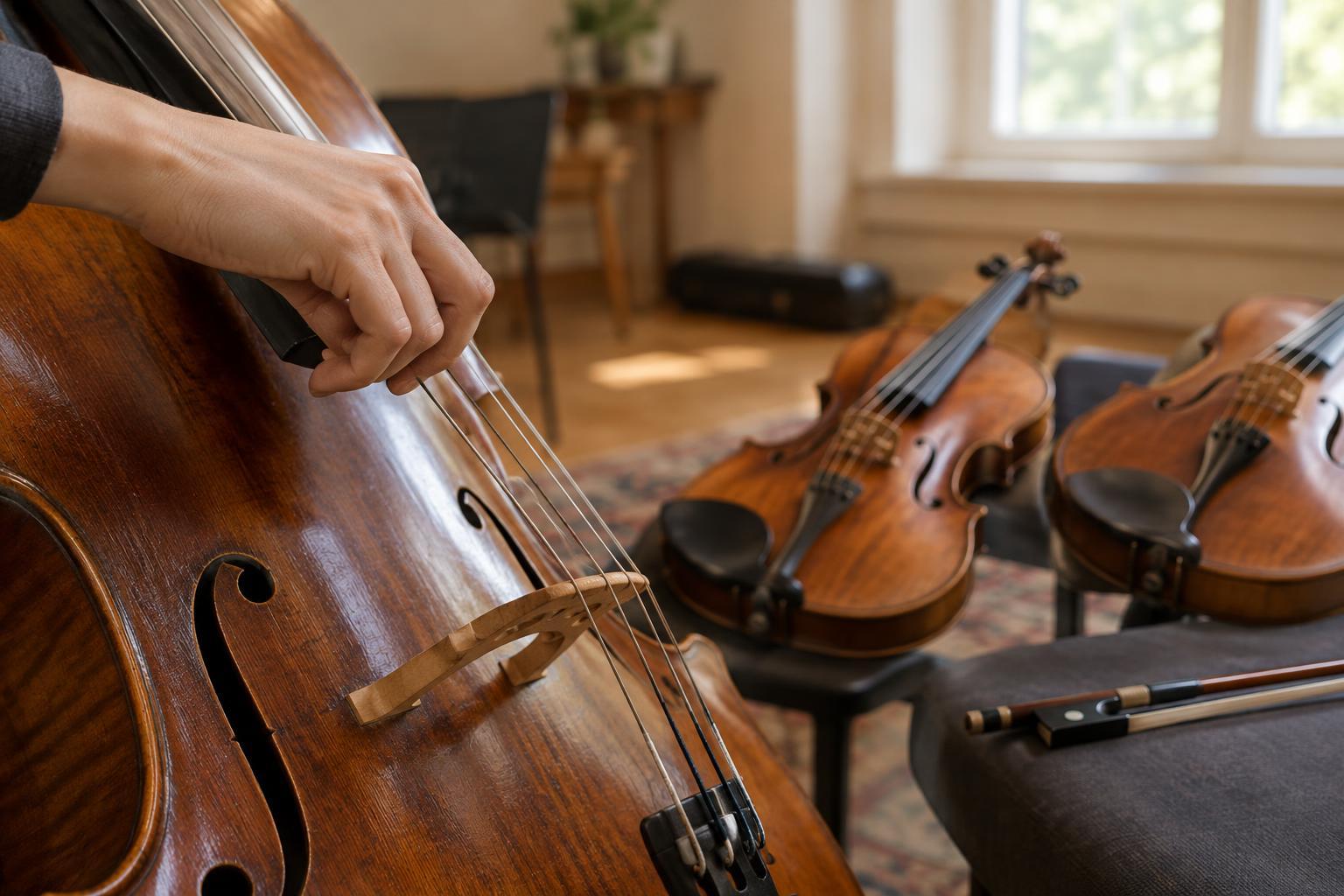
In ordinary pizzicato, a string player generally uses a finger of the right hand to pluck while the left hand chooses the pitch by pressing the string against the fingerboard. On violin and viola, the player can often keep the bow in hand while using a finger to pluck. Cellists and double bassists likewise have ways to manage the bow during short plucked passages. A long passage may give a player more opportunity to settle into a comfortable plucking position.
The left hand still matters. A stopped note, an open string and a note played high on a string can have noticeably different amounts of ring. Players also control when a note stops by touching or releasing the vibrating string. The result is not simply a bowed passage with a different surface sound: fingering, spacing and the handling of silence all affect how a pizzicato line speaks.
Four instruments, different kinds of weight
The same instruction can produce different impressions across a string ensemble. Violin pizzicato often stands out as light and sharply defined, particularly in a high register. A viola can give a plucked figure a slightly darker middle voice. On the cello, the lower strings may provide a rounded, resonant pulse as well as clearly pitched melodic notes. A double bass pluck can supply a deep foundation whose initial sound is easier to locate than its fading tail.
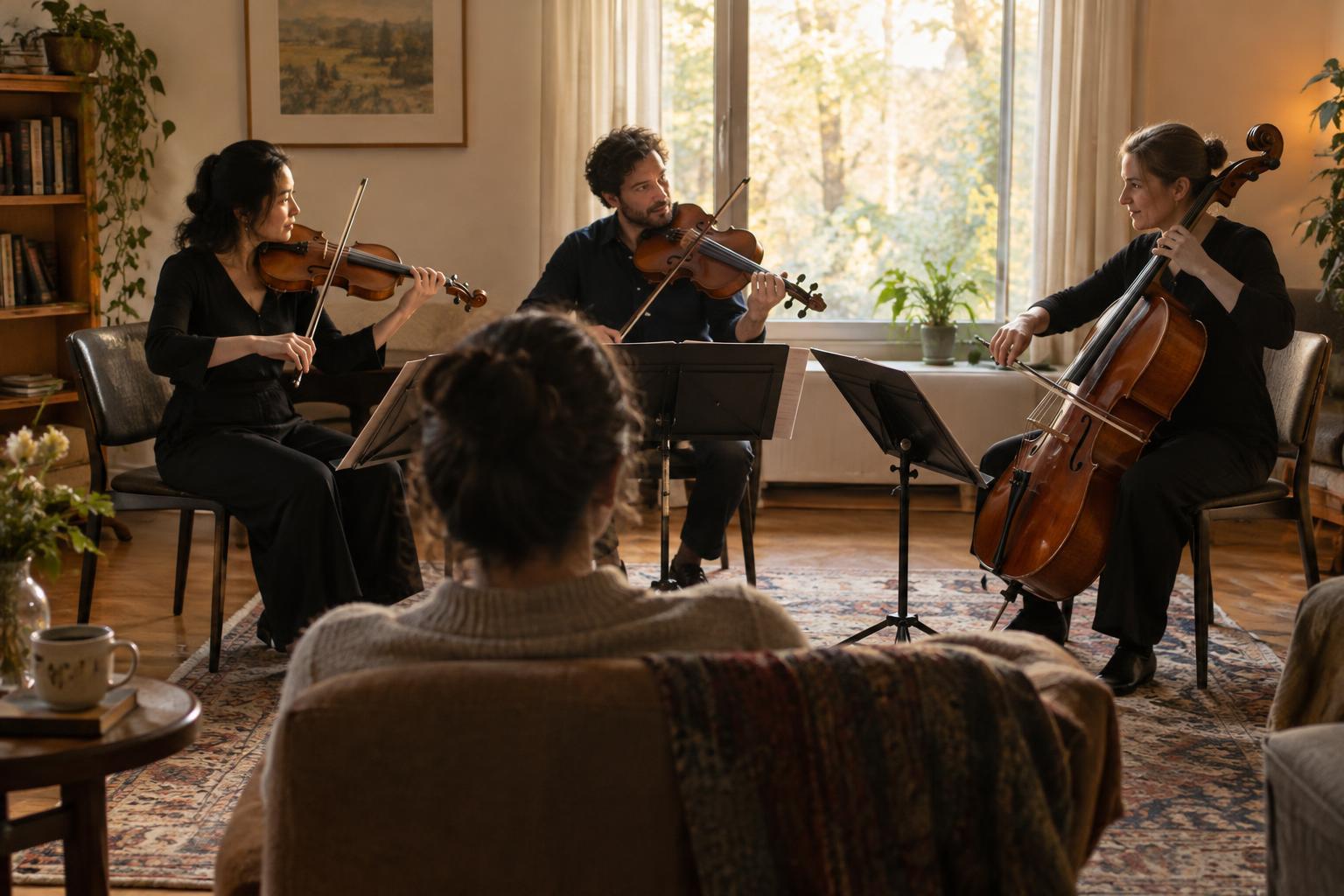
These are listening tendencies, not fixed rules. Register, string choice and the force of the pluck can alter the result. So can the surrounding music: a cello note may feel substantial beneath a soft violin line but comparatively delicate beside a forceful chord. In chamber music, the interest often lies in how these sounds relate. A low pluck might mark the beat, while higher plucks answer one another like short spoken phrases.
Why composers use pizzicato
Pizzicato can change the character of an ensemble almost instantly. A sustained texture may turn into a pattern of separate pulses. Plucked lower strings can support a bowed melody without covering its long notes; plucked upper strings can add quick accents or a fleeting countermelody. Because each sound decays, small gaps become part of the rhythm. Those gaps can make the music feel buoyant, tentative or unusually spacious.
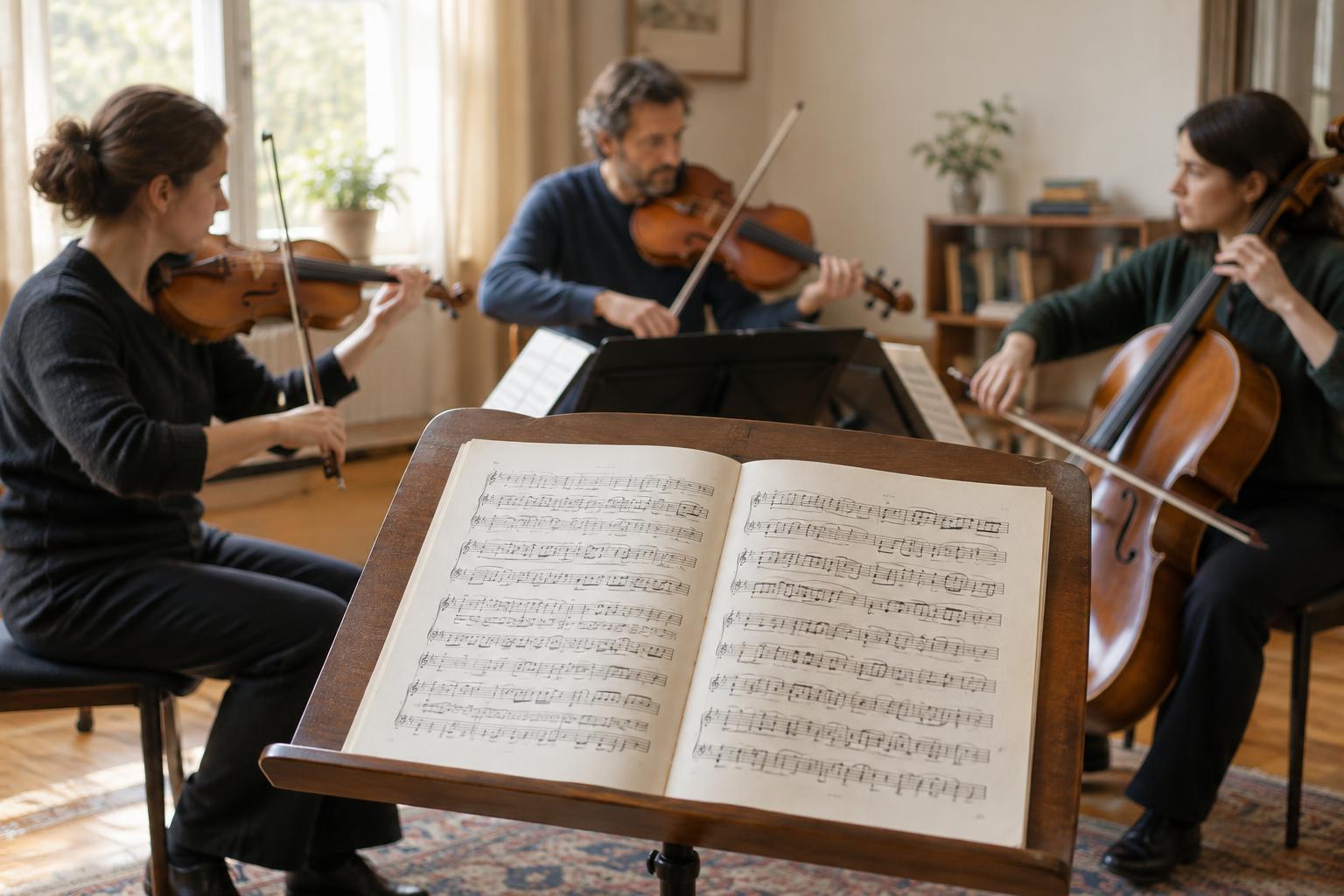
The contrast is especially clear when players return to the bow. Scores commonly mark a plucked passage with “pizz.” and the return to bowing with “arco.” You do not need to see the score to hear the change. Notice whether a line suddenly gains the ability to swell or sustain, or whether a smooth phrase breaks into individual points of sound. A passage that alternates between the two techniques can make that change part of the musical conversation.
How to listen for the details
Choose one instrument to follow through a short passage. First, listen for the attack: does each note begin with a distinct click or pop? Then listen beyond that first instant. Some notes leave a clear ringing pitch; others seem to disappear quickly, making the next note or a moment of silence more prominent. Finally, shift your attention to the group. Ask whether the plucked instrument is carrying the tune, keeping a pulse or punctuating someone else’s phrase.
You may also encounter less ordinary plucked effects, including left-hand pizzicato or a forceful snap in which the string rebounds against the fingerboard. These have their own character, but they need not be your starting point. The most useful habit is to hear pizzicato as a change in time as well as tone: the player starts a sound, lets it fade and makes its ending part of the music.