Begin with the song
The nickname “Death and the Maiden” belongs to Schubert’s String Quartet in D minor, D. 810, because its second movement draws on his earlier song “Der Tod und das Mädchen.” The connection is clearest if you listen to the song before the quartet. It is brief, but it sets out a scene with two sharply different voices: a young woman recoils from Death, and Death answers her gently, asking her not to be afraid.
Schubert’s setting gives the exchange more than one emotional color. The maiden’s urgent words interrupt a measured piano introduction; Death’s reply is quieter and steadier. That contrast helps explain why the music could work without words. Even before a singer enters, the piano establishes a solemn pulse. In the quartet, Schubert returns to related material not to retell the poem line by line, but to explore what its calm, unsettling sound can become.
What the quartet borrows
The quartet’s second movement, marked Andante con moto, is a set of variations on a theme derived from the song. Its chordal rhythm and restrained character recall the piano music associated with Death’s response. Played by four strings instead of piano and voice, the theme has a different presence: each part can sustain, shape, or pass along a note, so the sound seems to breathe collectively.
Listen first for the theme’s regular pace and simple outline. Then follow how each variation changes the surface while keeping something recognizable underneath. A line may grow more active, the texture may thicken, or one instrument may come forward while the others provide a pulse. Some passages offer relief; others make the same underlying material feel more troubled. Recognizing the tune is satisfying, but hearing those changes of character is the larger reward.
The song is a doorway, not a plot
It is tempting to assign a role to every instrument or treat each movement as a stage in the poem. The quartet does not require that kind of story. It is an instrumental work with its own contrasts, developments, and returns. Its nickname points to a real musical borrowing, but it does not turn the whole piece into a literal depiction of the maiden’s encounter.
That distinction makes listening more flexible. You can hear the slow movement in light of the song’s words and still notice how carefully it is built as a variation movement. You can also respond to the first movement’s force or the finale’s momentum without deciding what either one “means.” The song offers a useful point of entry, not a test with one correct interpretation.
Finding your way through the four movements
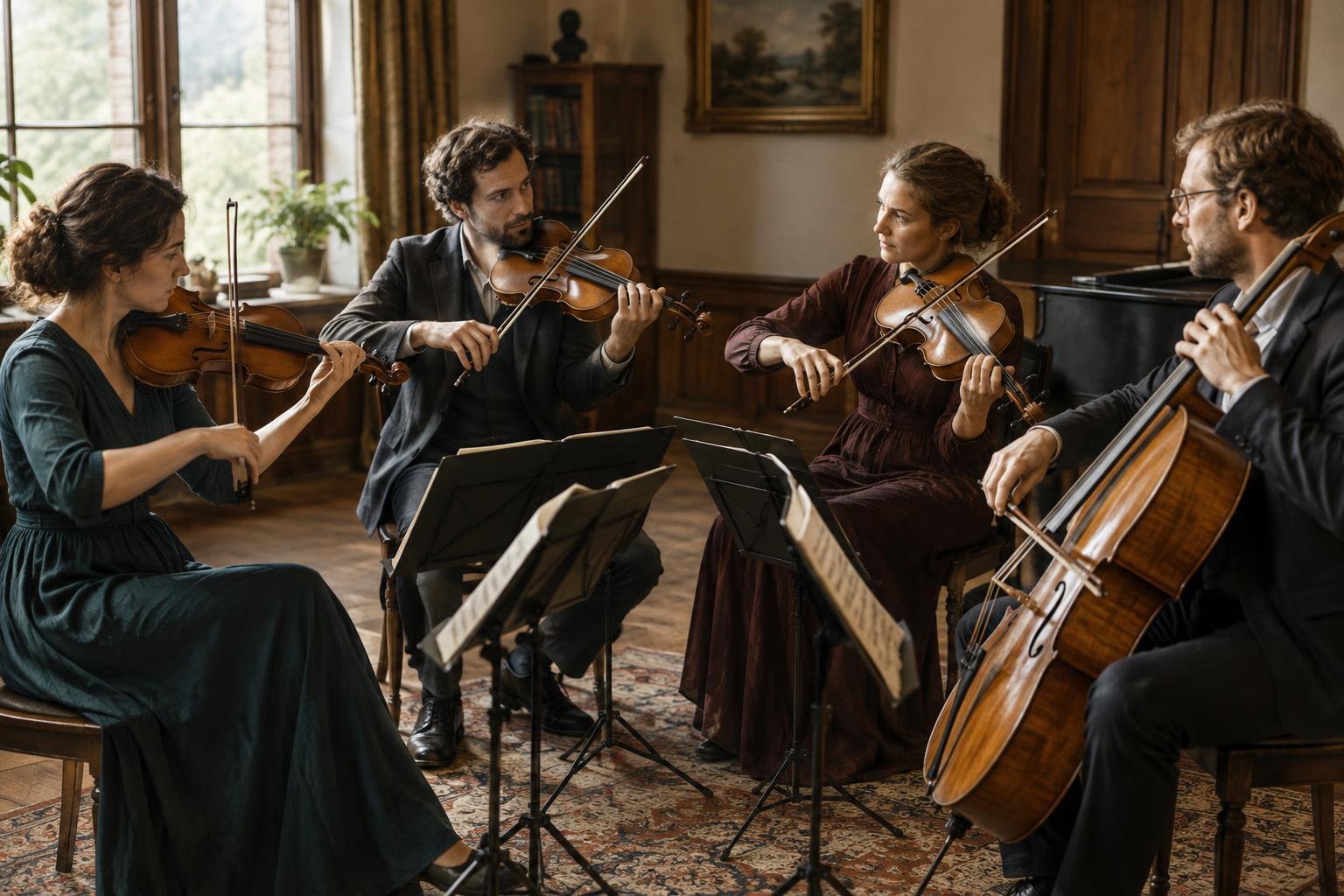
The opening Allegro begins with an urgent gesture that immediately establishes the quartet’s tense atmosphere. Rather than looking for a vocal melody, listen to how the four players exchange short ideas and shift between tightly coordinated attacks and more flowing lines. Schubert makes a small ensemble sound remarkably expansive without losing the clarity of its individual voices.
After the variations, the Scherzo brings a sharply rhythmic, vigorous contrast. Its gentler middle section, called a trio, provides a change of color before the scherzo returns. The final Presto then drives forward with quick, dance-like motion. Its speed can make it sound straightforward at first, but repeated listening reveals changes in emphasis and texture. Across the quartet, moments of softness matter partly because they stand beside such restless music.
A simple way to listen
Start with the song once, attending to the switch from the maiden’s alarm to Death’s measured reply. Next, play the quartet’s second movement and see whether you recognize the character of the song’s piano part in the opening theme. There is no need to count every variation: notice instead when the pulse feels stable, when it feels disturbed, and which instrument draws your ear.
Then hear the quartet from beginning to end. On a first pass, its strong contrasts may be easier to follow than its finer details. On a second, try listening for how the players share a phrase: a figure begun in one part may gain a new weight when another takes it up. The link to the song remains a powerful clue, but the quartet’s appeal also lies in what four instruments can do with that clue once the words fall silent.