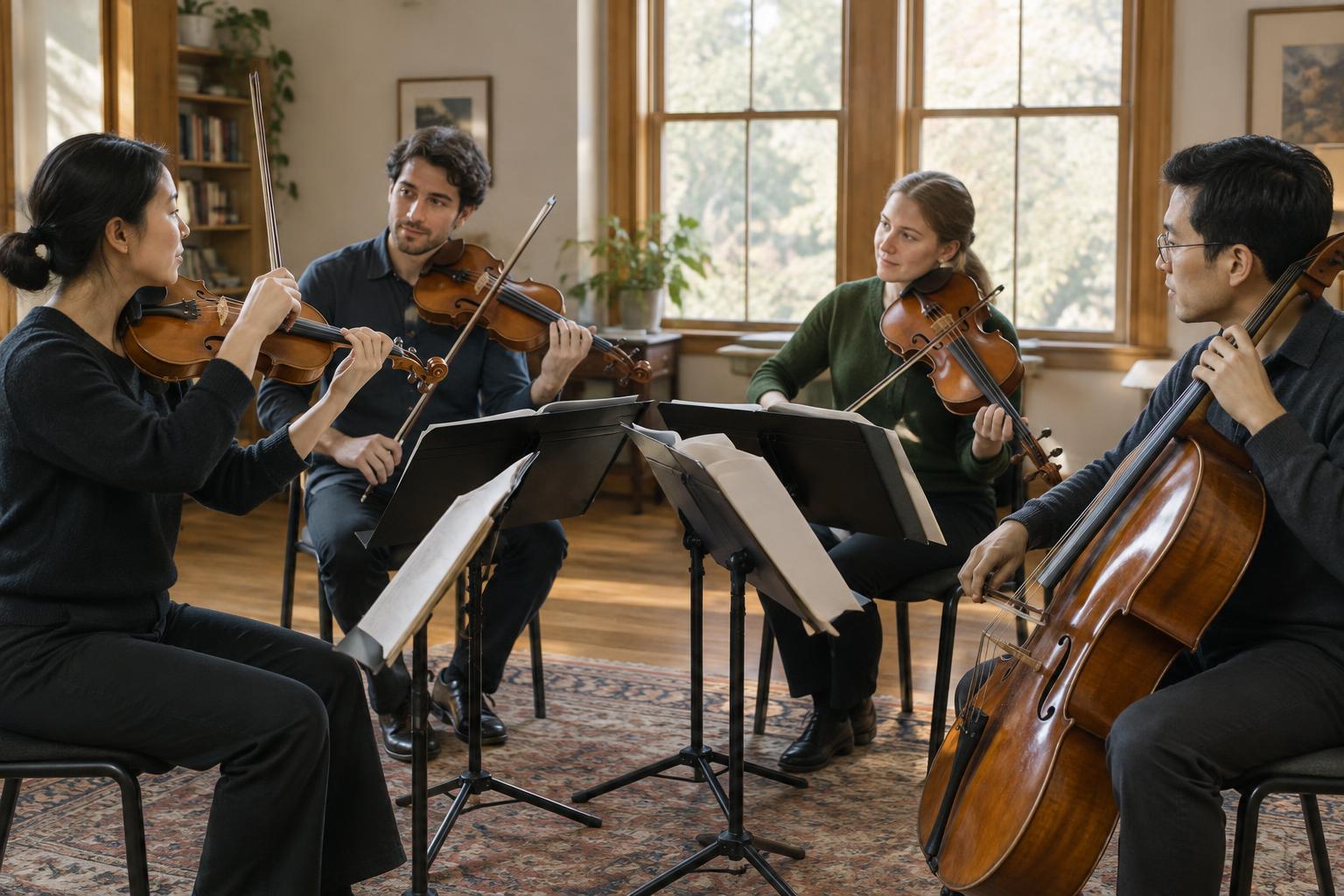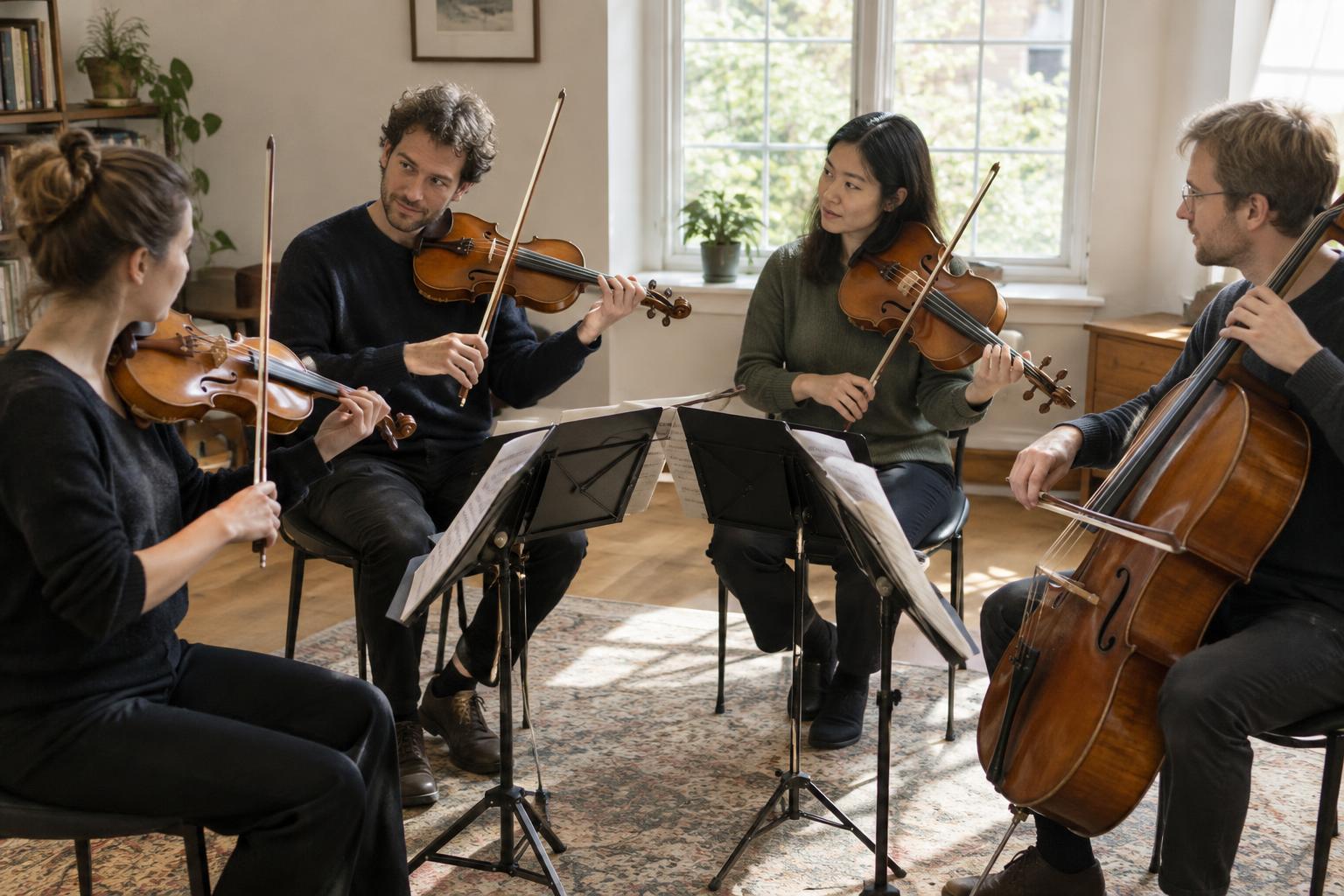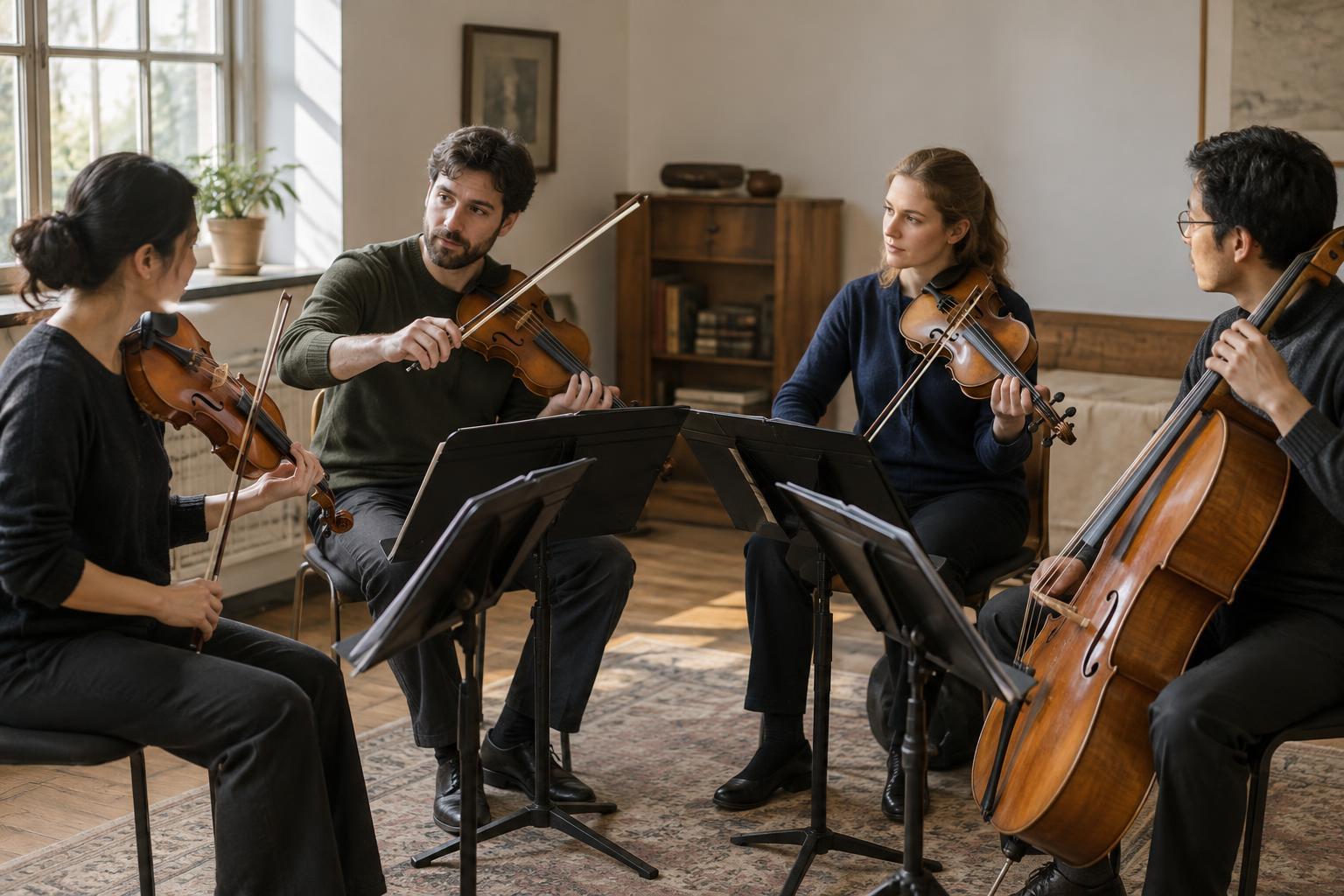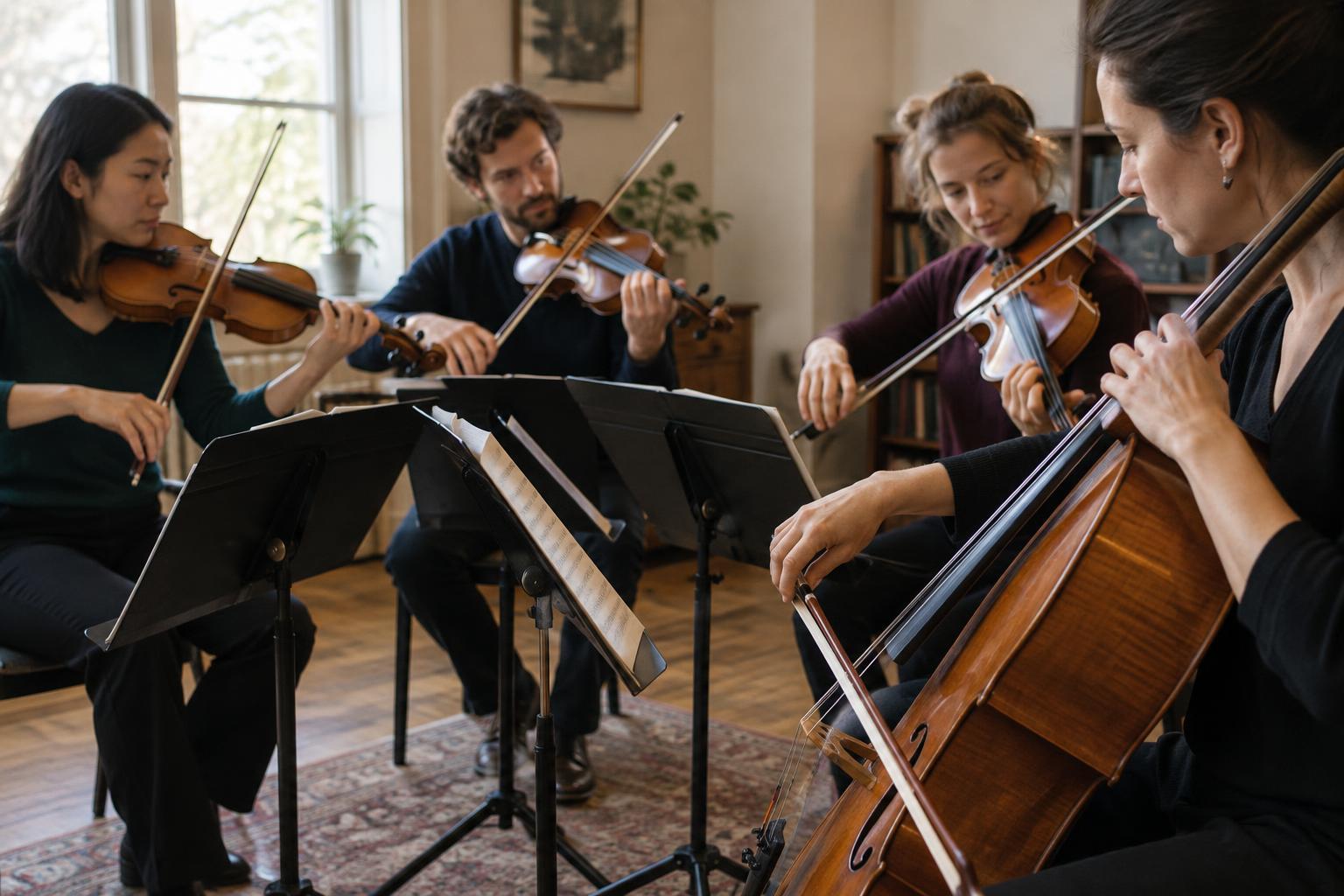
Start with the beat you could walk to
Pulse is the regular sense of motion beneath the notes: the beat you might tap gently or walk to. It is not necessarily a sound you can point to. In a string quartet, one instrument may play a long melody while another fills the space with quick notes, yet both parts can belong to the same underlying beat. The notes are what the players perform; the pulse is the steady reference that helps you hear how those notes relate.
To find it, listen through several phrases rather than deciding on the first note. Try tapping along silently. If your chosen beat makes the music feel frantic, you may be tapping subdivisions, such as two quick notes within each beat. If it feels too slow to follow, try a smaller beat. There may be more than one plausible tapping speed; for now, choose one that helps you anticipate where the next beat will fall.
Listen for groups, not just a steady tick
Meter is the way beats gather into recurring groups. Once you have a pulse, ask whether the music seems to return to a point of arrival every two, three, or four beats. Count lightly—ONE two, ONE two; or ONE two three, ONE two three—and see which pattern remains convincing across more than a single bar. You do not need a score to hear these groupings, though some passages leave room for more than one interpretation.
A strong beat need not be loud. A new harmony, a bass note, or the start of a melodic idea can make it feel like the beginning of a group. In chamber music, the clue might move between instruments: the cello outlines a repeating pattern, then the piano takes it over while the cello sustains a note. Follow the relationship among parts rather than expecting one player to mark every beat for you.
Tell three beats from two larger beats
One useful listening puzzle is the difference between three beats with two small notes in each beat and two beats with three small notes in each beat. Both can contain six quick notes before the pattern repeats. The question is where the larger beats fall. Does the music feel like ONE-and TWO-and THREE-and, or like ONE-and-a TWO-and-a? A repeating accompaniment often makes the distinction easier to hear than an expressive melody does.
Try listening for where a player leans into a new harmony or where the bass returns. Then hum the melody while keeping your larger beat steady. If the quick notes fit comfortably in pairs, a three-beat grouping may make sense; if they fit in threes, you may be hearing two larger beats. Neither test works for every passage, and performers can deliberately play against the grouping. The aim is to hear a useful organizing pattern, not to force every note to announce the meter.
Keep the pulse when the surface gets busy
A missing note on an expected beat does not mean the beat has vanished. Players may tie a sound across it, enter just before it, or accent a normally weaker position. This is part of what makes syncopation engaging: you sense the regular pulse even as the audible notes pull away from it. When you lose your place, return to a repeated figure in another instrument or wait for the next clear phrase opening instead of trying to account for every note you missed.
The same approach helps during long, quiet passages. Imagine the beat continuing underneath a sustained violin line, then check your sense of time against the next entrance. In faster passages, resist following every flourish; a run of notes can sweep across several beats without changing the basic grouping. Listening at two levels—the larger pulse and the quicker activity around it—often makes a dense texture easier to enjoy.
Allow the music to breathe
A shared pulse does not require mechanical sameness. An ensemble may ease into the end of a phrase or give a new idea a little space. Rather than assuming you have lost the beat, listen for how the players arrive together afterward. Some music also changes its grouping or makes it deliberately ambiguous. If your count stops fitting, begin again with the next clear pattern; a changed meter is one possible explanation, but not the only one.
For practice, choose a short recording and listen twice. On the first pass, find a comfortable pulse without counting. On the second, test a grouping and notice which instrument offers the clearest clues. You can do this at home with a quiet tap; at a concert, keep the beat in your head so other listeners are not distracted. Getting the count “right” matters less than hearing how the players build expectation, disturb it, and find one another again.