A plucked instrument with a long afterlife
A harp note begins with a clear pluck, then gradually fades. Unlike a bowed violin or a blown flute, the harp cannot keep adding energy to a note after it sounds. Yet its strings can continue to vibrate while the player moves on, leaving a trail of resonance. In chamber music, that combination of a precise beginning and a lingering end gives the harp several possible roles: it can mark a rhythm, outline a harmony, answer a melody or add a quiet shimmer around another instrument.
A concert harp has a wide range, but its registers do not sound identical. Lower notes can feel rounded and spacious; higher notes often have a more pointed attack. Where and how a player plucks also affect the colour. Listen to the shape of a phrase rather than treating every sweep across the strings as decoration. An arpeggio may be the harmonic foundation of the passage, or its first note may be timed to join a melody elsewhere in the group.
What the pedals actually change
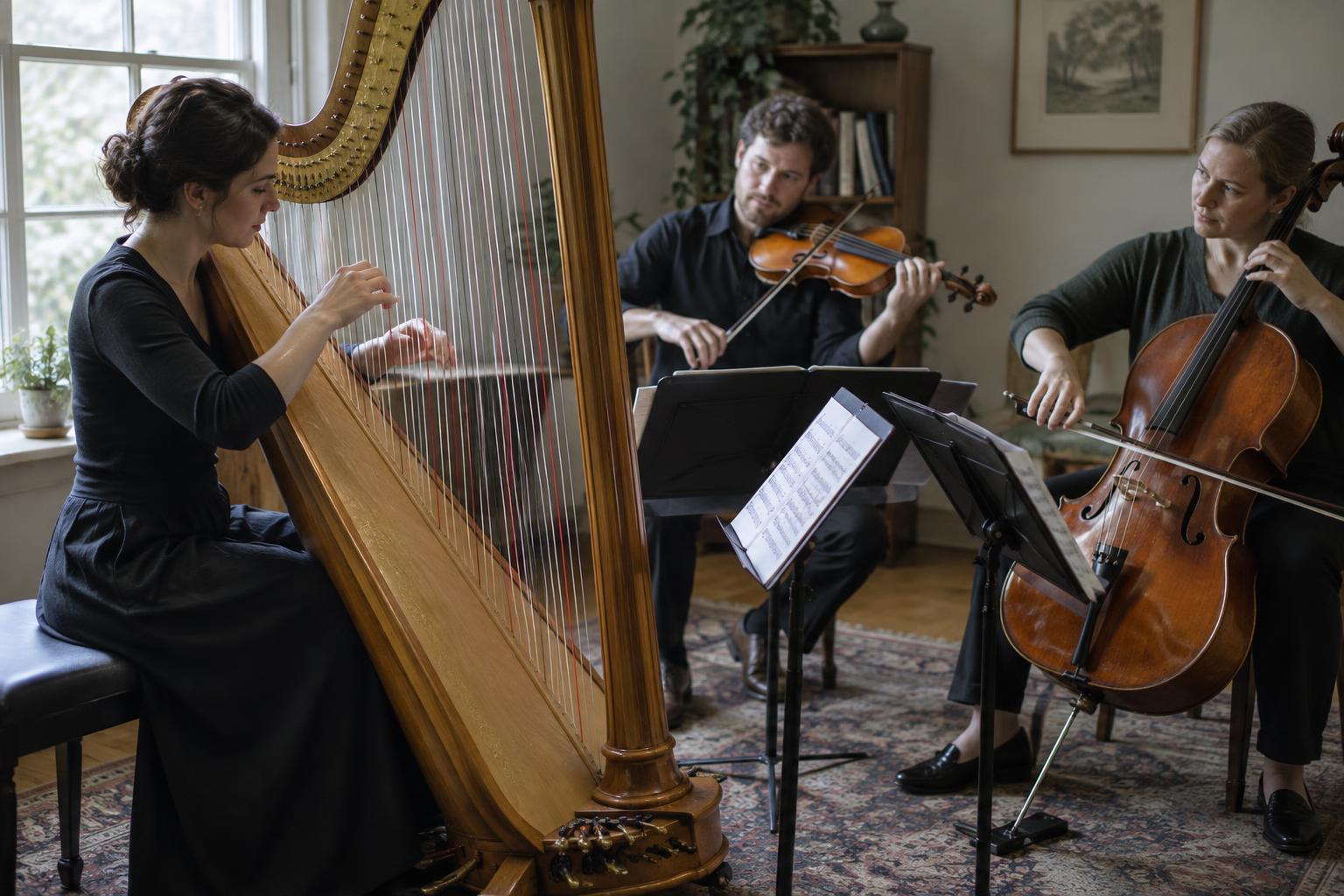
The concert pedal harp has seven pedals, one for each letter name: A through G. Each pedal has three positions, conventionally described as flat, natural and sharp. Moving a pedal changes the pitch of every string with that letter name across the instrument’s octaves. The pedals do not work like a piano’s sustain pedal: they change available pitches rather than switching resonance on and off.
That system makes pedal planning part of performance. A player may need to change one or several pedals between phrases, sometimes while the hands are busy. Notes that sound the same in equal temperament can have different spellings, such as G sharp and A flat; on the harp, those spellings can offer different fingering and pedal possibilities. This helps explain why harp writing often looks carefully arranged on the page, even when it sounds effortless. Lever harps use a different pitch-changing system, so pedal-specific details do not apply to every harp you may hear in a small ensemble.
Resonance needs tending
Ringing strings can make a small group sound unusually full. They can also blur a change of harmony. Harpists manage this by placing a hand or finger back on strings to stop their vibration, a technique often called damping or muffling. Silence, in other words, may be as deliberate as the notes. A sudden clean break before a new chord can make the next entrance feel brighter and more definite.
Pedal changes add another reason to pay attention to what is still sounding. If a string is vibrating when its pitch mechanism moves, the change may be audible. Whether that effect is welcome depends on the music. In a score, a composer or arranger can leave room for a player to quiet strings and move pedals; in performance, the harpist makes those transitions sound like part of the phrase. As a listener, try following the ends of harp notes. Do they fade naturally, disappear abruptly, or overlap to form a soft background?
Finding a place in the ensemble
The harp’s attack is easy to notice, but its fading sound may be covered by an instrument that can sustain or grow louder. A cello holding a note, a clarinet in a strong register or several strings playing together may obscure a quiet harp line. Balance therefore depends on more than asking everyone else to play softly. Register, spacing, texture and timing all matter.
One solution is to give the harp room at the start of a phrase, then let another instrument take over its sound. Another is to place its notes away from a companion’s busiest register. A harp can also strengthen a musical gesture by doubling selected notes rather than competing throughout a melody. In a live performance, players adjust articulation and dynamics as they listen to one another. The aim is not always to make the harp prominent: sometimes its contribution is a pulse or harmonic colour that you notice most when it stops.
A simple way to listen
On a first hearing, pick one short passage and ask three questions. Where does each harp note begin? How long does it remain audible? What is another instrument doing during that time? These questions distinguish a rhythmic harp part from one that supplies resonance beneath a melody. They also reveal moments when a single pluck is meant to stand out from the group.
On a second hearing, notice changes in texture. A passage of widely spaced harp notes may sound open beside a close, sustained chord in the other instruments; a quick figure may briefly become the centre of attention before receding. If you can see the player, pedal movements and hands returning to strings may offer clues, but the music makes sense without that view. Following the harp’s beginnings, endings and spaces between notes is a useful way into the whole ensemble.