The basic idea: departure and return
A rondo is built around a musical idea that returns after other material. Think of the returning idea as the refrain and the passages between its appearances as episodes. A simple outline might be A–B–A–C–A: A is the familiar music, while B and C take the piece somewhere else. You do not need to identify every letter in real time to enjoy the form. The pleasure often lies in hearing something familiar reappear after the music has changed direction.
Rondos are common in instrumental music, including movements of chamber works. They may feel lively, but speed alone does not define the form. A quick movement is not necessarily a rondo, and a refrain need not return in exactly the same way each time. The most useful question is: “Have I heard this musical idea before?”
Give the refrain a memorable identity
On a first listen, focus on the opening idea rather than trying to map the whole piece. Notice its rhythm: does it begin with a short burst, a steady pattern, or a pause before the melody starts? Listen for the melody's contour, such as a leap upward followed by a gentle descent. You might also notice a distinctive exchange between instruments. One or two features are enough to give your ear something to recognize later.
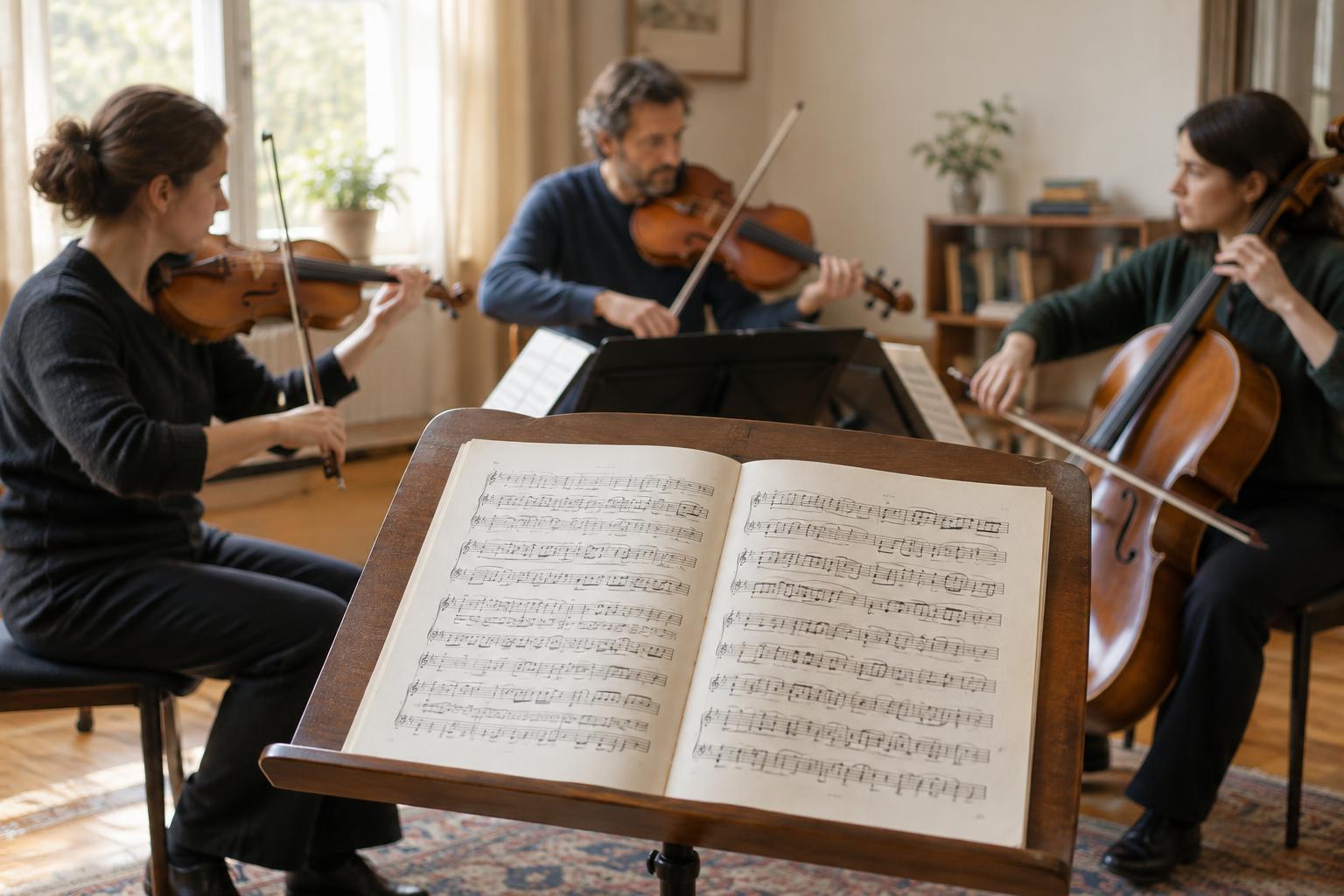
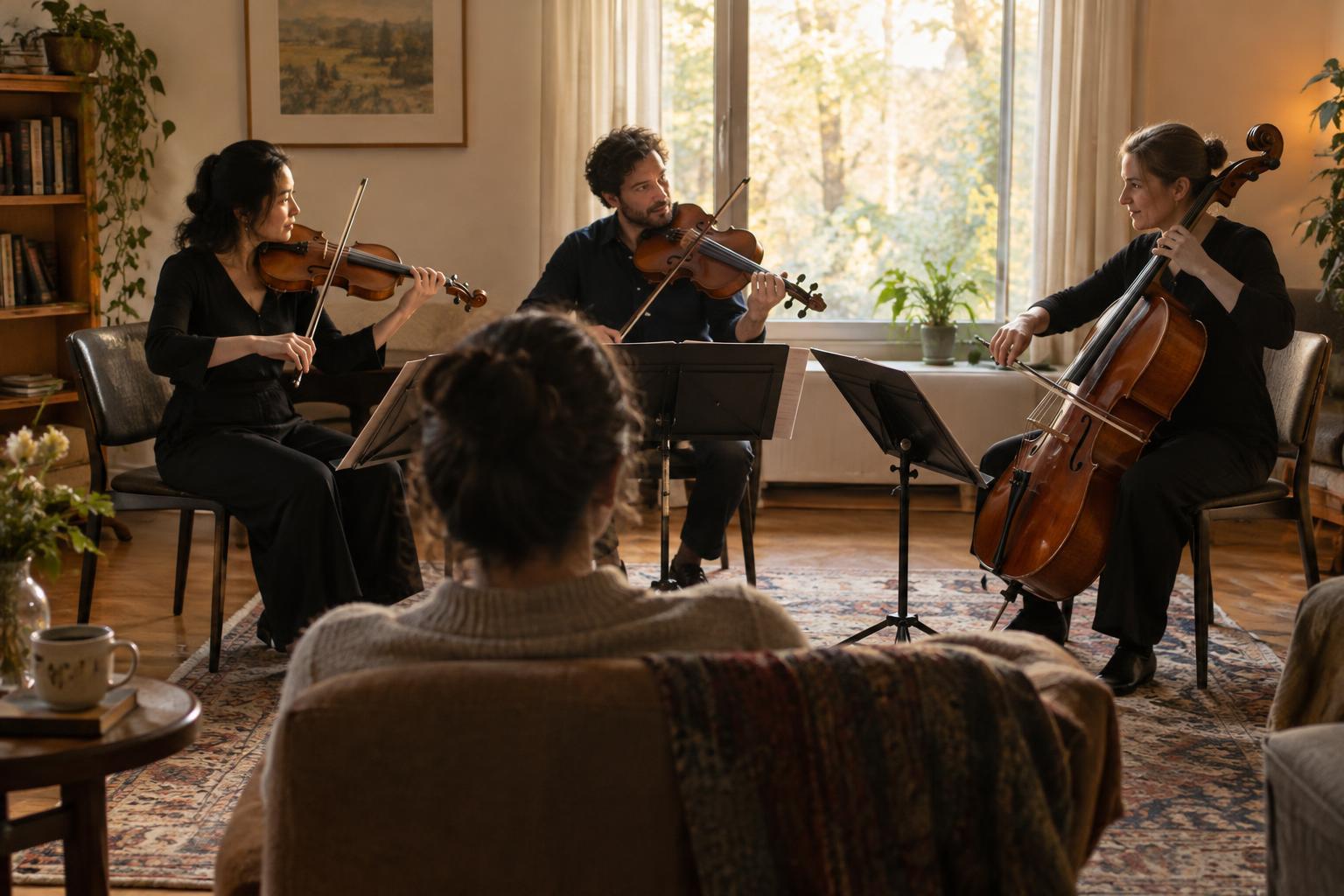
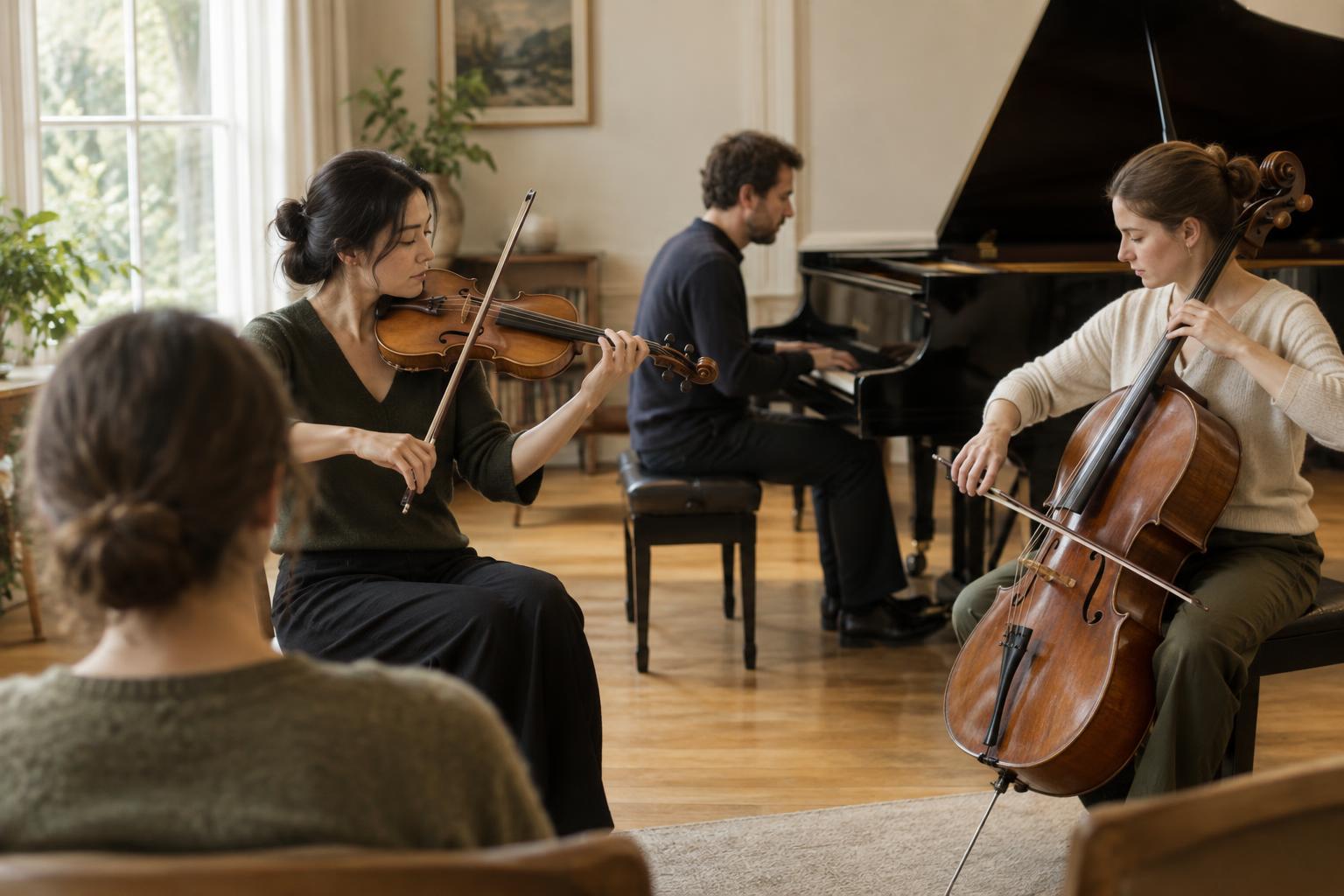
In chamber music, the melody can move from one player to another. A refrain introduced by a violin might return with its most recognizable notes in a piano part, or with a different instrument taking the lead. Accompaniment may also change. If you rely only on the original instrument's sound, you could miss the return; rhythm and melodic shape are often better clues.
Try describing the idea in your own words: “three brisk notes, then a longer note,” or “a rising phrase answered by a falling one.” This is not a formal analysis, and it does not have to be precise. It simply helps you remember what to listen for.
Hear what the episodes change
An episode creates a sense of contrast or travel away from the refrain. The change might be obvious: a new melody, a quieter texture, or a shift in character from playful to reflective. It might also be subtle. The instruments could continue at a similar pace while the music explores a different pattern or mood. Rather than waiting for a dramatic break, ask whether the idea you have been following has given way to something new.
Episodes help make each return meaningful. After a busy passage, the refrain may sound reassuring; after a gentle one, it may seem more energetic than it did at the start. Listen to the transition as well as the destination. Sometimes the players prepare the return with a pause or a flourish. At other times, the familiar idea arrives with little warning, making recognition part of the fun.
Not every section between refrains is neatly separate. Composers can borrow a fragment of the main idea while developing other material, blurring the boundary between departure and return. If you are unsure where an episode begins, keep listening for the full, recognizable refrain instead of trying to mark an exact dividing line.
Expect familiar music with a different face
A returning refrain is not always a replay of the opening. It may be shorter, decorated with extra notes, placed in a new register, or shared differently among the instruments. These changes can make a rondo harder to label on a single hearing, but they also reward close listening. Ask what stays constant beneath the altered surface: the opening rhythm, the shape of a phrase, or the way a question-like gesture receives its answer.
It also helps to distinguish a return from a general resemblance. A piece may reuse a short rhythm throughout without bringing back the whole refrain. Conversely, a refrain may begin with only a partial reminder before its more familiar phrase appears. Let the music make its case over several measures. Recognition often becomes clearer once the idea has had time to unfold.
A simple listening exercise
Choose a movement identified as a rondo and listen once without taking notes. On the second hearing, write “A” when you recognize the main idea and a new letter when you hear a substantial contrasting passage. Your rough outline might look like A–B–A–C–A, or it might include an extra departure or a return that seems changed. The goal is not to produce a perfect diagram; it is to notice how recognition shapes your experience.
On a third hearing, follow one question: what is different each time A comes back? Perhaps the surrounding episode changes how you perceive it, or the players alter its texture. If a return escapes you, go back to the opening and refresh your memory of its rhythm and contour. Over time, the letters become less important than the sensation they describe: leaving a familiar musical place and finding your way back.