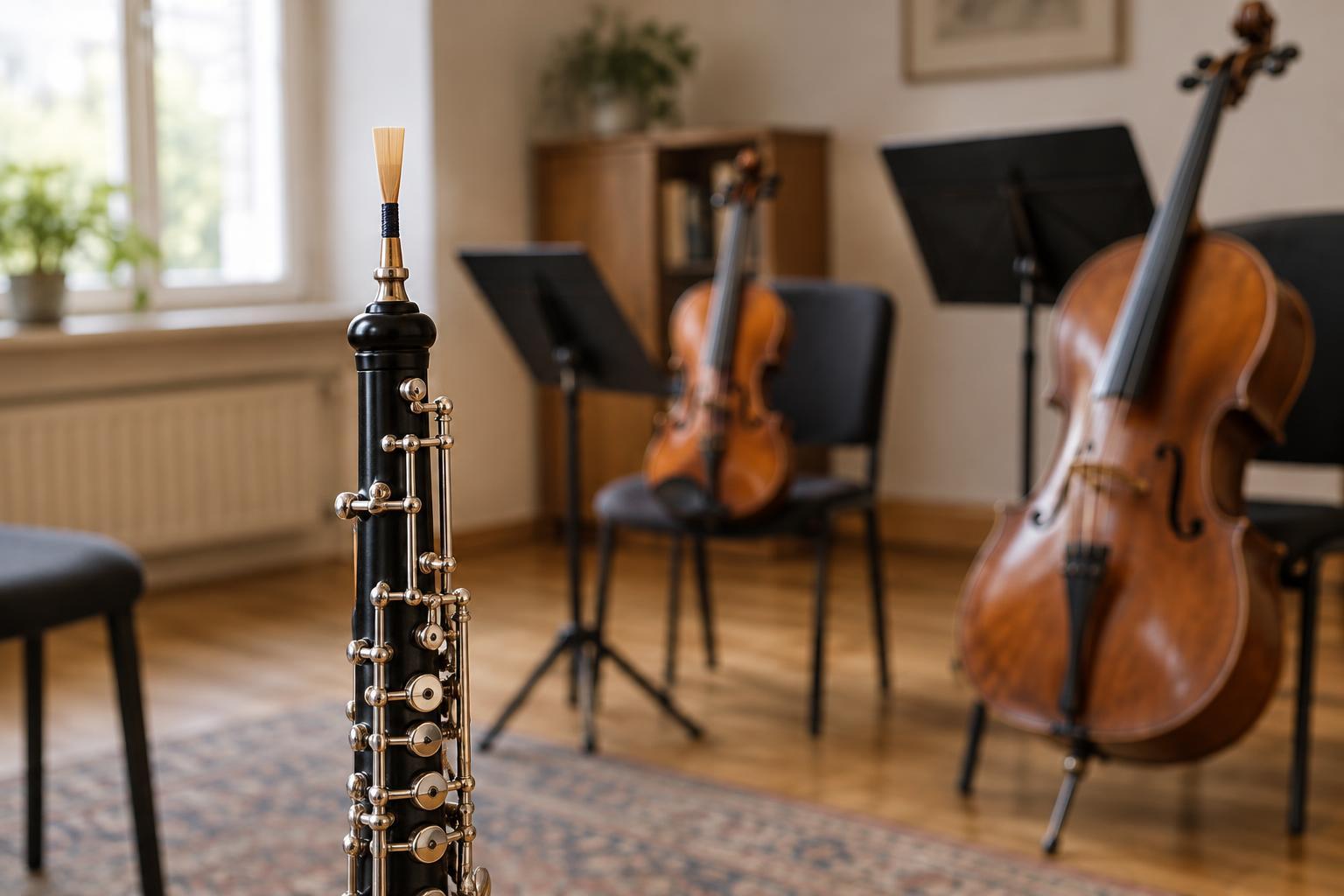
A voice that can change roles
In chamber music, the cello is easy to recognize when it plays a long, singing phrase. Its role is less obvious when it supplies a quiet pulse or slips between notes played by other instruments. That flexibility is part of what makes it so important to a small ensemble. Rather than serving as a permanent bass instrument, the cello can lead, support, answer and connect.
Its four strings are tuned C, G, D and A, from lowest to highest. That range gives a composer room to write a deep foundation and, higher up, a more prominent melodic line. The cello’s sound changes with its register and with the way the player uses the bow. A low note may feel like an anchor; a phrase on a higher string may seem to step forward. Listen for those changes of position within the group, not just changes in volume.
The bass line is more than a backdrop
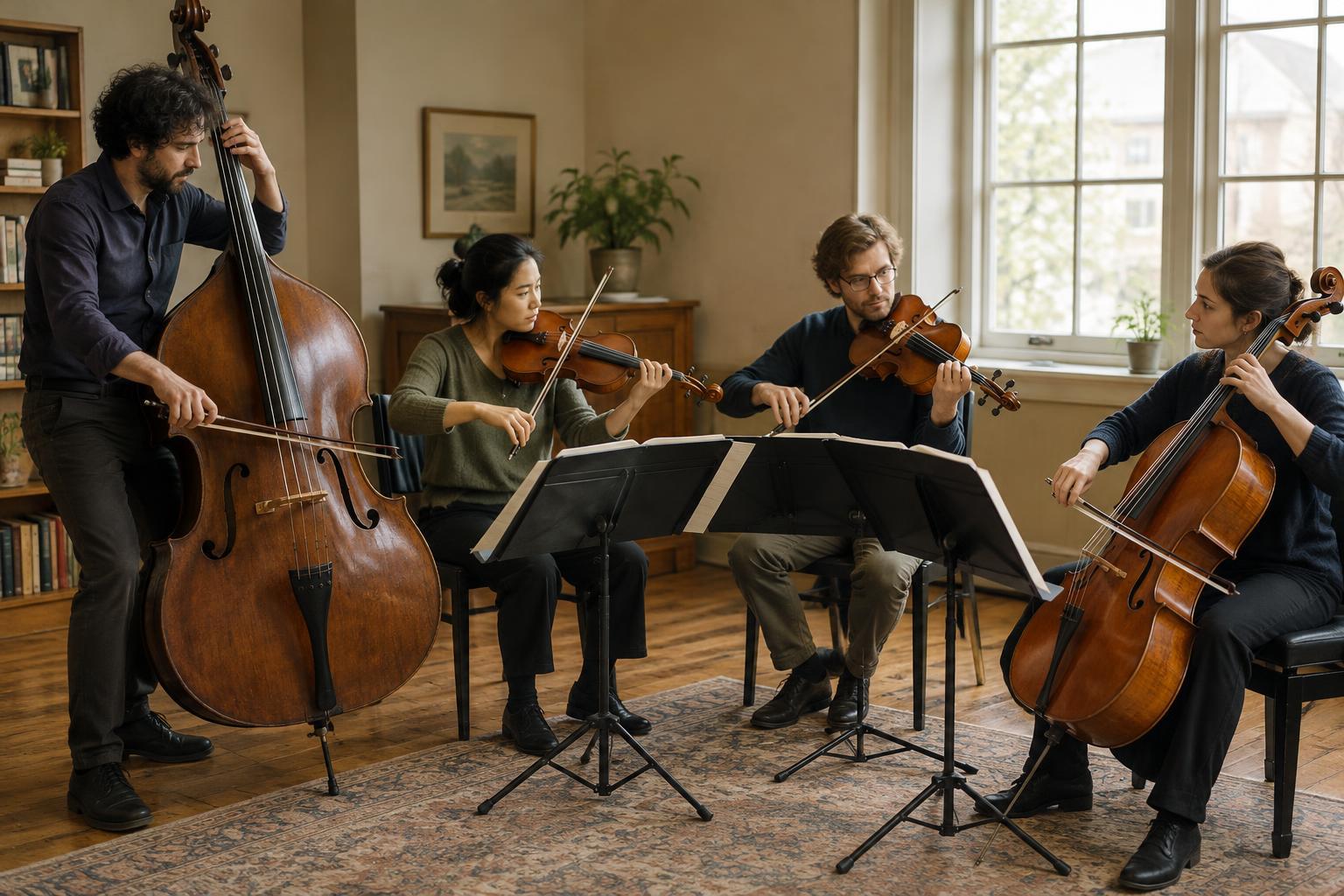
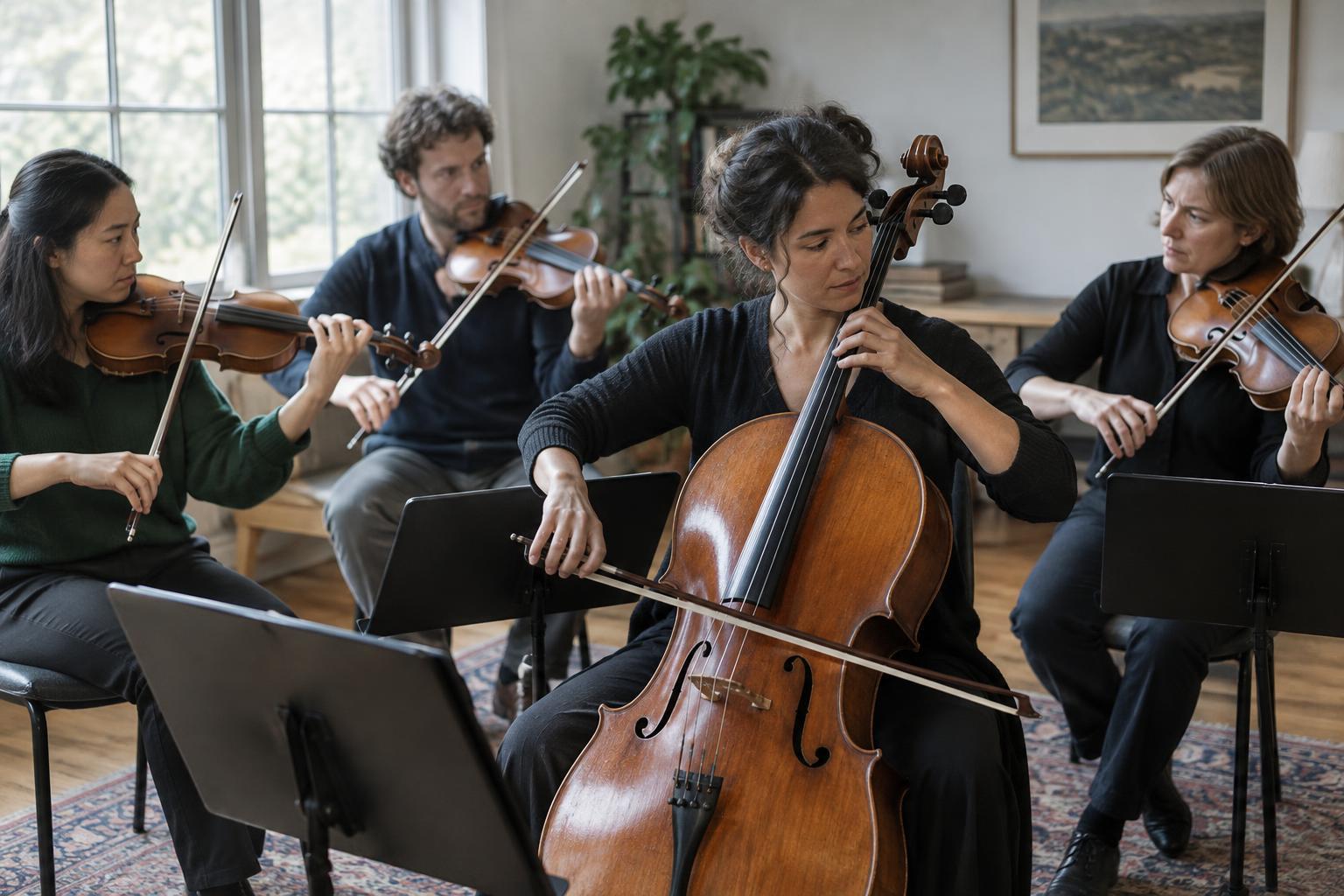
In a string quartet, the cello often plays the lowest line beneath two violins and a viola. Those notes help listeners hear where a harmony settles and when it begins to move. The bass may mark steady beats, trace a smooth path from one chord to the next, or leave space with a few carefully placed notes. Even a simple repeated figure can give the other players something to push against.
Try following only the cello through a short passage. Does it land on a note as the phrase comes to rest, or move onward while the upper parts hold still? Does it play on every beat, or make the rhythm feel spacious by playing less often? These details can change how a passage feels without drawing attention to themselves. Supporting a group is an active musical role: the cello helps shape the direction and weight of the whole conversation.
When the cello takes the melody
A cello melody need not begin with a dramatic solo. Sometimes an upper instrument states an idea first and the cello repeats it from below. At other times, the group thins its texture so a cello phrase can be heard clearly. Listen for a line with a recognizable beginning, development and ending. If the violins or piano seem to be accompanying rather than introducing new ideas, the cello may have become the principal speaker.
A melody played by the cello can sound different depending on where it sits. In its middle register, it may blend closely with the viola; higher passages can stand apart from the bass line listeners expect. Bowing matters, too. Connected notes can make a phrase feel continuous, while shorter strokes can give it an insistent character. None of these effects belongs to the cello alone, but its broad range makes the contrast between them particularly noticeable.
The parts between melody and bass
Not every cello part fits neatly into one of those two categories. It might play an inner line while a violin carries the tune and another instrument supplies the lowest notes. It might offer short replies between phrases, hold a note that ties changing harmonies together, or double another player briefly before moving away. These moments can be easy to miss because their purpose is often to make the ensemble sound coherent.
A piano trio offers a useful example of changing roles. The piano can play low notes of its own, freeing the cello to join the violin in a duet or to weave a separate line around it. The cello may then return to the bass a few measures later. In such music, asking “Who is playing lowest?” is often more revealing than assuming the answer. The player with the lowest notes, the player with the melody and the player shaping the rhythm can all change as the passage unfolds.
A simple way to listen for the cello
On a first hearing, choose one task: notice each time the cello changes roles. You do not need to identify every note. Begin by listening for its lower sound beneath the group. When it becomes harder to find, check whether it has moved higher, fallen silent or blended with another instrument. Then listen for exchanges: does another player finish a phrase the cello started, or does the cello answer an idea heard above it?
On a second hearing, pay attention to texture. A bowed note can sustain through changing activity around it, while a plucked note, called pizzicato, has a shorter, more percussive effect. Notice whether the cello’s playing makes the music feel grounded, restless or open. These are listening impressions rather than fixed rules, but they give you a way into the piece. The more you follow the cello’s movement between foreground and background, the more chamber music begins to sound like an exchange among equals.