A small reed with a large role
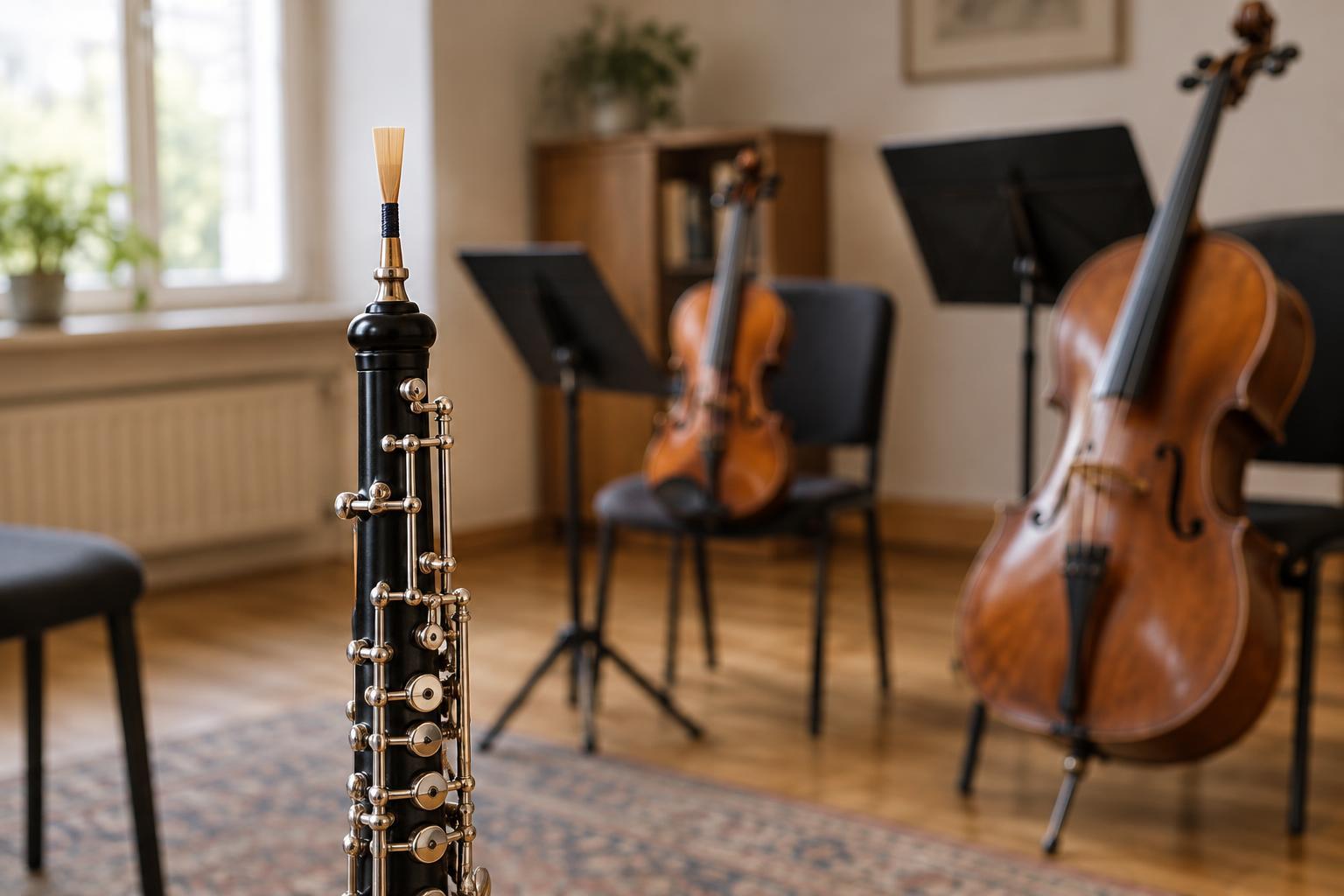
An oboe reed consists of two thin blades of cane bound together at their base. When the player blows, the blades vibrate against each other and set the air inside the instrument in motion. This is different from a clarinet’s single reed, which vibrates against a mouthpiece. The oboe’s bore, fingerings and player all affect the result, but the double reed is the first point of contact between breath and sound.
Because the reed is small and held directly between the lips, subtle changes in breath support and lip pressure can be audible. A player can shape the beginning of a note, give a phrase more urgency or let it taper gently. The reed also offers resistance: producing an easy, singing tone takes control rather than simply blowing harder. In chamber music, where every instrumental line can be heard, those small adjustments become part of the conversation.
Why the oboe can sound so present
Listeners often describe the oboe as clear, focused or slightly penetrating. Its sound contains upper harmonics that help it remain recognizable beside strings, piano or other winds. That does not mean it always has to be loud. An oboe playing softly may still seem close to the listener because its tone has a distinct edge.
The reed contributes to this character, though no two reeds respond in exactly the same way. A reed that feels freer may allow a different balance of warmth and brightness from one that feels more resistant. Players adjust their reeds and their technique to find a workable response across the instrument’s range. For listeners, the useful point is not to identify a particular reed but to notice how the tone changes: a low note may sound earthy, a sustained middle-register note may feel vocal, and a high note may cut cleanly through the texture.
Articulation makes a musical sentence
A double reed responds to both the tongue and the flow of air. When an oboist begins a note, the tongue can release the reed crisply; with a gentler release and connected breath, the entrance can feel more rounded. Short notes may sparkle in a quick exchange with a violin or flute, while connected notes can carry a long melody across several changes of harmony.
Try listening to where each note starts rather than concentrating only on its pitch. Are repeated notes evenly separated, or does one seem to lean toward the next? Does the player leave a little space before another instrument answers? In a small ensemble, these choices help define a phrase’s rhythm and character. The reed makes them especially noticeable, but effective articulation is also a shared decision: the oboist must fit the timing and weight of other players’ sounds.
Breath, tuning and blend
Sustained oboe lines often sound remarkably continuous, yet they are shaped by the practical need to breathe. An oboist may plan a breath where a melody pauses or another instrument briefly takes over. When the line resumes, the reed has to respond at once. That combination of continuity and renewed attack can make a phrase sound like speech: it has punctuation without losing its direction.
Blend presents another chamber-music challenge. The oboe can join a string line without disappearing into it, or add definition to a wind chord. Players listen closely to pitch, volume and tone color, making small adjustments as the harmony moves. Tuning is not a fixed setting established before a piece begins; it is something musicians continually negotiate by ear. A reed’s response can influence how comfortably an oboist makes those adjustments, while the surrounding instruments and musical context matter just as much.
A simple way to listen in an ensemble
In an oboe-led passage, follow one melody through its entrances, long notes and releases. Notice whether the instrument sounds bright and insistent or gentle and contained, and how that quality changes when a violin, cello or piano takes up the same idea. Then listen again for the moments when the oboe is not leading. It may reinforce another line, supply a brief answer or add a color that becomes apparent only when it stops.
There is no need to hear the reed in isolation to appreciate its effect. Its close connection to the player’s breath helps give the oboe a flexible, recognizable voice, while chamber music reveals how that voice behaves among others. The most rewarding question is often not “What does an oboe sound like?” but “What is the oboe doing to this musical conversation?”