Start with the event, not the age label
Children do not all enjoy concerts in the same way. One may watch a string quartet intently; another may love the sound but struggle to sit still. Rather than looking for a universal “right age,” think about your child’s comfort with seated activities, unfamiliar spaces and sustained listening. A first visit can be an experiment, not a test.
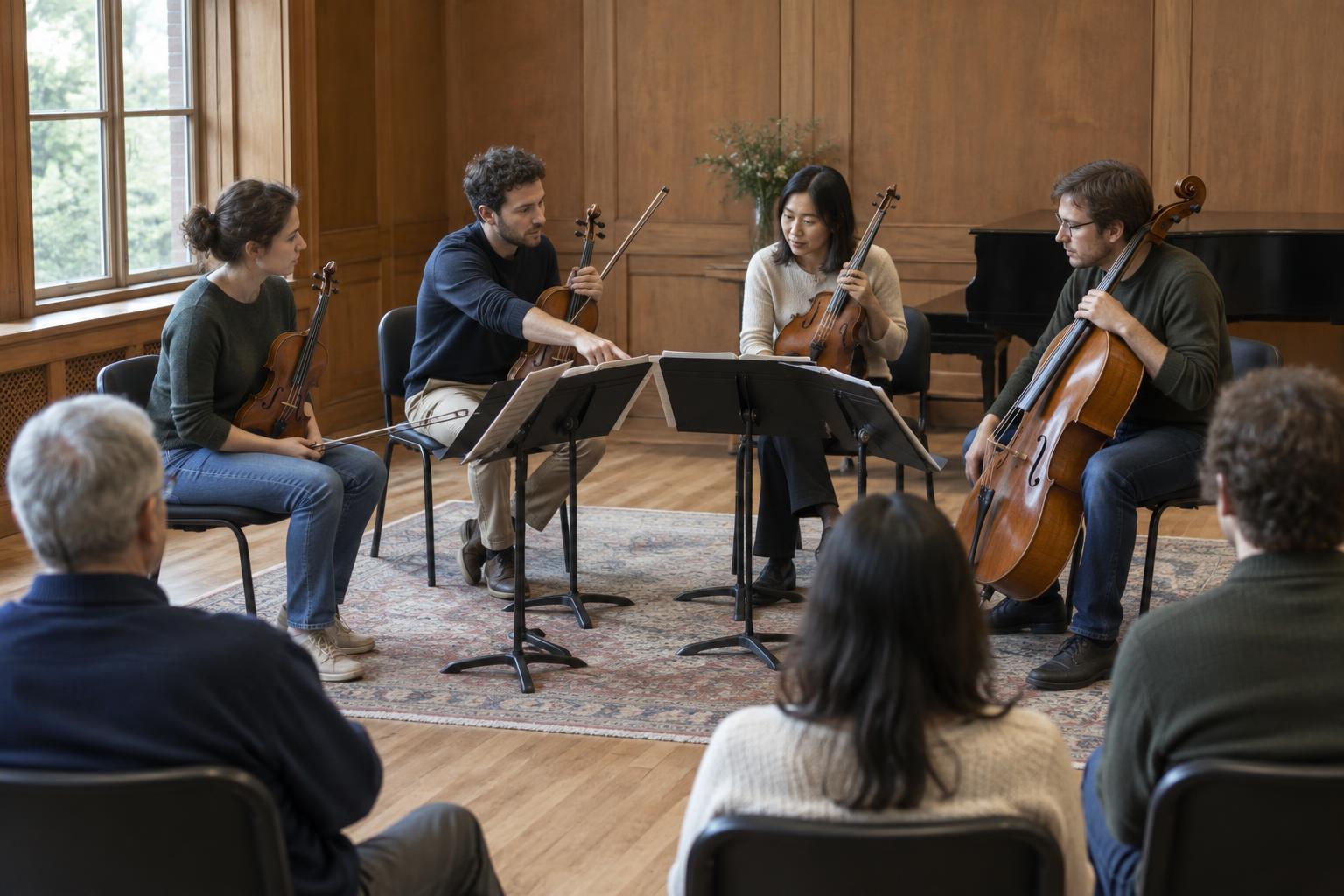
Family concerts and informal performances can be good starting points because they may offer spoken introductions, shorter pieces or a more relaxed atmosphere. An ordinary chamber concert can also work, especially if its advertised length suits your child. Before booking, check the venue’s guidance on children, the running time, whether there is an interval and whether leaving and re-entering is permitted. If those details are unclear, ask the venue directly rather than assuming every concert follows the same rules.
Choose a manageable listening experience
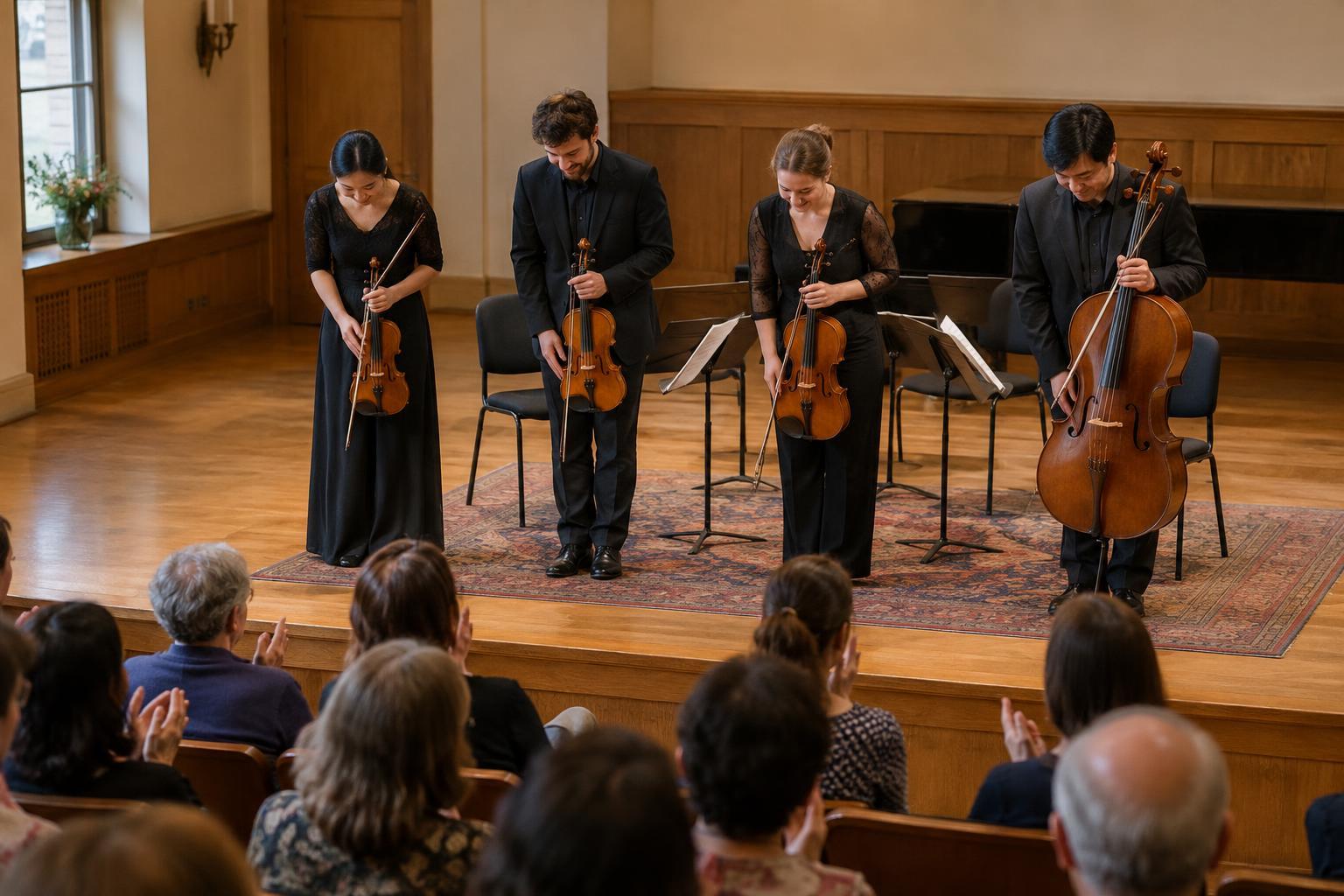
A short program is often easier for a first outing than a full evening, but length is only one consideration. Chamber music brings a small group of players into focus, which can help a child connect a sound with the person making it. A program featuring a familiar instrument, such as a piano or violin, may give you an easy way to talk about what you will hear. You do not need to explain every piece beforehand.
If the program includes several works, pick one small thing to listen for together: a melody passed between players, a sudden quiet moment or a change from fast to slow. Present it as an invitation, not a task. A child who mainly notices the players’ bows or the way musicians look at one another is still observing part of the performance. If your child is sensitive to sound, consider where you will sit and whether the event’s setting seems comfortable for them.
Make the venue easy to navigate
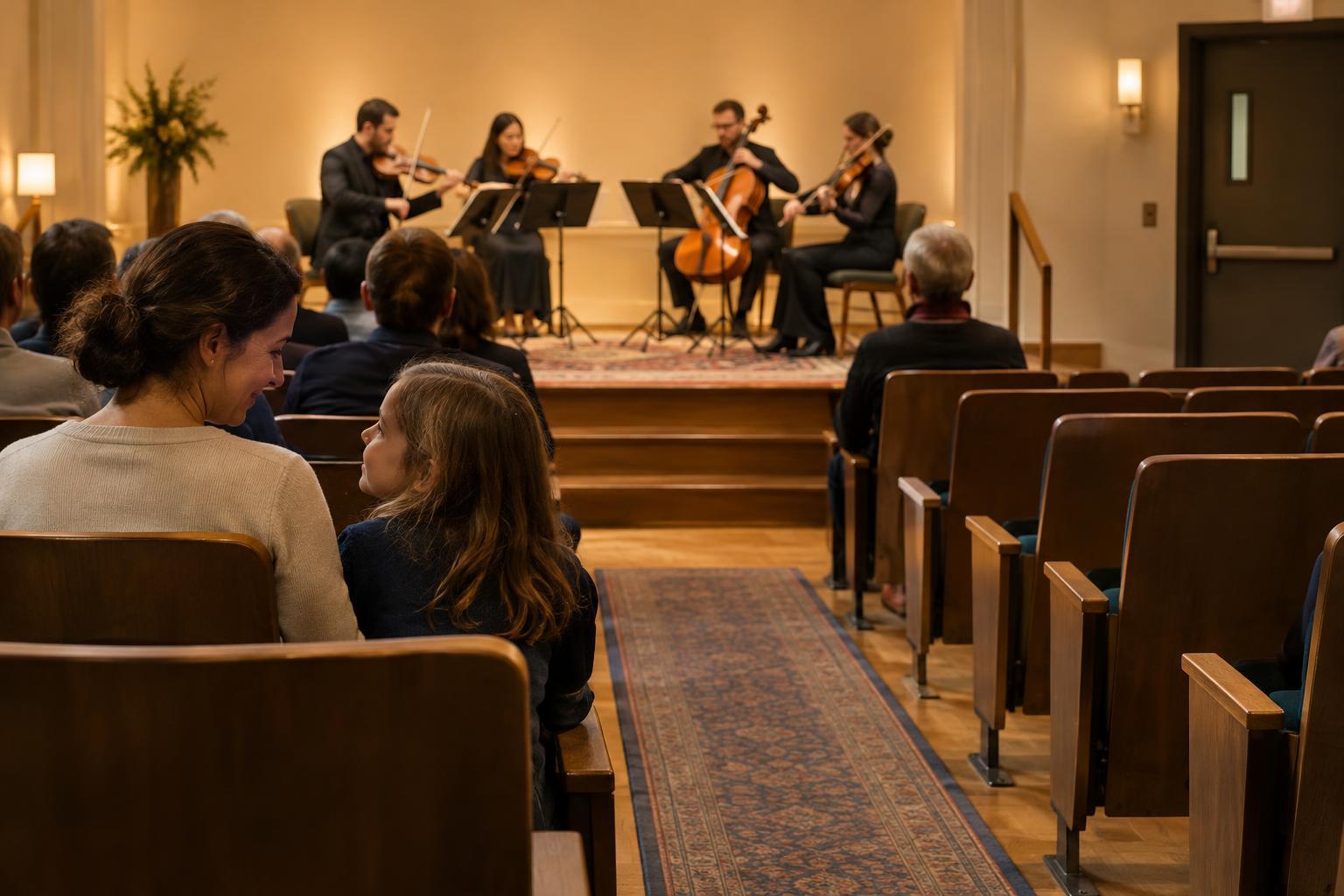
Arriving with time to spare gives you a chance to find the entrance, toilets and your seats without a rush. If you can choose seats, a place near an aisle may make a quiet exit simpler. Check whether the nearest door leads directly into the hall or through another space, and ask an usher where to go if you need a break. Some venues have a foyer where you can wait; others have more limited space.
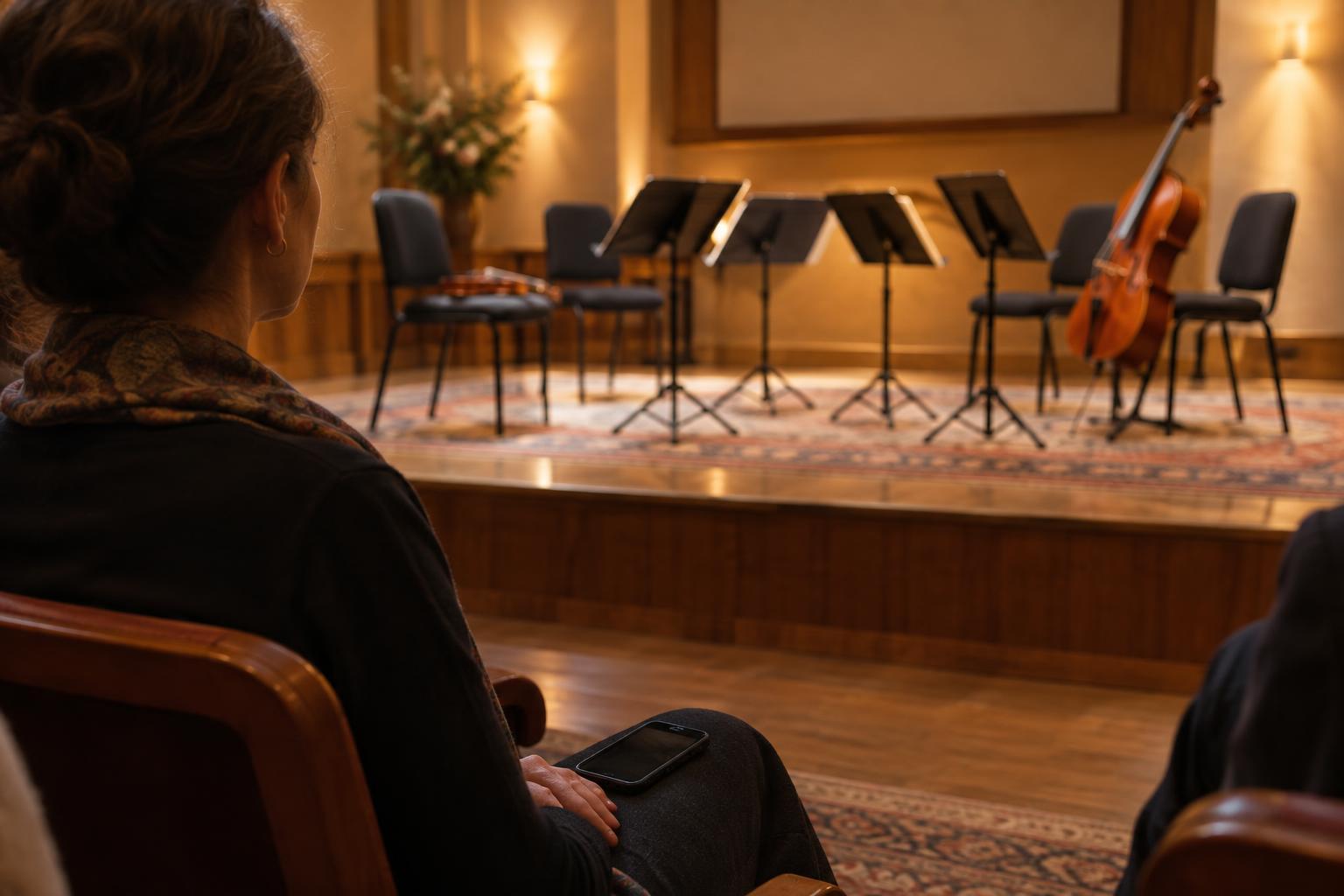
Tell your child what the visit will be like in simple terms: people will sit together, the musicians will play, and there will be times to listen quietly. Explain that you can step outside if they need to move or talk. A drink or a quiet activity may be useful before the performance or during an interval, but check the venue’s rules before bringing anything into the hall. Putting away bright screens and noisy objects helps everyone focus on the music.
Plan breaks before you need one
A break plan removes some of the pressure from both adult and child. Decide in advance what signs might mean it is time to leave the hall: repeated questions spoken aloud, restlessness that is becoming uncomfortable or a request to go out. You can agree on a small signal, such as a tap on the arm, so your child does not have to explain themselves during a quiet passage.
If you need to leave, follow any usher guidance and use a natural pause when possible. There is no need to wait through a long piece if your child is distressed. Once outside, offer water, a toilet visit or a few minutes to move around. Find out whether re-entry is allowed and when it can happen; some halls ask latecomers and returning listeners to wait for a suitable break. Leaving early is also a reasonable choice. It does not make the outing a failure.
Let the experience continue afterward
After the concert, ask open questions rather than checking how much your child remembers. Which instrument caught their attention? Did any part feel exciting, strange or too long? Their answer may help you choose a future event, and it tells them that listening can be personal. If the concert was difficult, you might try a shorter performance next time or listen to a piece at home before returning to a hall.
A successful first visit need not mean staying silent for every note or hearing the entire program. It can mean discovering how a live instrument sounds, learning when to take a break and feeling welcome to try again. With a suitable event and permission to be flexible, families can make room for both the music and the child’s needs.