Start with the instruments
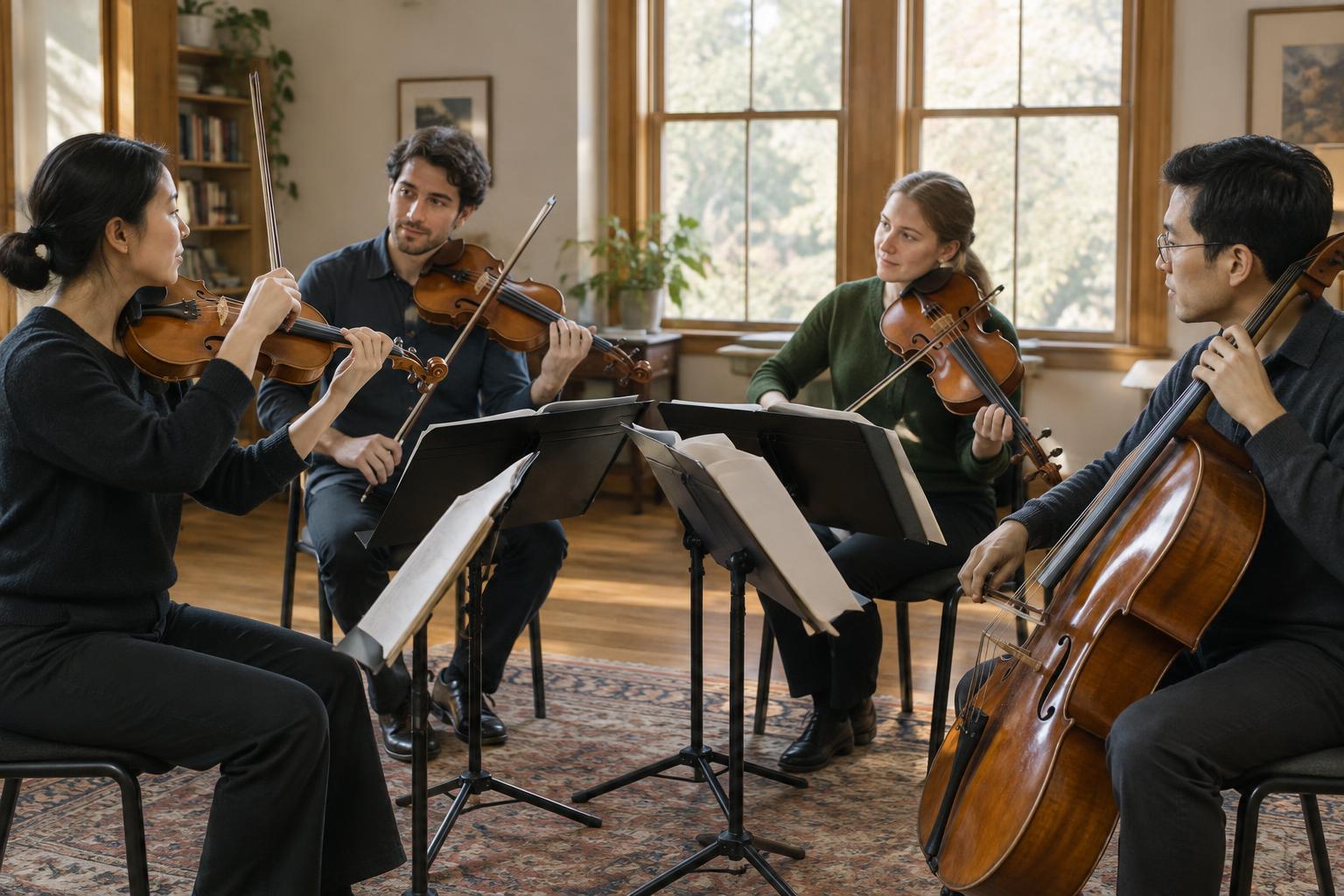
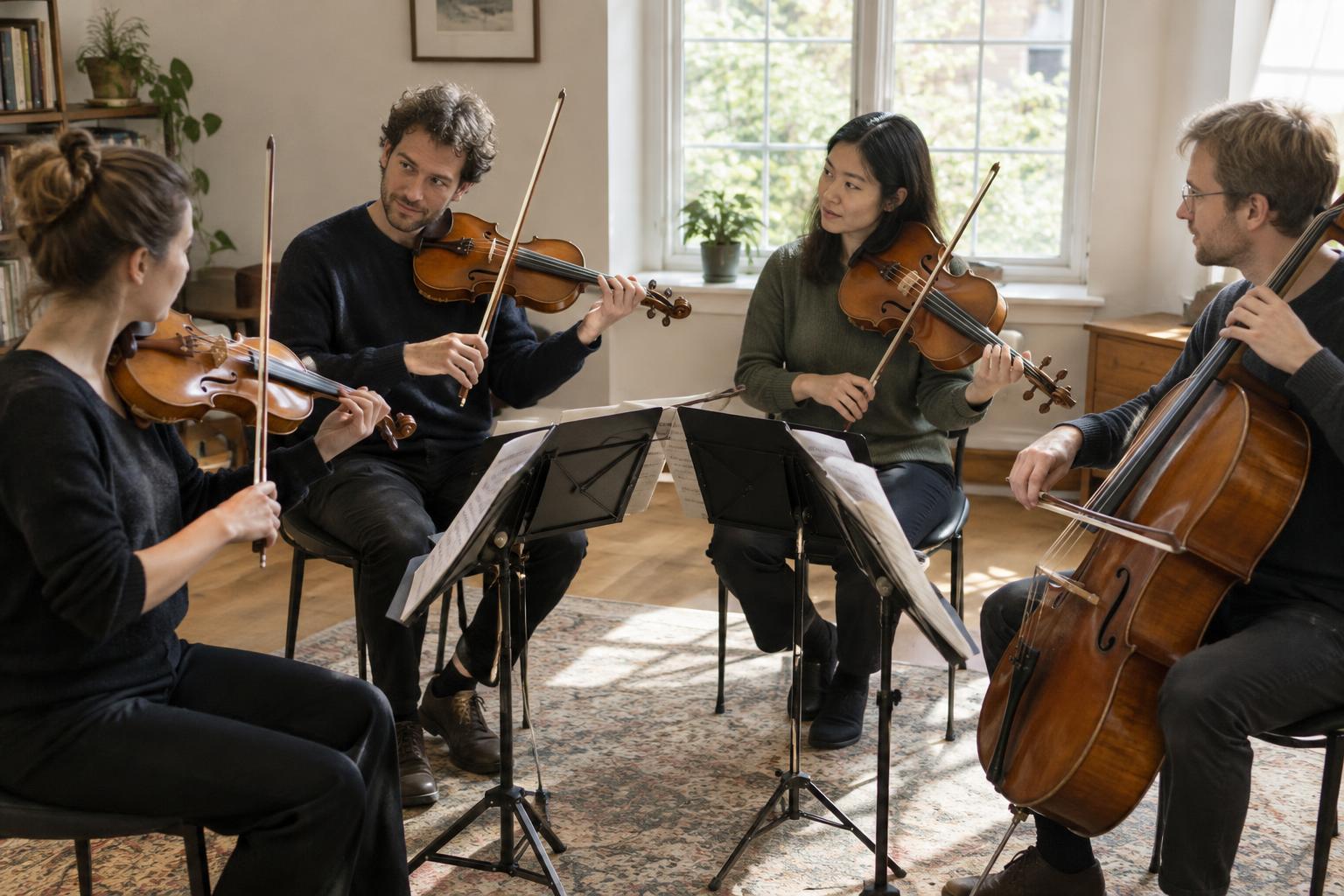
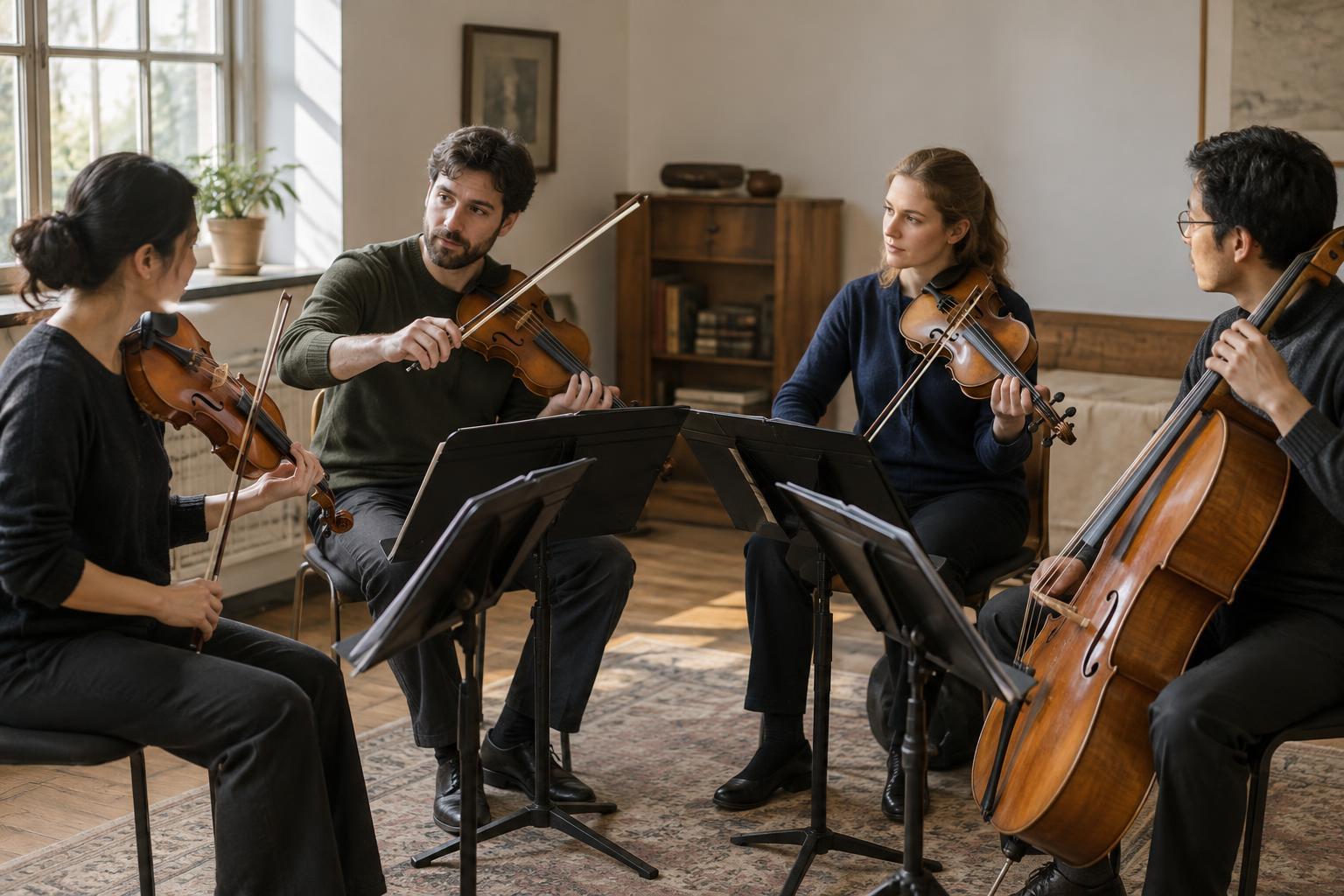
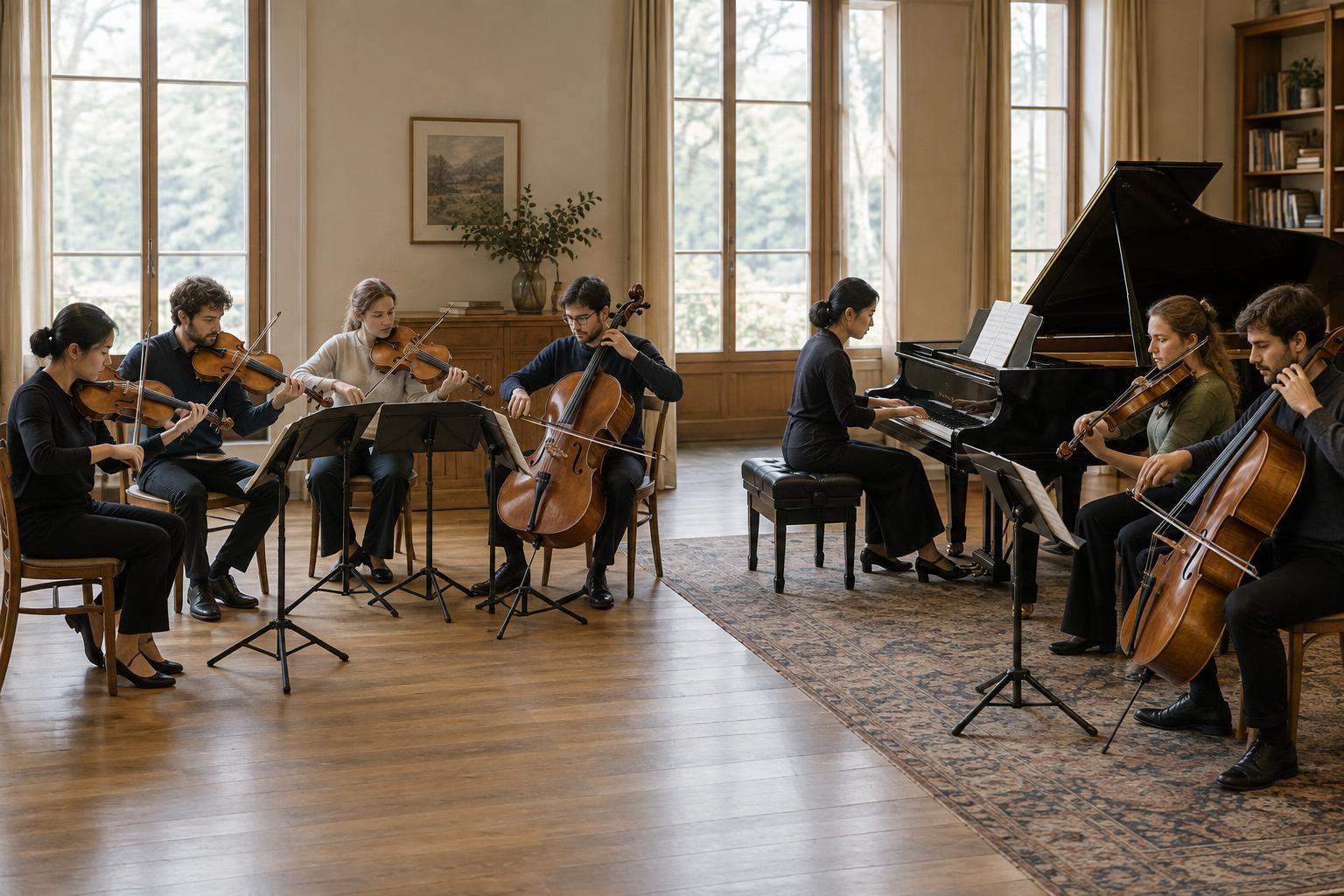
A string quartet has two violins, a viola and a cello. A piano trio has a violin, a cello and a piano. That small change in the lineup makes a large difference to the sound. The quartet’s four instruments all produce notes with bows or plucked strings. In the trio, two bowed instruments share the space with a keyboard that can play many notes at once.
Neither ensemble has a fixed hierarchy. A first violin may carry a quartet’s opening tune, only for the viola or cello to take it over. In a piano trio, the piano may introduce the main idea, provide a quiet backdrop or answer the strings. Rather than listening for a permanent lead instrument, notice who has your attention from one phrase to the next.
Hear how notes begin and end
One of the clearest differences is sustain. A bowed string player can keep a note sounding and shape its volume while it lasts. Four string players can therefore build a continuous sound, pass a held note between instruments or let several lines swell together. Listen for a melody that seems to grow after it begins: its changing tone can be as expressive as the pitches themselves.
A piano note works differently. Once the hammer strikes the string, its sound begins to fade. A pianist can use the sustain pedal to let notes ring together, but cannot swell a single held note in the same way a bowed string player can. This gives a piano trio a particular interplay between the piano’s attacks and the violin’s and cello’s sustained lines. A short piano chord may set a phrase in motion while a string melody continues beyond it.
Follow the texture, not just the tune
A string quartet offers four separate lines with closely related sounds. When the players match their articulation, they can seem to speak as one instrument. When each line has its own rhythm, the result can feel like a lively discussion. Try following the viola for a few moments: its part may connect a high violin phrase to the cello’s lower notes, even when it is not playing the tune.
In a piano trio, the piano can supply a bass line, inner harmonies and a melody at the same time. That range allows one player to fill out the texture while the violin and cello move independently. It can also make the piano easy to notice, especially when it plays strong chords. Listen past those chords to hear what the strings are doing: they may be supporting the harmony, trading small figures or pulling the music in a new direction.
Notice what drives the rhythm
Rhythm can feel different when every player produces sound with a bow. In a quartet, a repeated figure might move from violin to viola to cello without a sharp change of tone. The players can make the pattern feel buoyant or urgent by changing the length and emphasis of each note. Even a quiet accompaniment may have a sense of motion.
The piano can give a trio a more distinct rhythmic edge. A low note followed by a chord, or a run of quick notes under a long violin phrase, can make the beat especially clear. But the piano need not be the ensemble’s engine. A cello pulse may anchor the music while the pianist plays lightly around it. Ask yourself which part is setting the pace and whether that role changes.
Try a simple listening comparison
To hear these differences for yourself, choose a movement from a string quartet and one from a piano trio. You do not need matching composers or periods. On a first listen, follow whichever melody stands out. On a second, pay attention to the background: held notes, repeated patterns, chords and brief exchanges that make the melody feel complete.
Then listen for a moment when the texture thins out and a moment when everyone plays. In the quartet, notice how the four string voices blend or separate. In the trio, notice how the piano’s broad range interacts with the two bowed lines. These are tendencies, not rules; composers and performers find many ways to use each ensemble. The pleasure of comparing them lies in hearing how a few instruments can create such different kinds of conversation.