Start with how the parts move
When several instruments play at once, you can listen in two complementary ways. One is to hear the combined sound: the harmony, its color, and the rhythm with which it changes. The other is to follow each player’s path, noticing where a phrase begins, turns, or comes to rest. Chamber music rewards both kinds of attention because a small ensemble makes individual parts relatively easy to pick out.
A useful first distinction is between chordal texture and independent lines. In a strongly chordal passage, the players tend to change notes together, so the ensemble seems to breathe in shared pulses. One instrument may carry a tune while the others supply accompanying chords. In a passage built from independent lines, parts have more distinct rhythms or melodic shapes. You may hear one player continue a thought while another starts something new. These are listening descriptions, not rigid labels: a passage can contain a clear melody, an active bass line, and chordal support at the same time.
Hearing a chordal texture
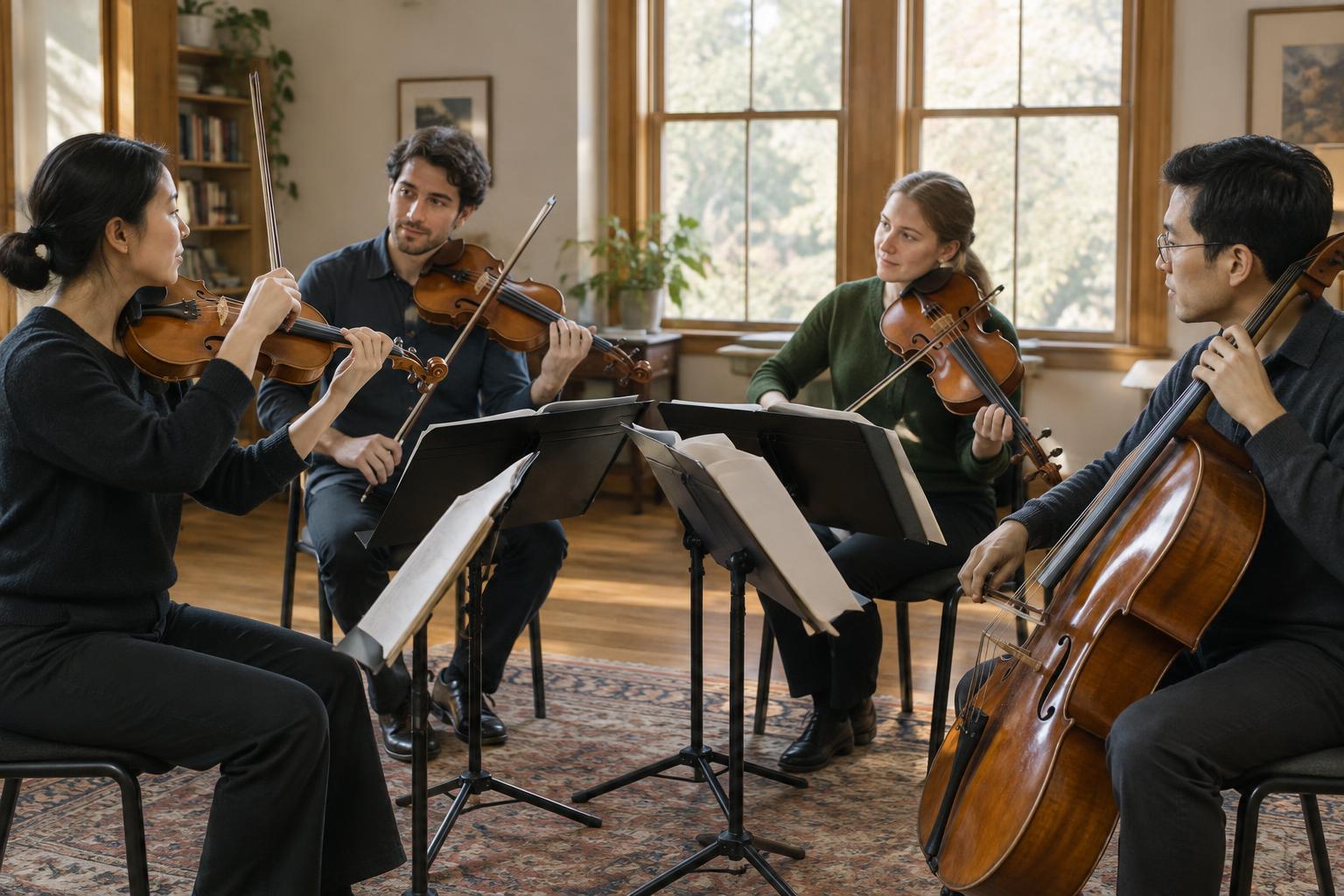
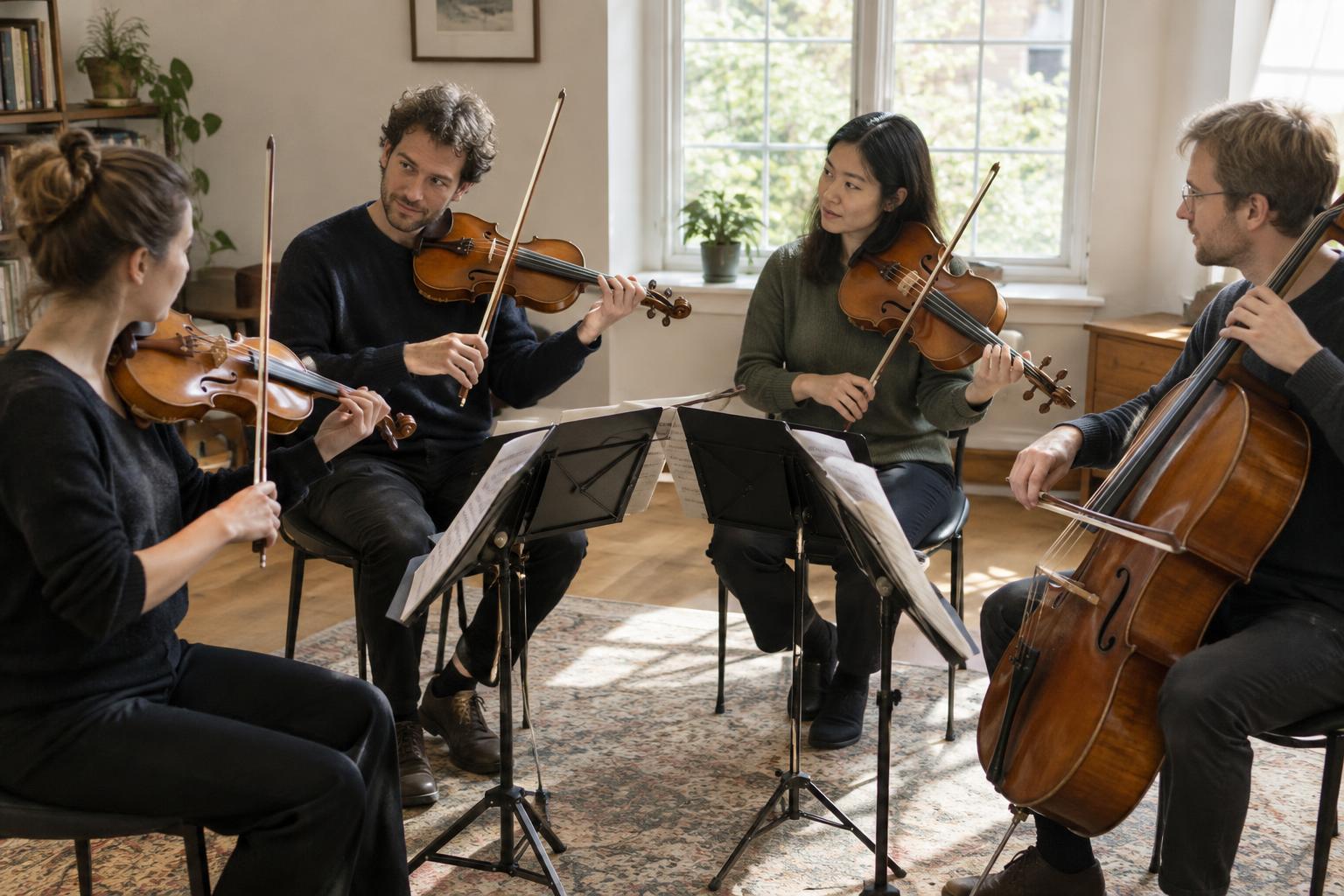
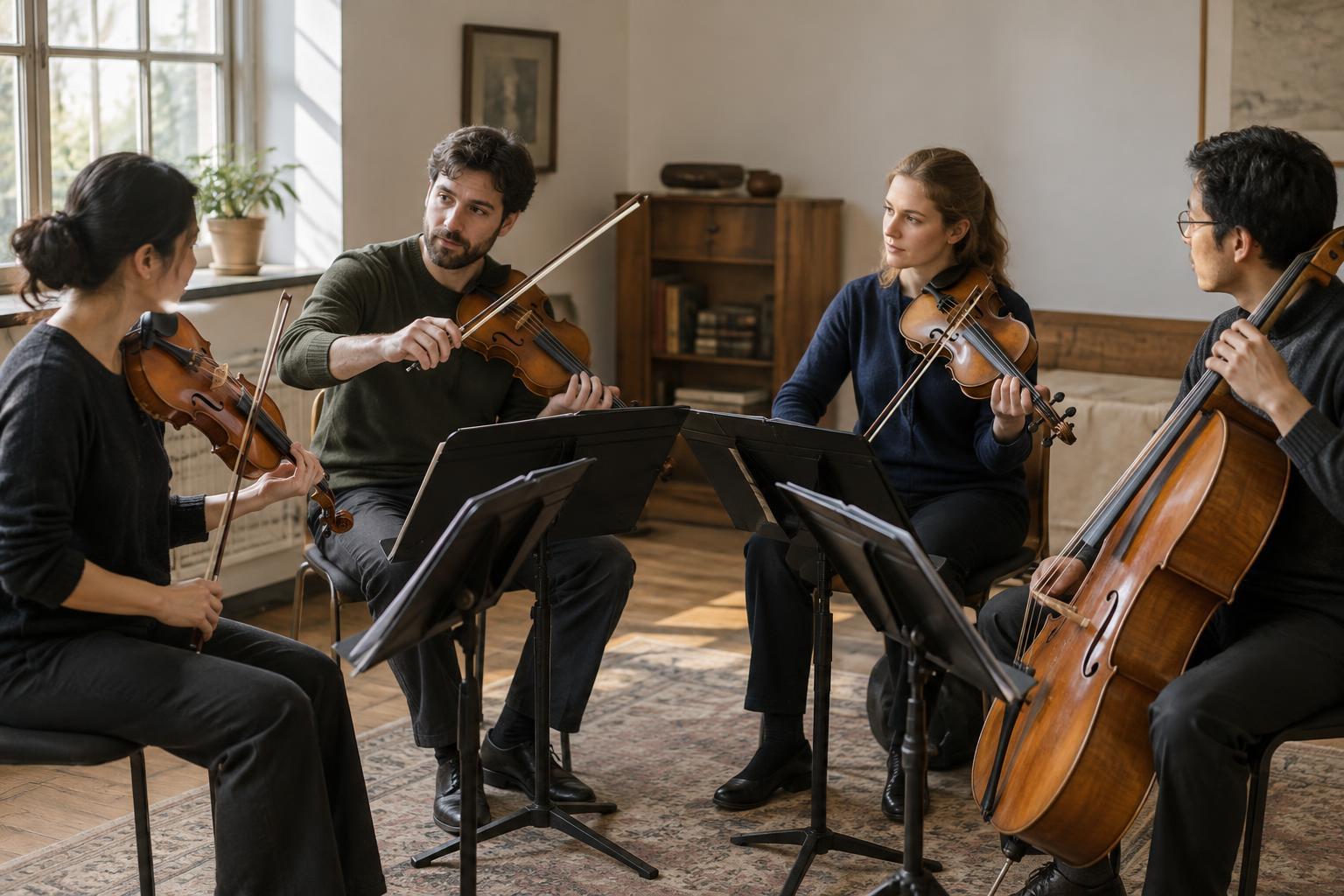
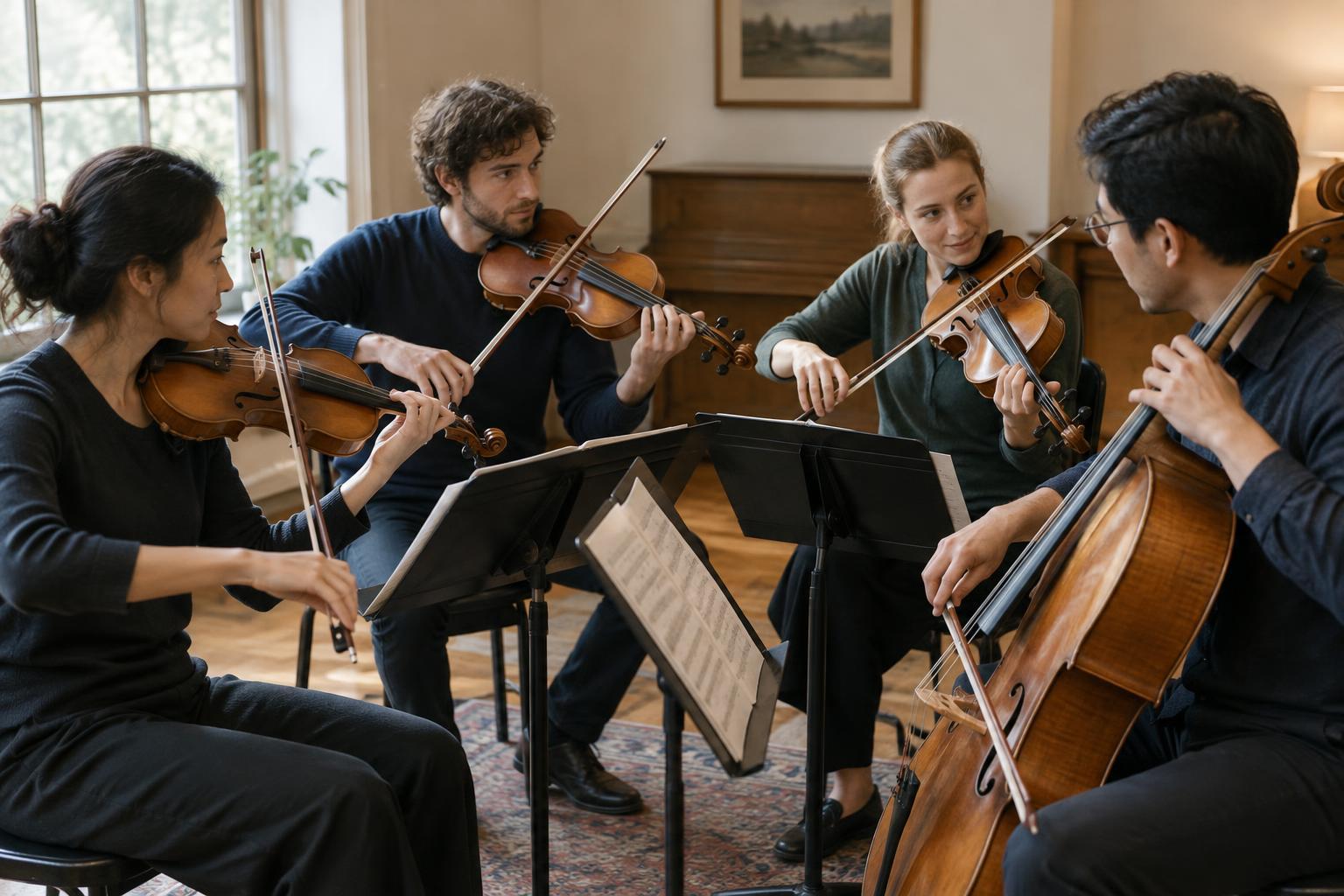
Imagine a string quartet playing a lyrical melody in the first violin. The other players enter together on sustained notes or move in a regular pattern beneath it. Your ear may take in those supporting notes as changing harmonies rather than as three separate tunes. Listen for moments when several players attack or release a sound at nearly the same time. Their coordination can give a phrase a firm outline, even when the melody itself is gentle.
Chordal does not necessarily mean loud, simple, or block-like. A piano may spread the notes of a harmony one after another while a violin plays above it; the result can still feel harmonically unified. Likewise, an inner string part might add a small rhythmic figure without drawing your attention away from the main tune. To hear what the harmony contributes, try following the lowest notes for a few measures. When the bass changes, does the melody feel settled, newly tense, or ready to move on? You do not need to name the chords to notice their effect.
Following independent lines
Independent lines invite you to hear musical conversation. One instrument presents a short idea; another may imitate its contour, answer with a different rhythm, or continue moving while the first pauses. In a wind quintet, the players’ contrasting tones can make these exchanges especially noticeable. In a string quartet, similar timbres can make it more rewarding to track each line by register and rhythm.
Independence is not the same as everyone playing unrelated material. The parts still fit together, often sharing a motif or helping shape the same harmony. What changes is the route each player takes through it. A cello might climb in steady steps while a violin descends in longer notes. If you try to follow both, the passage may feel less like a melody with backing and more like two unfolding thoughts. On a first listen, choose just one line other than the highest. Follow it until it rests, then listen again for how it relates to its neighbors.
Notice the shift between the two
Composers and performers can use a change of texture to make a musical event stand out. After a passage of separate, interweaving lines, the players might arrive together on a shared rhythm. That arrival can sound decisive because the parts briefly act as one. The reverse can be just as striking: a chordal opening may loosen when an accompanying voice develops a shape of its own. A part that seemed to be background becomes someone you want to follow.
These changes need not happen at a clear boundary. An inner voice may grow more active over several phrases, or a melody may pass from one player to another while the harmony stays steady. In a piano trio, listen for whether the piano supplies a harmonic frame, exchanges phrases with the strings, or does both. Rather than deciding which instrument is most important for the whole piece, ask what job each player has at this moment. That question keeps your attention on the music as it changes.
A simple listening exercise
Choose a short chamber-music passage and hear it three times. First, attend to the overall shape: where does the music seem to gather energy or relax? Second, listen for simultaneous changes. Notice when players begin notes together or when a new bass note alters the color of the group. Third, pick one instrument and trace its line, including the moments when it pauses. You may discover movement you barely noticed on the first hearing.
Finally, ask whether the passage draws you toward a unified chordal sound, distinct melodic paths, or a blend of the two. There is no need to assign a label to every measure. The point is to gain another way into the ensemble: sometimes you can enjoy the sound of everyone moving together, and sometimes you can hear the character of each part in motion.