The string needs a continuing push
Pluck an open string on a violin, viola, cello or double bass and it rings, then gradually fades. Draw a bow across that same string and the note can continue for as long as the player keeps the bow moving. The bow does not simply scrape the string into sound. It repeatedly gives the string energy, replacing energy lost as the instrument vibrates.
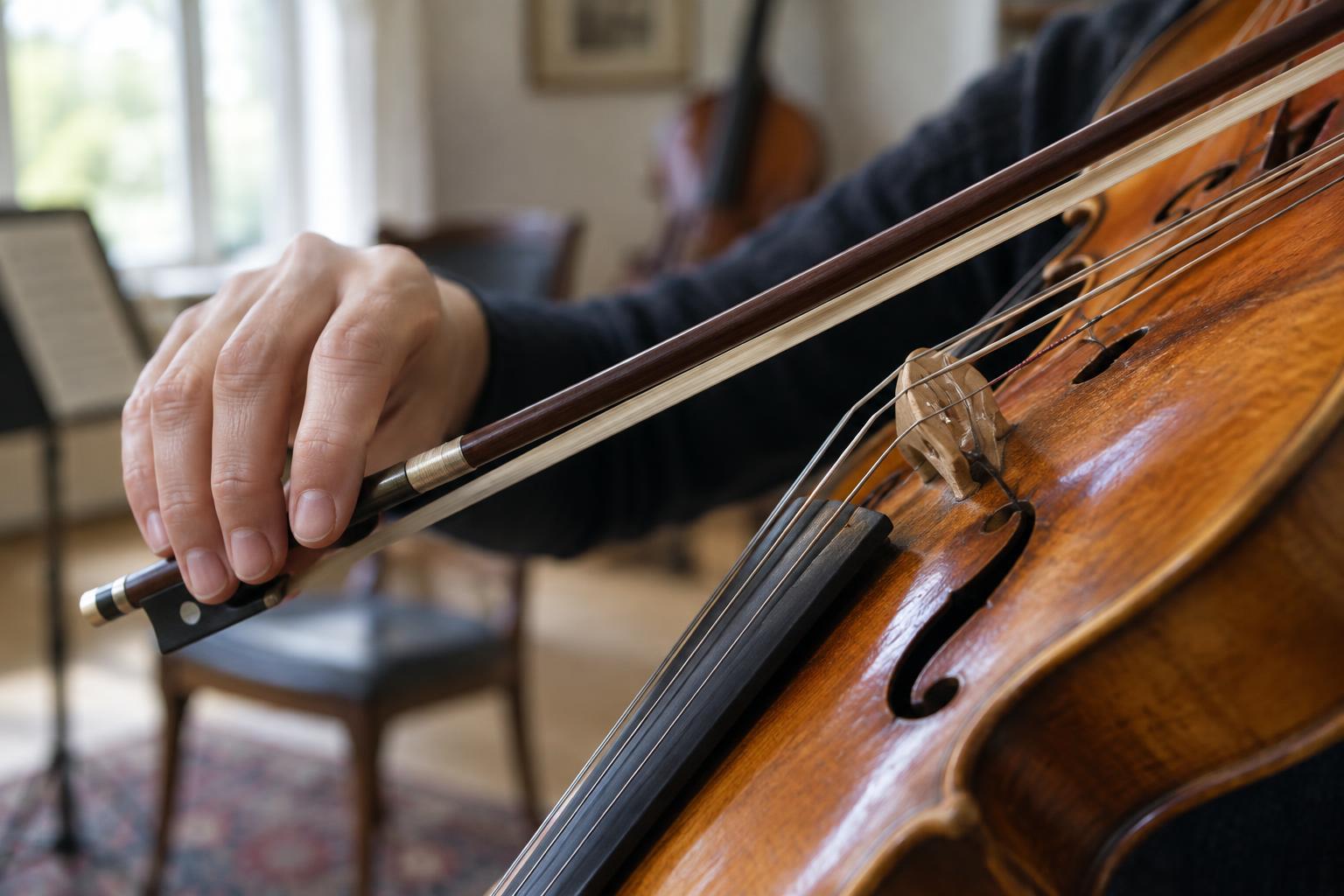
A bow is made with a ribbon of hair stretched between its ends. Players apply rosin to the hair so it can grip the string. As the bow moves, a small section of string catches on the hair and travels with it. The string’s tension then pulls it free. It springs back, catches again and repeats this cycle many times during a note. This alternating grip and release is often called stick-slip motion.
From string motion to audible sound
A vibrating string on its own moves relatively little air. Its motion passes through the bridge, the shaped piece of wood that supports the strings, into the instrument’s body. The top, back and enclosed air respond in complex ways and move more air than the string alone. That is why the body is essential to the familiar sound of these instruments, rather than merely a frame for holding the strings.
The pitch depends chiefly on the string’s vibrating length, tension and mass. Pressing a string with a finger shortens the part that can vibrate and usually raises the pitch; an open string vibrates without that finger contact. Bowing supplies the continuing energy, while the string and instrument determine how the resulting vibration sounds. Each note contains a fundamental pitch along with higher components that help give it its character.
Three bowing choices you can hear
Players continually balance bow speed, the force applied through the bow and the point where the hair meets the string. A faster bow uses more hair over the course of a note and can help produce a fuller sound. More force is not automatically better: if the bow presses too hard for its speed and position, the tone may become rough or choked. Too little grip can leave a thin or airy sound.
Contact point matters, too. Bowing nearer the bridge generally calls for a slower, more supported stroke and can bring out a focused, bright tone. Moving toward the fingerboard can produce a softer, less concentrated color. These are possibilities, not fixed settings. A player adjusts all three factors together, and the useful balance differs among strings, instruments and musical passages.
The angle and width of hair touching the string can also change the response. A broad ribbon of hair offers a different contact from a tilted bow using fewer hairs. Even when two players use the same instrument and play the same written note, small differences in these choices can make their sounds recognizably different.
Why bow strokes sound like musical gestures
The start of a note is especially revealing. If the hair grips the string before moving, the note may have a clear, firm beginning. If the bow is already moving or makes gentler contact, the beginning may sound softer. At the other end of a stroke, a player can ease the bow away or prepare a change of direction without an obvious break. These decisions shape a phrase much as consonants and breaths shape speech.
Short, separated strokes make the spaces between notes audible. Long, connected strokes can carry a melody across several notes while the left hand changes pitch. A bow can also leave the string briefly for a light, bouncing effect. None of these gestures changes the basic need to transfer energy to the string; they change when and how that transfer happens.
Violin-family instruments share these principles, but they do not respond identically. Their strings, bodies and playing positions differ. A bassist may use a stroke that looks unlike a violinist’s, yet both are managing contact between hair and string to sustain and shape vibration.
A simple way to listen
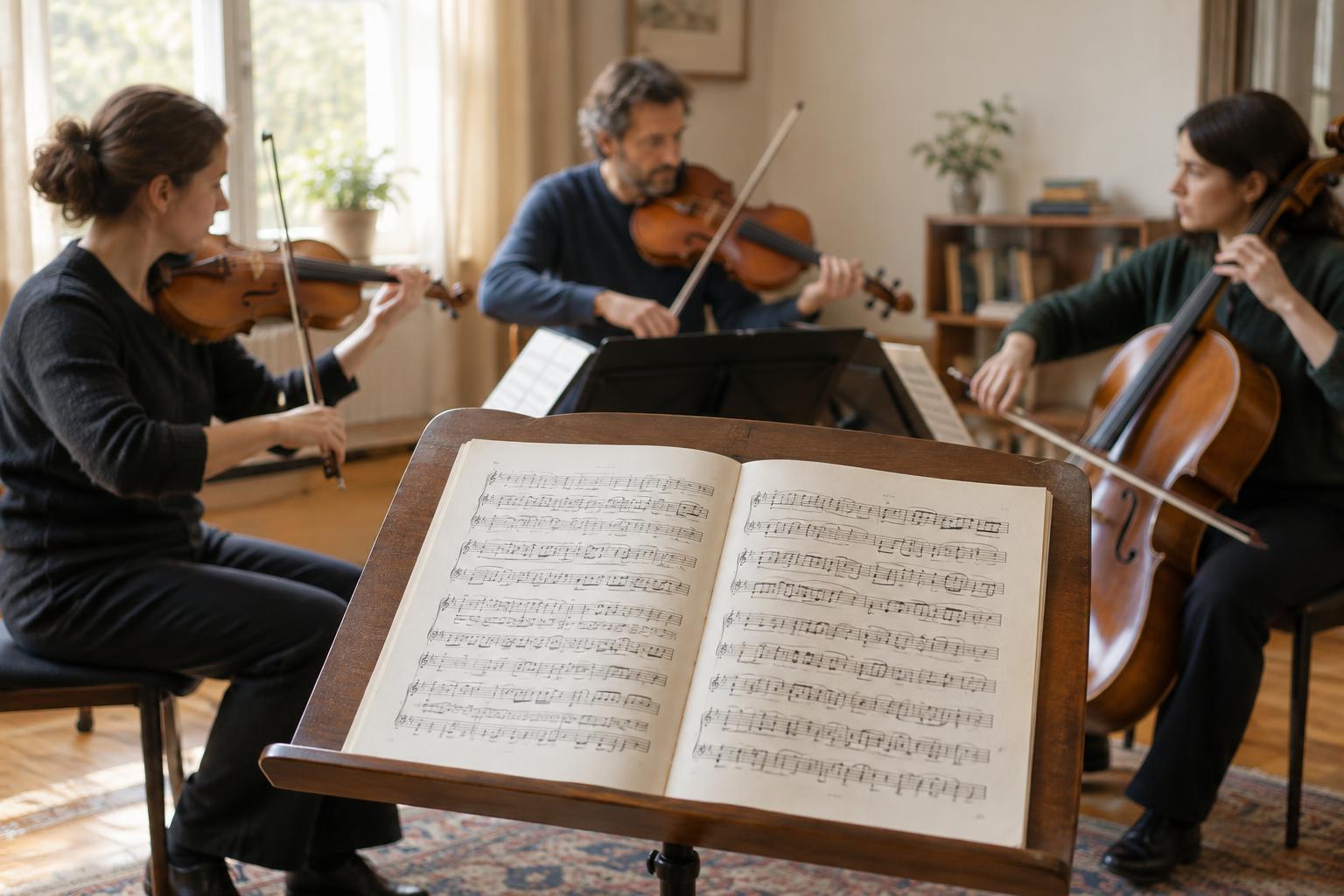
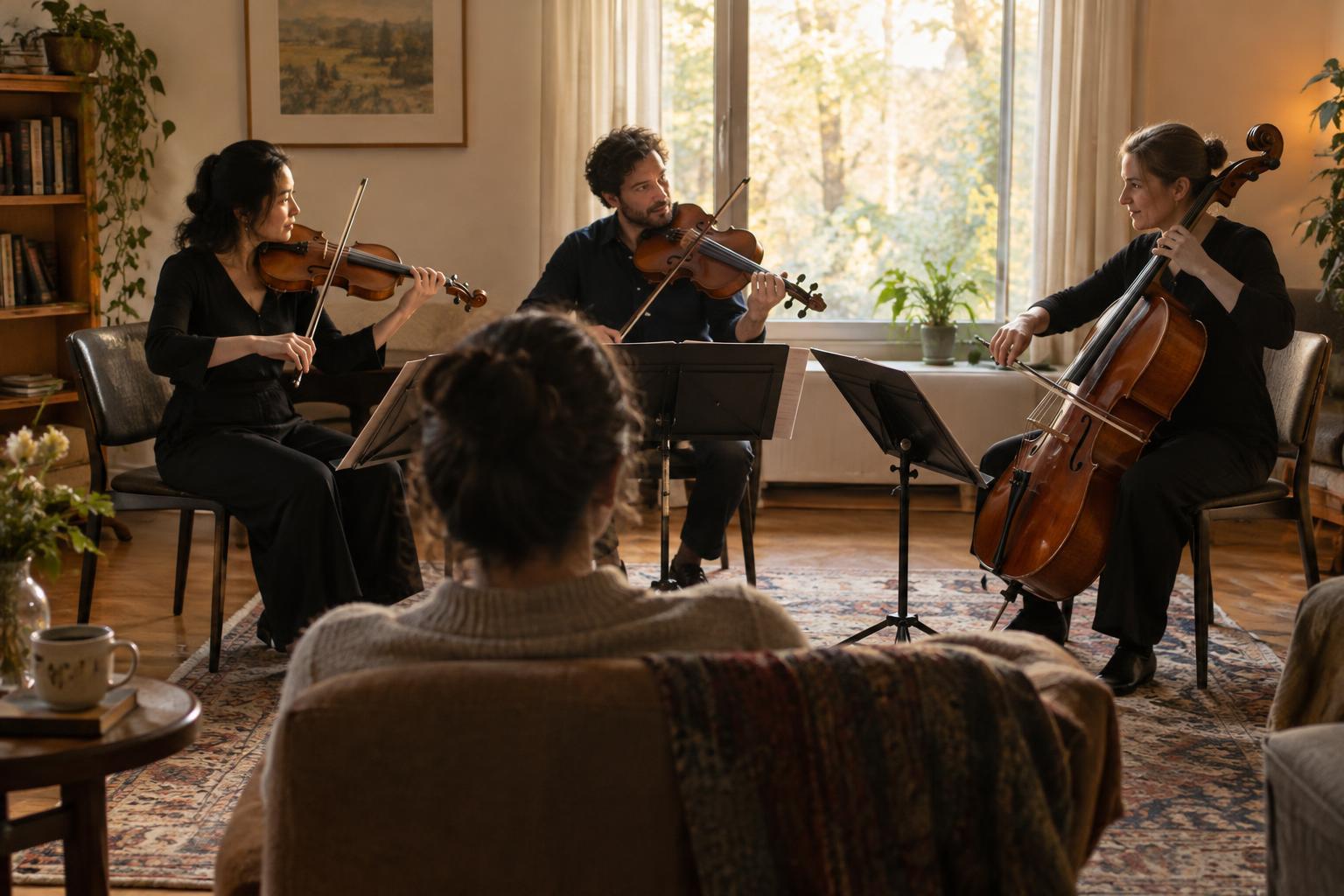
Next time you hear a solo string player or string quartet, choose one sustained note and follow its sound from beginning to end. Does it start sharply or emerge gradually? Does its color brighten, soften or stay steady? Listen for a bow change: sometimes you can hear a slight new impulse, while at other times the sound seems uninterrupted.
Then listen to a short passage of contrasting notes. The interest is not only in which pitches are played, but in how each one arrives and departs. The bow makes a vibrating string speak; a player’s control of that bow gives the line its shape.