Start with one recognizable idea
A fugue begins with a musical idea called the subject. It might be a short, sharply rhythmic figure or a longer, flowing melody. Before trying to follow every part, listen to the opening voice by itself. Notice how the subject starts: Does it rise or fall? Does it move in quick notes or measured steps? Its rhythm and shape are often easier to remember than its exact pitches.
Soon another voice enters with a recognizable version of that idea, usually at a different pitch, while the first voice continues. This handoff is imitation: one part presents an idea and another takes it up. The second entry may not match the first note for note, so listen for a family resemblance rather than an exact replay. A quiet singer repeating a distinctive phrase after another singer would create a similar effect.
Follow entries, not just melodies
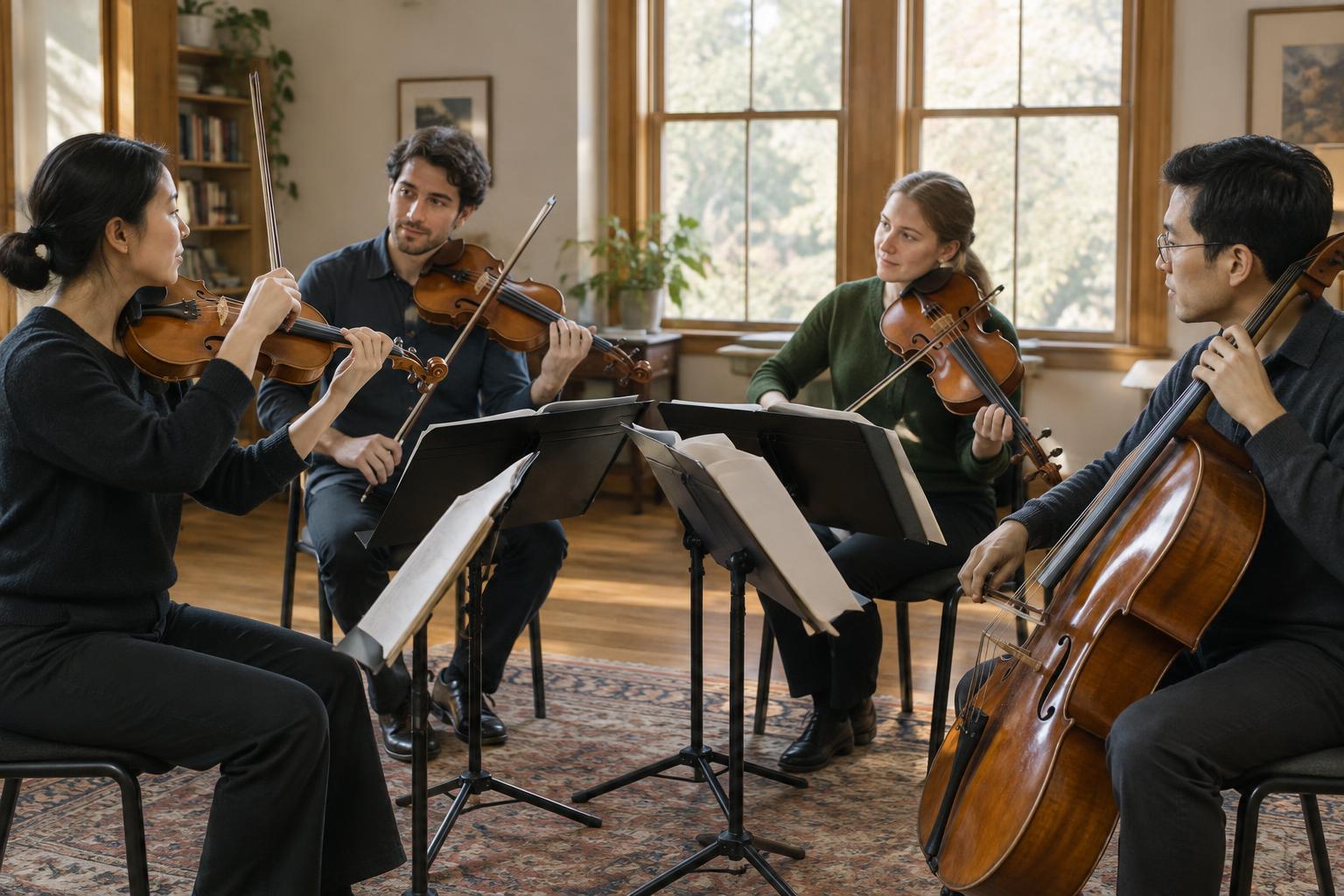
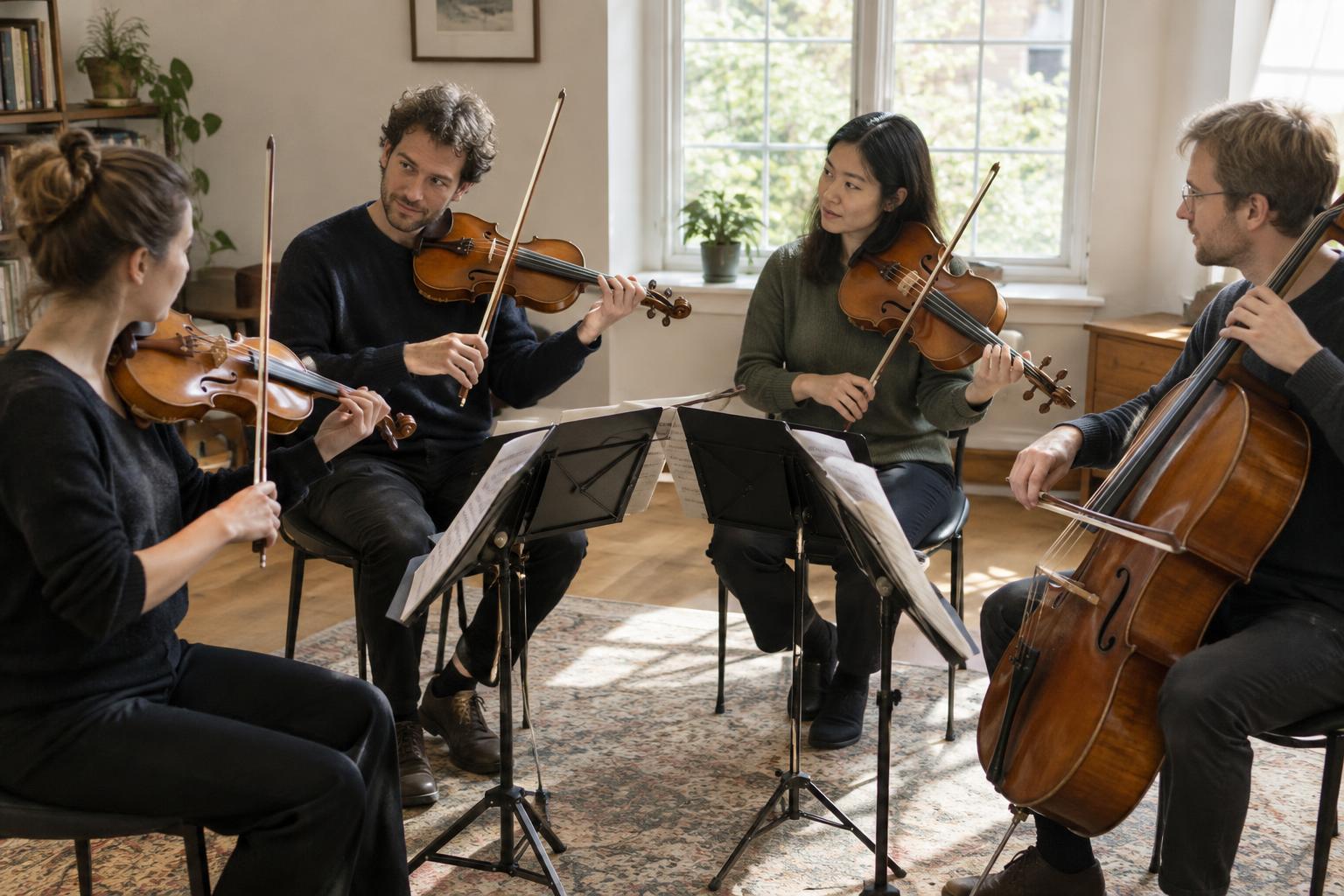
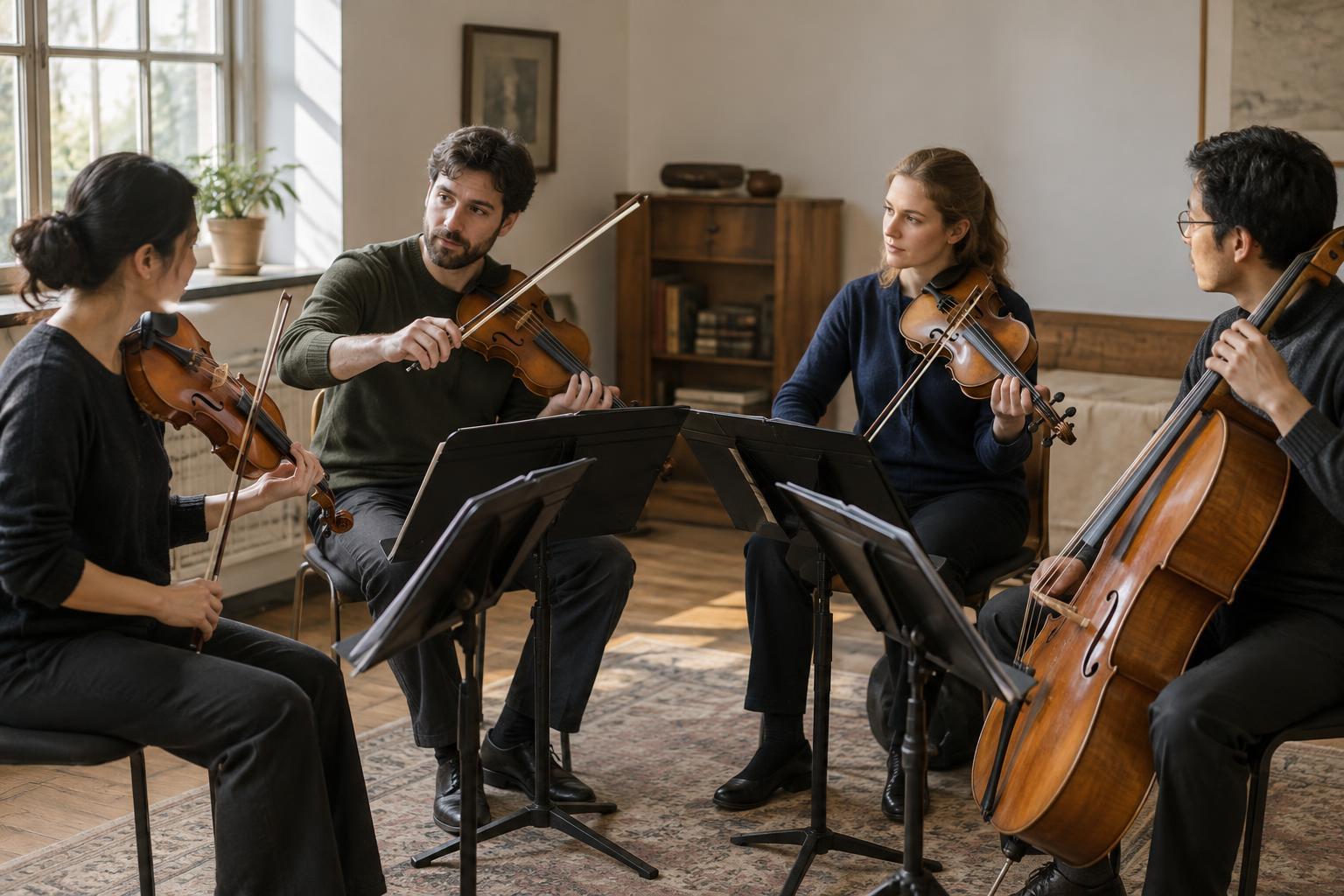
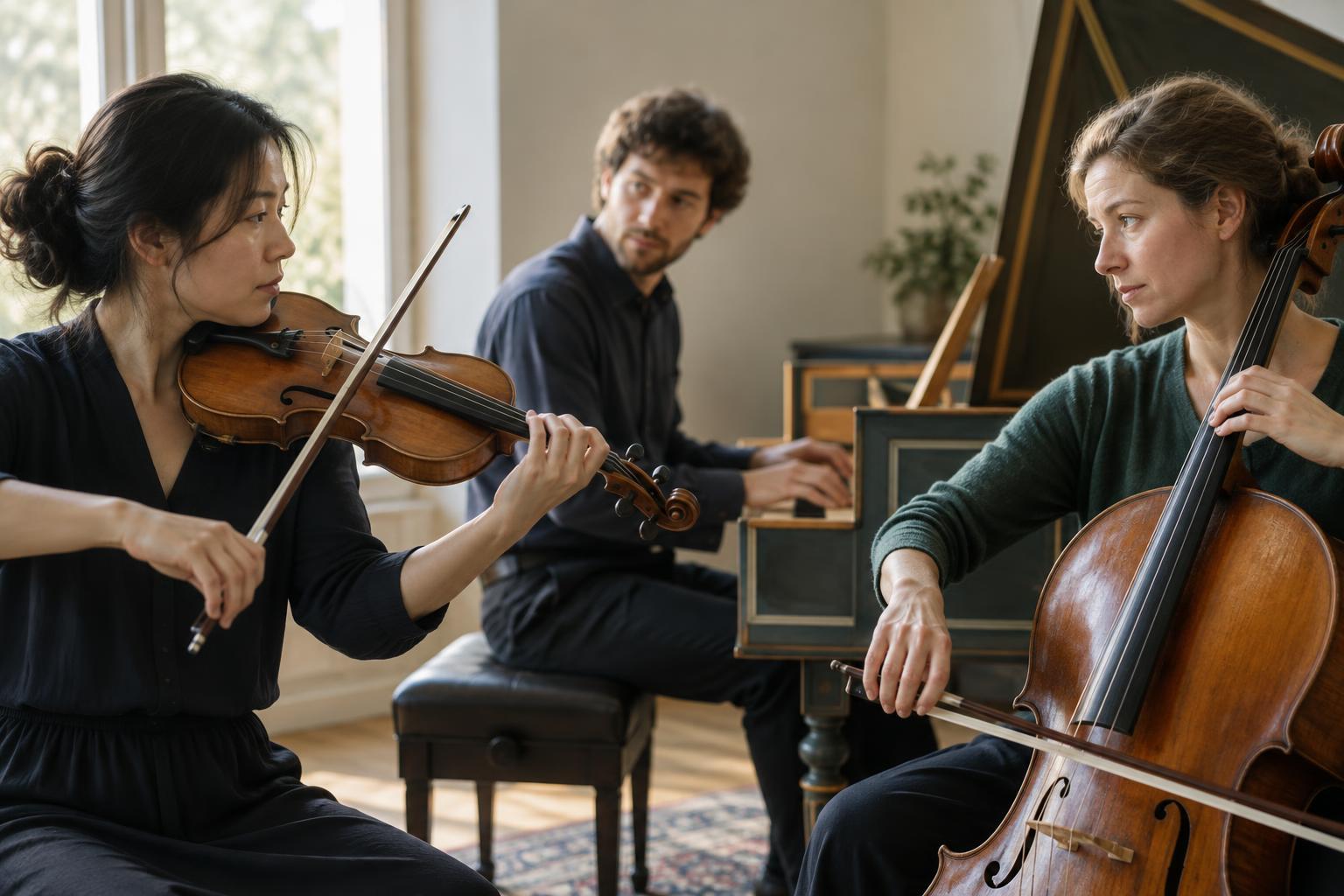
A voice in a fugue is an independent musical line, not necessarily a person singing. In a string quartet, different instruments may carry different lines; on a keyboard, one player can play several at once. To hear an entry, focus on the beginning of the subject and ask, “Where did that opening gesture appear next?” Following just its first few notes can be more manageable than tracking a complete line through dense texture.
On a first listen, you might hear the subject in a high register and then in a lower one. On the next, try following what the earlier voice does after the new entry begins. It may continue with a recurring companion idea, sometimes called a countersubject, or move into less easily labeled material. That continuing line matters: a fugue is not a relay in which each voice stops playing as soon as it passes on the subject.
Hear the difference between texture and overlap
Once several voices are active, the music can feel busy even when only one voice is stating the subject. Other lines may move alongside it, answering its rhythms or filling the spaces between its notes. Try listening for the subject’s distinctive beginning rather than treating every new flourish as an entry. If you lose your place, wait for a clearer return; you do not need to identify every note to enjoy the pattern.
Overlapping subject entries create a more specific effect. A new voice starts the subject before an earlier voice has finished it, so two recognizable versions unfold at the same time. This close imitation is called stretto. It can produce a sense of gathering momentum, although its character depends on the music around it. The useful listening question is simple: “Has the subject begun again while I can still hear the previous statement continuing?”
Use a short, repeatable listening routine
Choose a passage short enough to replay without losing your bearings. On the first pass, hum or tap the opening rhythm of the subject. On the second, count each time that recognizable beginning returns. On the third, listen only for the space between starts. Widely spaced entries can feel like orderly introductions; closer ones may be harder to separate and, if the subject statements themselves overlap, may form stretto.
It can help to imagine each voice as a thread with its own color. When a new thread picks up the subject, keep an ear on the old one rather than dropping it immediately. In chamber music, differences in instrumental sound can help you do this. In a keyboard fugue, register can serve as a rough guide, though voices may cross or move closer together. Replaying a passage with a single question in mind is often more useful than trying to hear everything at once.
Let the conversation remain a conversation
Fugues also contain passages in which the subject is absent or appears only in fragments. These stretches can provide movement and contrast before another clear entry. You need not assign a technical name to every moment. Notice instead how the composer balances recognition with change: a familiar opening returns, but its surrounding voices, register or timing may make it feel different.
The pleasure of listening for imitation is gradual. First you recognize an idea; then you hear it pass among voices; eventually you notice when one statement presses in before another has ended. Even if you cannot separate every line, that shift from taking turns to speaking together gives you a way into the fugue’s lively, layered conversation.