A woodwind with a wide range of voices
The saxophone may be made of metal, but it belongs to the woodwind family. A vibrating reed on its mouthpiece starts the sound, much as it does on a clarinet. That helps explain why the instrument can sound breathy and intimate in one phrase, then bright and forceful in the next. Its association with jazz is strong, but those same qualities give chamber-music composers and performers plenty to work with.
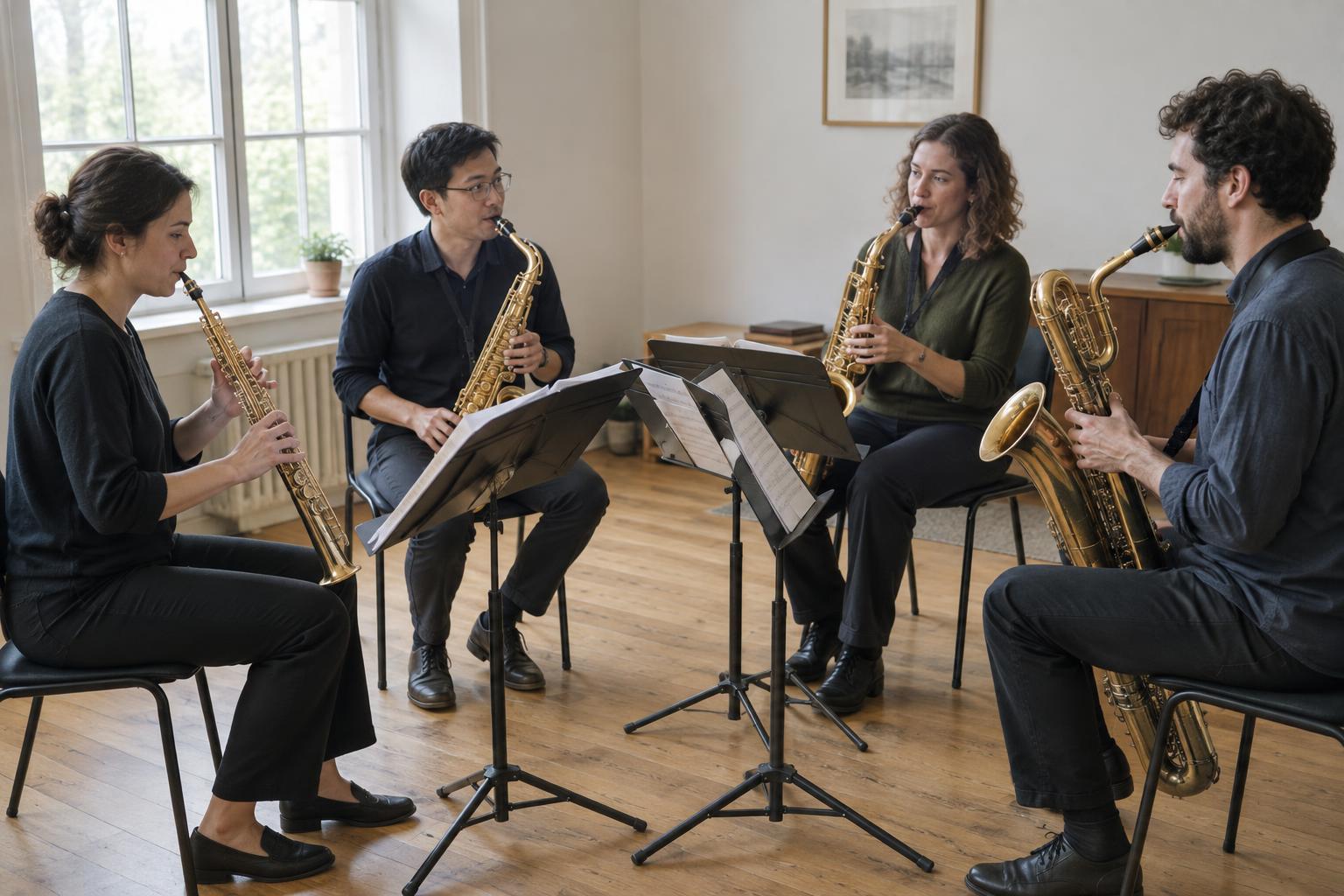
Soprano, alto, tenor and baritone saxophones are the voices most often heard together in a saxophone quartet. The soprano can carry a clear upper line; the alto often sits comfortably in the middle of the texture; the tenor adds a warmer lower voice; and the baritone can provide a firm bass. These are useful starting points, not fixed jobs. Any member of the quartet can take a melody, supply a pulse or blend into a chord.
How a saxophone quartet works
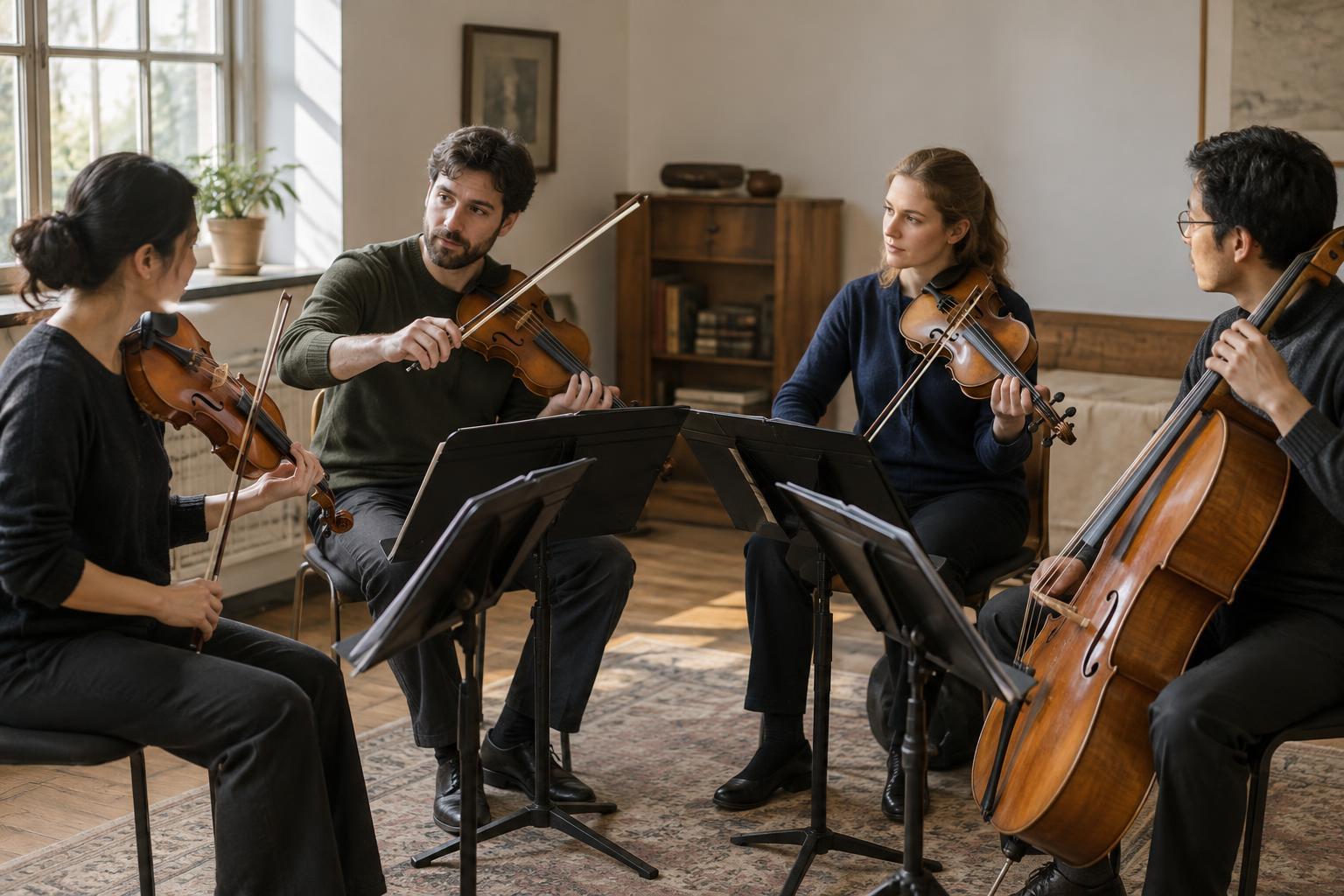
A saxophone quartet has something in common with a string quartet: four related instruments can pass ideas among themselves without a large change in tone color. Listen for a short musical phrase moving from one player to another. It may seem to travel through a single, expanding instrument, or each handoff may reveal a new shade of sound.
The quartet can also behave like a compact choir. Its members can sustain separate lines, join in close harmony or move together in a crisp rhythmic pattern. Because their sounds are related, players must make contrasts clear through articulation, dynamics and phrasing. A sudden accent, a softer entrance or a change from smooth to detached notes can reshape the whole conversation. In an arrangement of music written for another ensemble, it is especially interesting to hear how the saxophones preserve distinct lines while giving them a shared character.
Partners outside the saxophone family
The saxophone also appears alongside piano, percussion, strings and other winds. A saxophone-and-piano duo can move quickly between roles: the piano might provide a spacious harmonic background while the saxophone sings above it, then the two instruments might trade short gestures. In a mixed wind group, a saxophone can connect the rounded sound of a clarinet with the more penetrating sound of a flute or oboe.
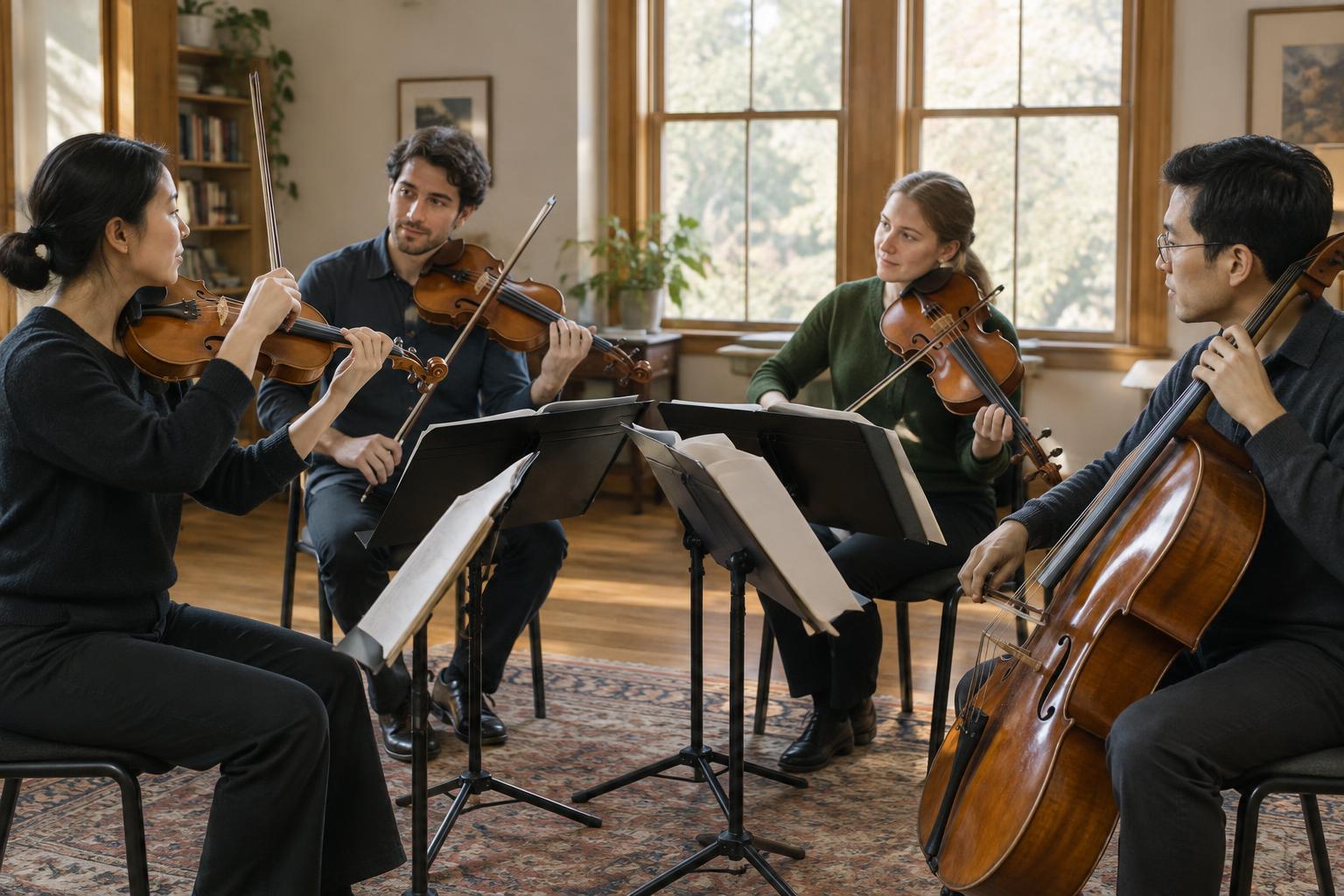
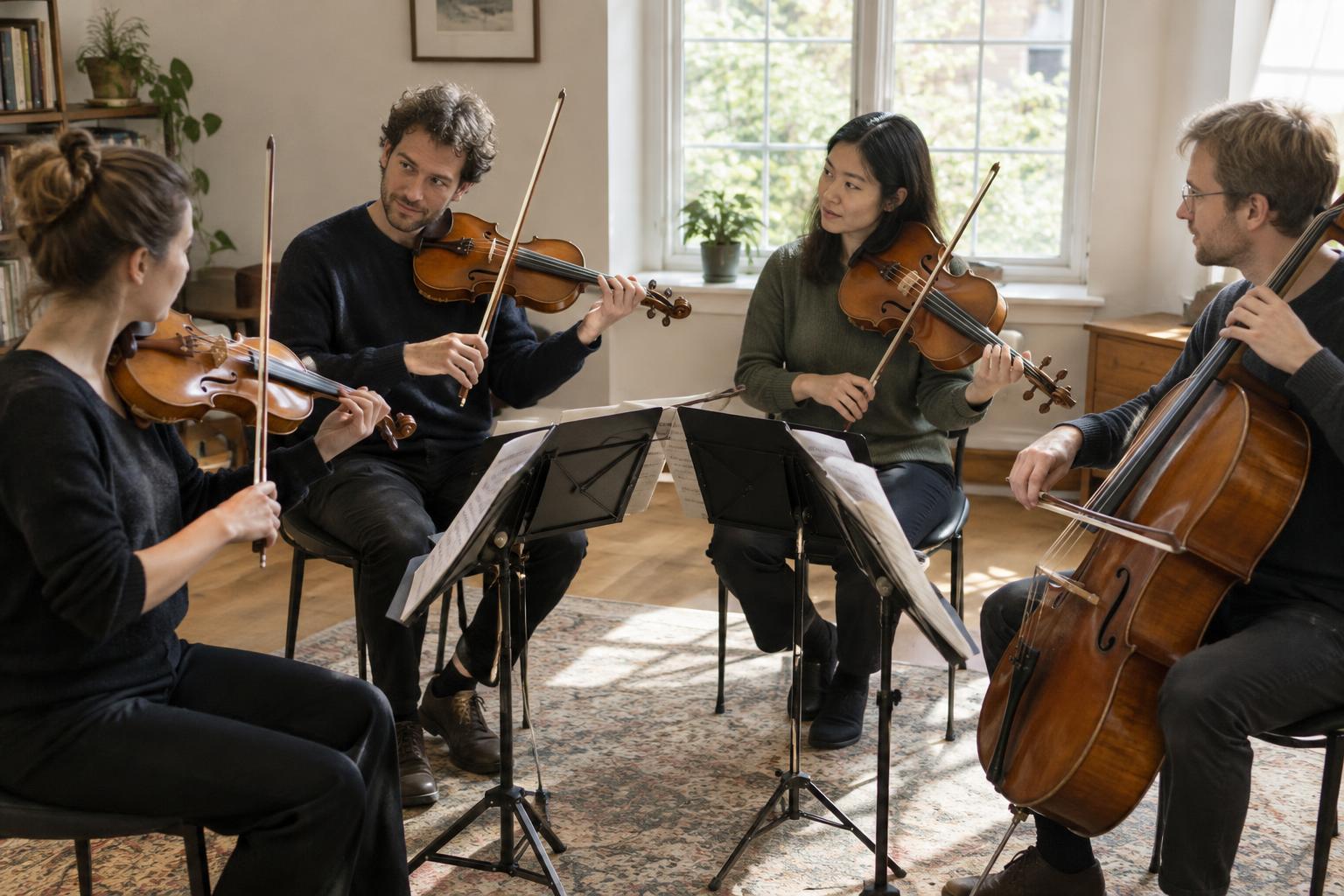
With strings, the contrast is more pronounced. A violin can sustain a line with the bow while a saxophonist shapes it with breath; both can make a phrase feel continuous, but their attacks and endings differ. Composers and players may emphasize that contrast or search for a blend. Neither approach is automatically better. The interest lies in hearing how the instruments make room for one another and how a shared musical idea changes as it passes between them.
What to listen for in a performance
Start with balance. Can you follow a quieter accompanying line beneath the melody, or does one instrument dominate? The answer may change as the music moves between registers and dynamics. Notice how a saxophonist begins and releases a note: a clean, sharply defined entrance creates a different effect from a gentle one that seems to emerge out of the surrounding sound.
Next, listen for blend and separation. In a quartet, try to identify moments when the four players sound almost like one instrument, then moments when you can hear four individual parts. In a mixed ensemble, pay attention to pairs of instruments. Does the saxophone echo a string line, answer a piano chord or join another wind on the same rhythm? These small exchanges are often the substance of chamber music.
An open-minded way into the repertoire
There is no single chamber-music sound for the saxophone. Some pieces favor long melodies and carefully balanced harmonies; others explore quick rhythms, unusual textures or striking contrasts. Arrangements offer another route in, though they are worth hearing on their own terms rather than as substitutes for the original instrumentation.
If you are new to this repertoire, begin with a saxophone quartet and follow one voice for a short passage. On another listen, shift your attention to the lowest part or to the way all four players end a phrase together. Then try a duo or mixed ensemble and notice what changes when the saxophone meets a different sound. Its place in chamber music is not defined by an absence of jazz. It is defined by the close listening, flexible roles and musical exchange that chamber playing invites.