Two questions to ask as you listen
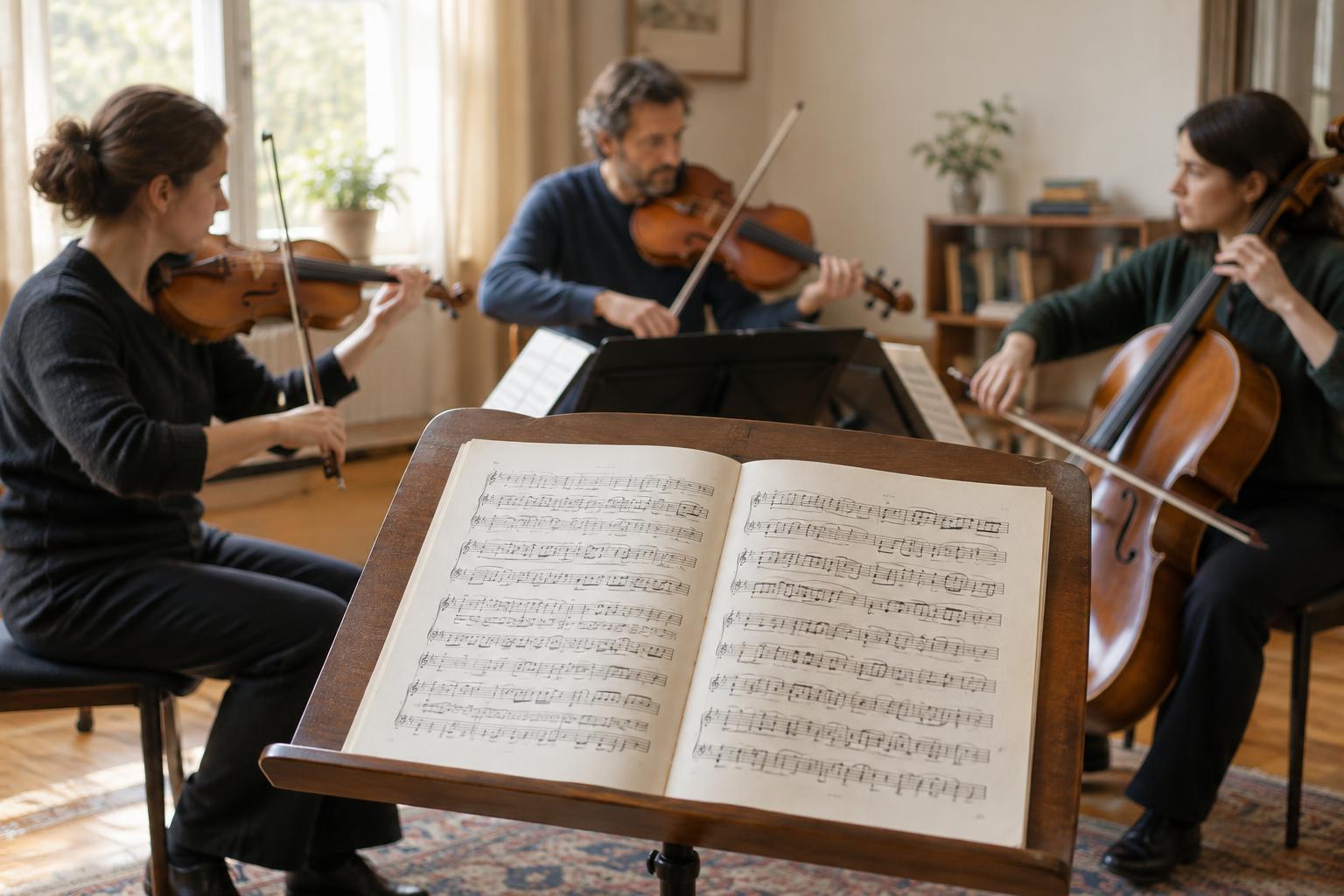
When a passage suddenly feels more vivid, ask two questions: Did the players change how forcefully they played, or did the music move higher or lower? The first question concerns dynamics, which describe levels of softness and loudness. The second concerns register, the part of an instrument’s pitch range in which the notes lie. Both can change the character of a phrase, but they are not the same thing.
A violin can play a high note softly, and a cello can play a low note loudly. Either might draw your attention for different reasons. Separating dynamics from register gives you a way to describe what you hear without needing to identify every note. It also helps explain why a passage can seem to grow more intense even when no one appears to be playing much louder.
Hear dynamics as a changing level of energy
Dynamics can shift abruptly or unfold gradually. A sudden move from quiet playing to a strong chord creates a clear break. A gradual increase, often called a crescendo, can make a phrase feel as though it is gathering momentum. Players may also ease back after a peak, allowing the sound to settle rather than simply stop.
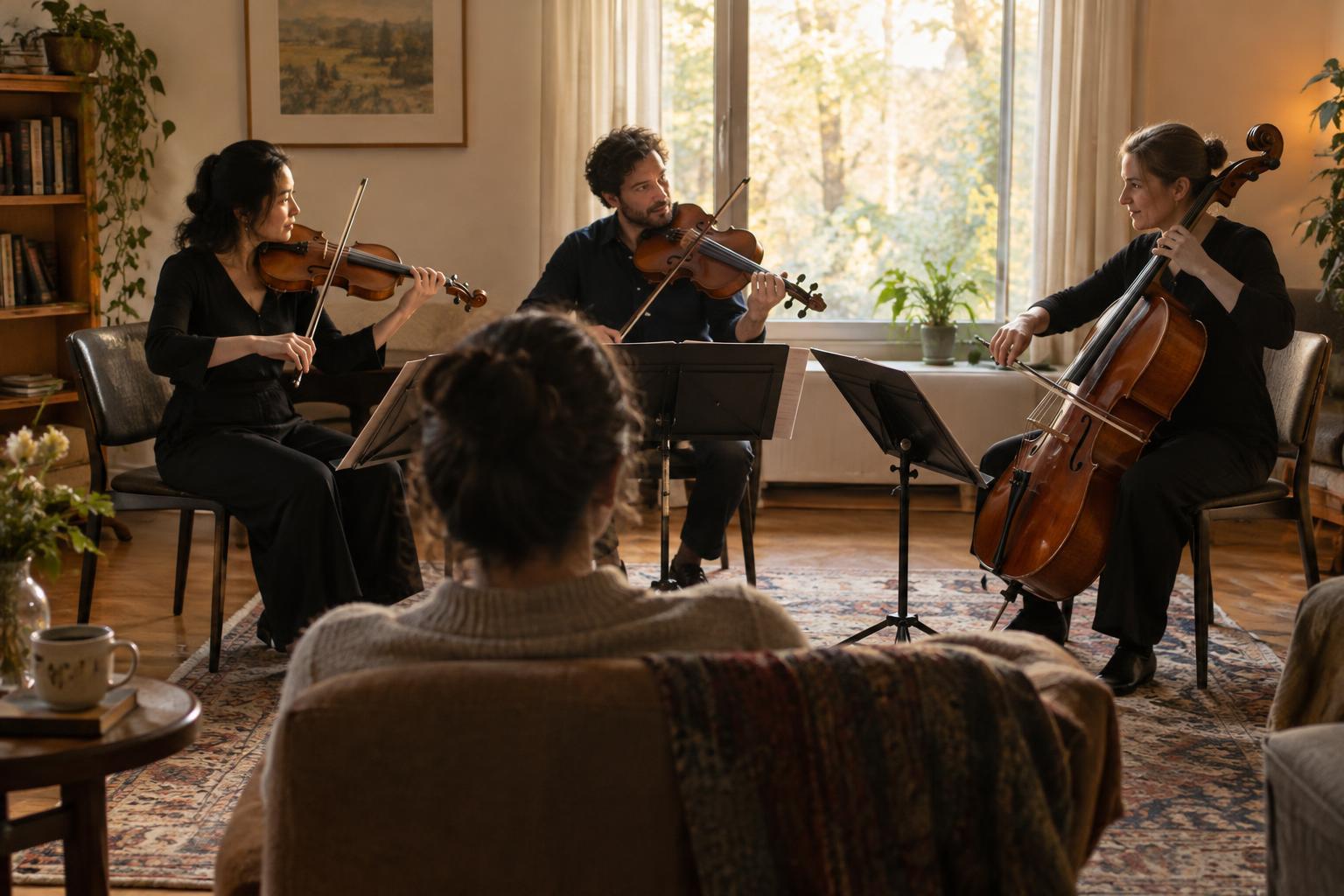
In chamber music, loudness is often relative. A single instrument playing gently can come forward when the others fall silent. The same part may recede when its companions become more active. Listen for the relationship among the players, not just the overall volume. When a melody is passed from violin to clarinet, for example, the new player may need to shape the phrase differently to keep it prominent against the accompaniment.
Playback volume can obscure these details. If you are listening to a recording, set a comfortable level and leave it there through a passage. That makes it easier to hear which changes come from the performers rather than from your volume control.
Hear register as a change in location and color
Register answers a different question: where does the sound sit within an instrument’s range? A melody that climbs may acquire a sense of brightness or urgency; one that descends may feel more grounded. Those associations are useful starting points, not fixed rules. Rhythm, harmony, articulation and the instrument itself all affect the result.
Each instrument also has its own character across its range. A clarinet’s lower notes can have a different color from its upper notes, just as a cello sounds different when it sings high above its usual supporting role. A change of register can therefore alter both pitch height and tone color, even if the player maintains a similar dynamic level.
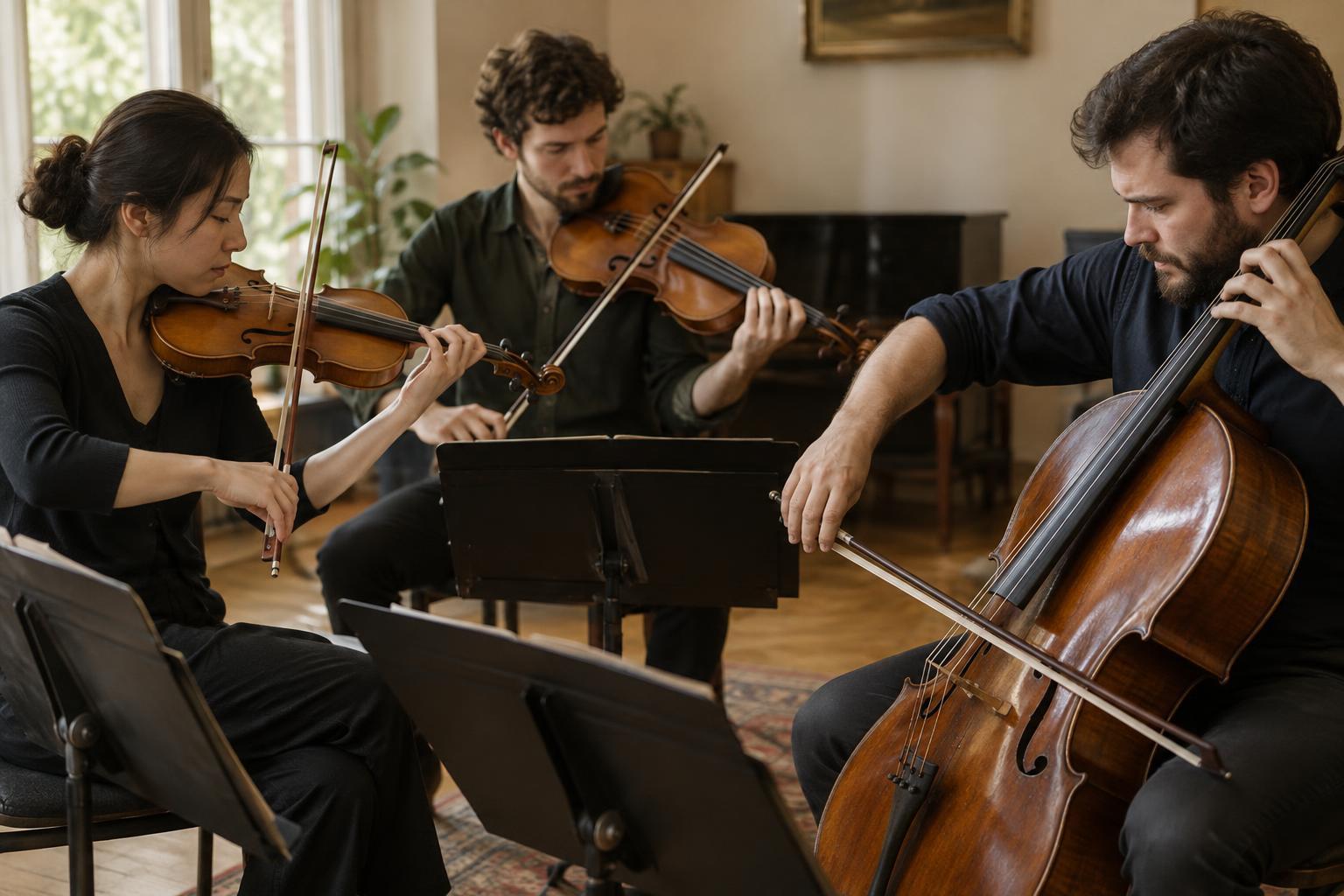
Try following one line through a short passage. Does it remain in a narrow band, leap upward, or sink by degrees? Then notice whether another instrument occupies the space it leaves. In a small ensemble, a high line and a low line can frame the music, while inner parts fill the space between them.
Notice when the two kinds of contrast disagree
Composers and performers can reinforce a change by combining a rising line with a crescendo. The music moves higher and grows louder, so the approach to a peak is easy to hear. More elusive effects arise when the signals pull in different directions. A phrase might climb while becoming quieter, giving its final high note a delicate, distant quality rather than a triumphant one.
The reverse can happen too: a descending line can grow louder. Its arrival in a low register may feel weighty without sounding bright or sharp. In an ensemble, one player might take a soft melody high above a vigorous accompaniment. The melody’s register makes it easy to locate, while its restrained dynamic changes how it relates to the group.
These combinations are a reminder that “higher” does not automatically mean “louder.” A pitch may stand out because it contrasts with what surrounds it, not because the player has increased the volume.
A simple listening exercise
Choose a brief stretch of chamber music and listen twice. On the first pass, ignore pitch direction as much as you can. Mark the moments when the ensemble grows, fades, or suddenly changes level. Notice whether all the players move together or one instrument changes against the others.
On the second pass, keep the dynamics in mind but follow the placement of the notes. Which line is highest? Which is lowest? Does a melody climb to a new register, or does it stay put while another instrument moves around it? Finally, listen once more for moments when dynamics and register work together or diverge.
You do not need to arrive at a single correct interpretation. The aim is to hear two distinct choices that shape a passage. Once you can name them separately, you can better appreciate how a handful of players create variety without changing the size of the ensemble.