Treat the rest as part of your phrase
An entrance after a long rest can feel harder than a passage full of notes. While you are silent, the music keeps moving: another player may change the mood, the pulse may become less obvious, and your first note may need to blend into a phrase already underway. The goal is not simply to arrive on time. It is to enter with the right sound and a clear sense of what your note contributes.
Start by looking beyond the bar where you play. Find the phrase that leads to your entrance and the one that follows it. Are you completing someone else’s idea, adding a new layer, or beginning a contrasting section? Sing your first few notes while a recording or a partner supplies the preceding music, if either is available. This makes the entrance feel like a musical response rather than an isolated test of counting.
Build a reliable map through the silence
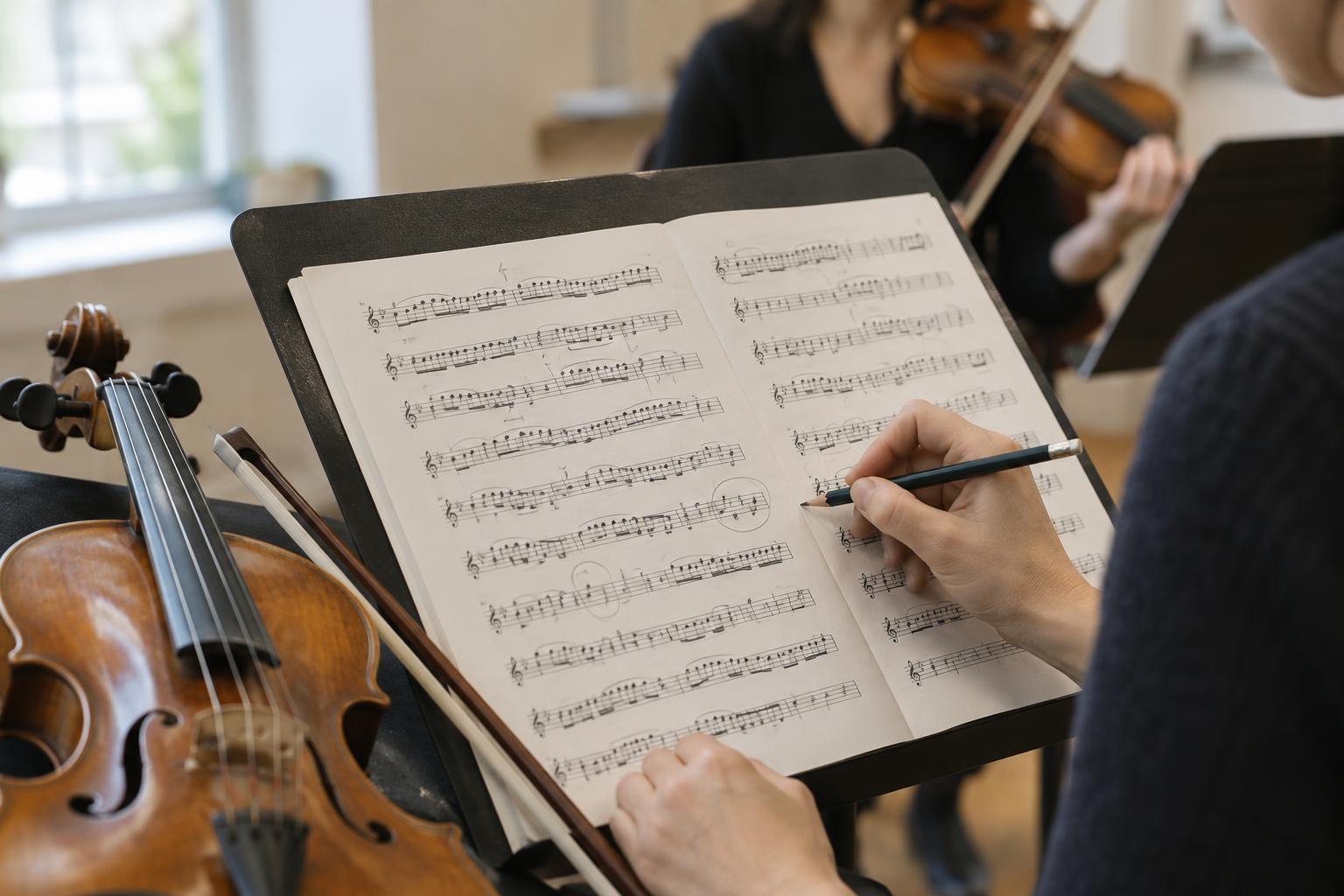
Counting matters, but counting every beat of a long rest without landmarks can be fragile. Divide the span into smaller groups, such as changes of harmony, repeated figures, or clear phrase endings. Mark a few useful landmarks in your part: perhaps a cello figure four bars before you enter or a repeated chord one bar before. Keep the markings brief enough to read at a glance.
Use at least two ways to locate the entrance. You might count measures while also listening for a distinctive motif. If one player takes extra time for expressive reasons, a purely mechanical count may leave you uncertain; if a familiar motif is played differently, counting gives you a second anchor. During practice, follow the score through the entire rest without playing. Tap or silently speak the pulse, then check whether your expected entrance matches the music. Repeat until you can describe what happens between your last note and your next one.
Prepare before the final beat
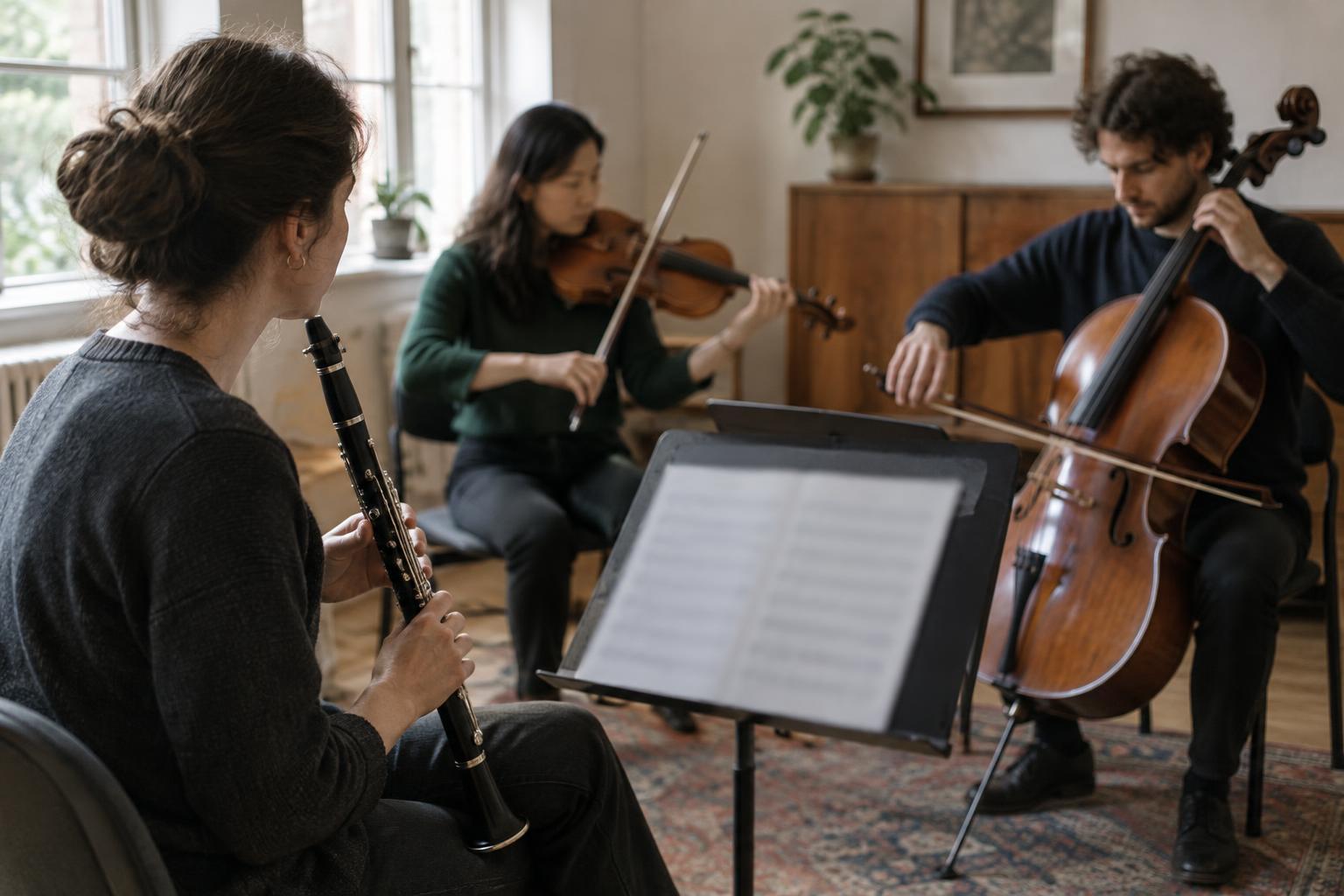
A correct count will not help much if the instrument is not ready. Work backward from your first sound. A wind player may need to settle the breath and embouchure; a string player may need to choose a contact point and bow speed; a pianist may need to find a comfortable hand position. These preparations should be quiet and unhurried. Experiment with when to get ready so that the final beat is available for listening rather than last-second adjustment.
Practice the entrance at several starting points. First play from a bar or two before it, using a partner or recording to fill the silence. Then begin farther back and include more of the rest. Finally, start from your previous playing passage so you experience the full transition from activity to silence and back again. Keep the first note’s character in mind each time: an accurate entrance that is too forceful or too tentative can still disturb the texture.
Use cues without depending on a perfect signal
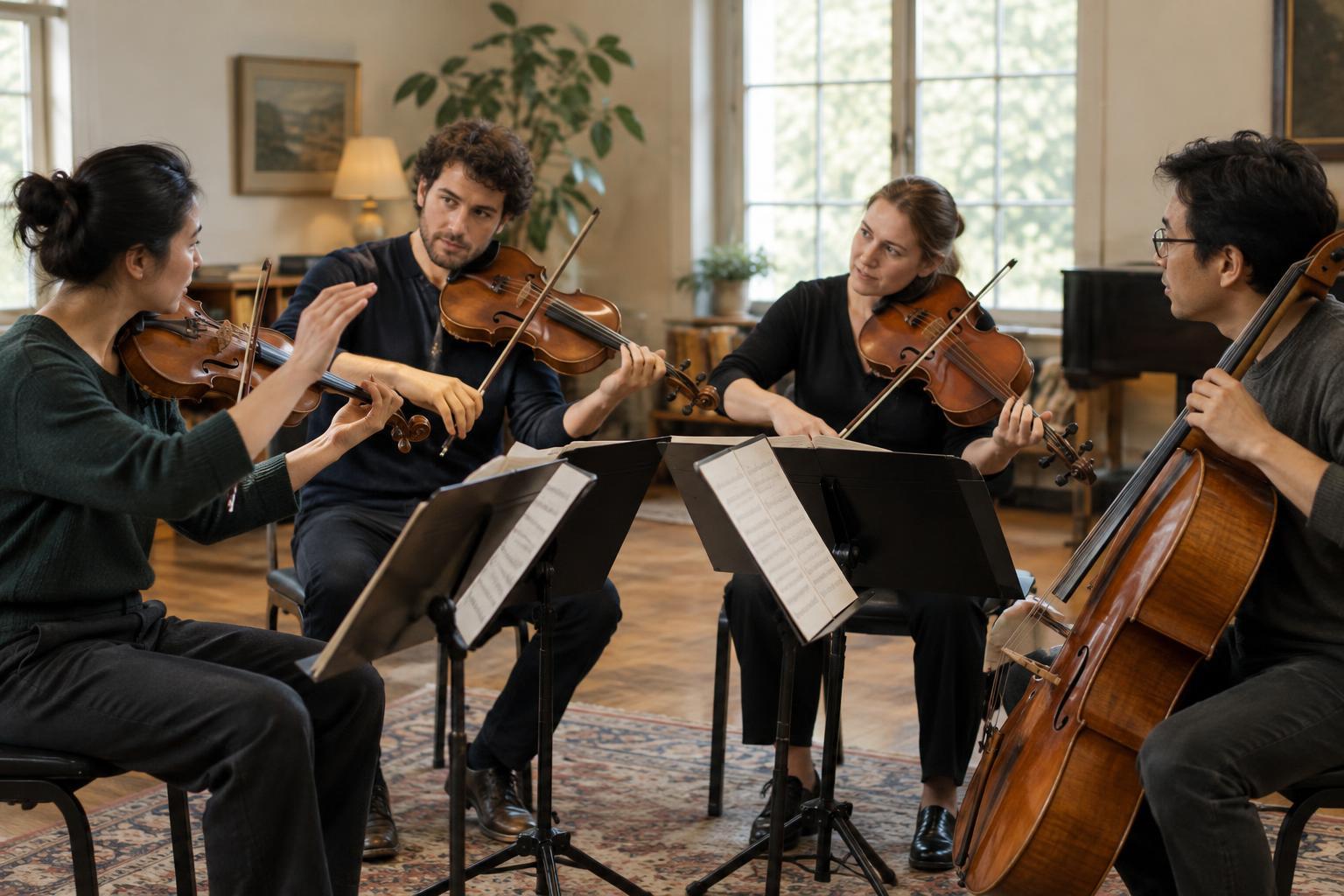
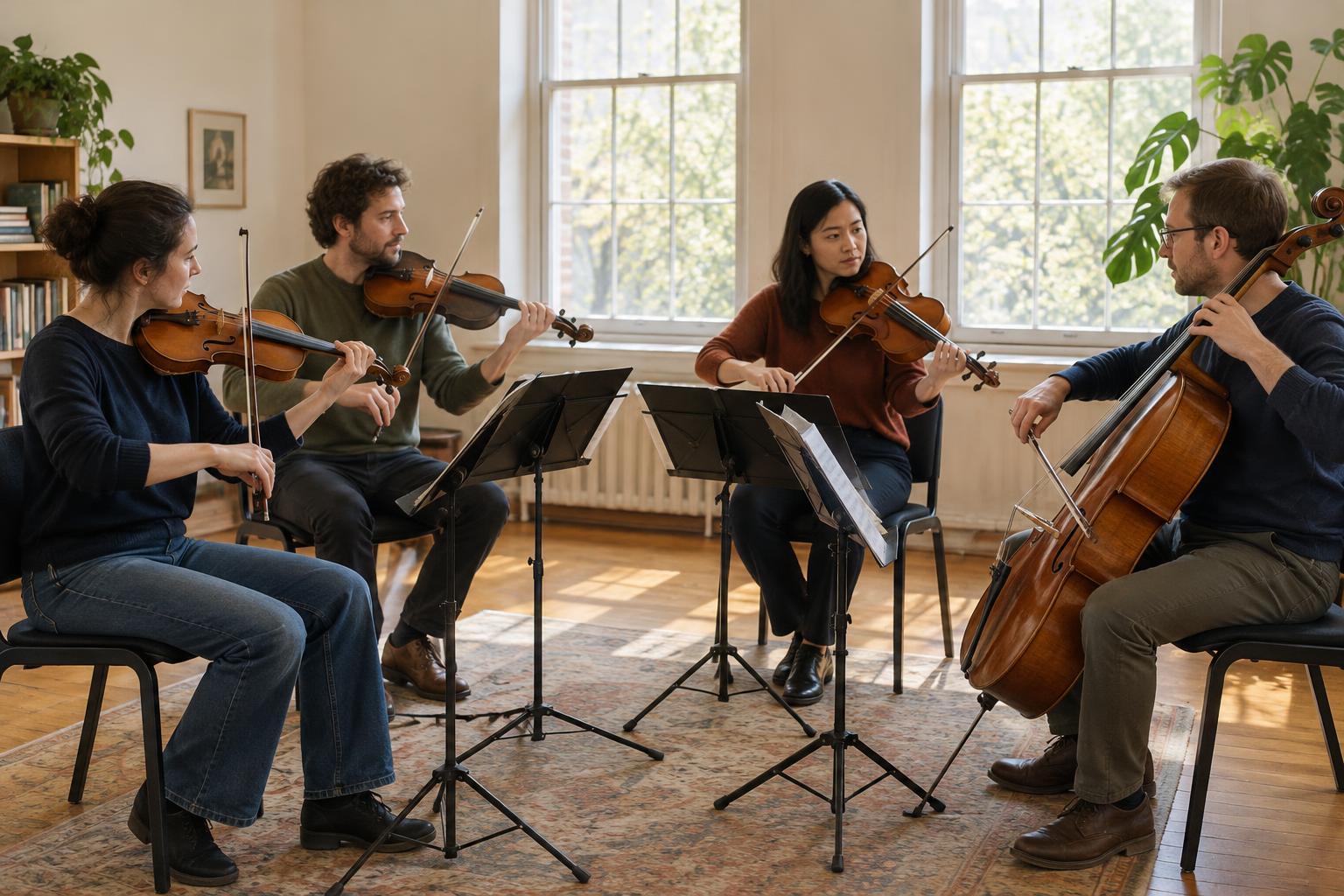
In an ensemble, a glance or shared breath can clarify the moment of entry. Agree on cues during rehearsal, especially where the tempo is flexible or several players enter together. A cue works best when everyone knows which musical event it supports; it should reinforce the pulse you already hear, not replace your knowledge of the passage.
It helps to rehearse the bars before the entrance with attention to the other parts. Ask which line carries the pulse most clearly and whether that responsibility changes as the phrase develops. Then try a run in which you do not look up until shortly before playing. This checks that you can stay oriented through your ears and score, while still leaving room to connect visually at the entrance.
Make recovery part of the practice
Even a well-prepared entrance can go wrong. Decide in advance how to rejoin if you lose your place: listen for the next clear landmark, avoid a rushed attempt to squeeze in missed notes, and return with the group’s pulse. In rehearsal, stop afterward to identify what caused the uncertainty. Was the rest hard to count, the cue unclear, or the first note not physically prepared?
Once the entrance is dependable, vary the conditions. Practice it after a short pause, after playing another demanding passage, and at a tempo that is slightly different from your usual one. These small changes test whether you understand the route through the rest rather than remembering only one run-through. With that route in mind, silence becomes something you can play actively: you listen, prepare, and arrive as part of the ensemble.