Start with a journey, not a diagram
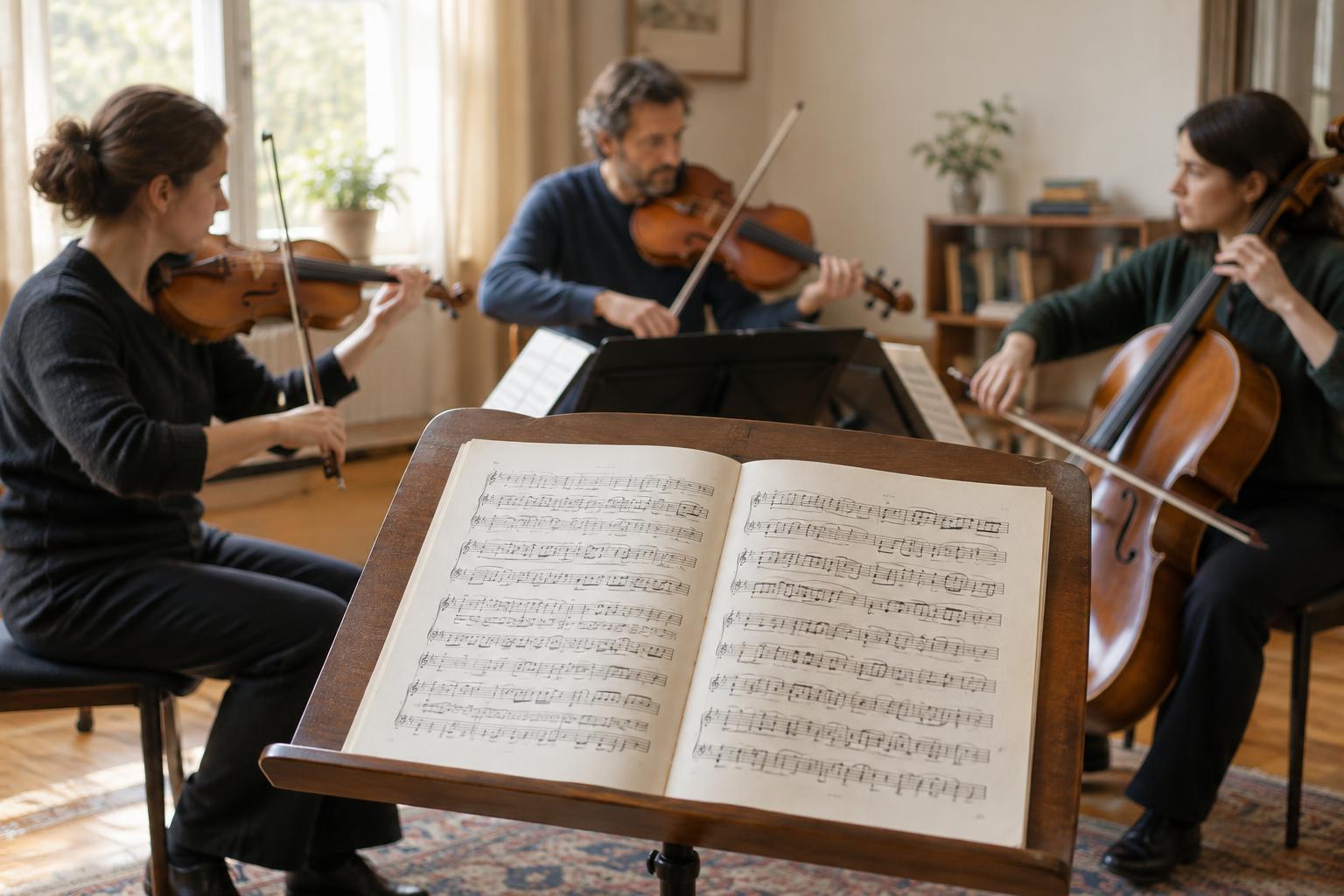
Sonata form describes a way of organizing a movement, not a fixed number of melodies. It often appears in the first movement of a string quartet, piano trio or sonata, though composers also use it elsewhere. At its broadest, the form presents musical ideas, puts them under pressure, then brings them back in a changed context. The three main stages are called exposition, development and recapitulation, or return.
For a first listen, put those labels aside. Notice what feels settled at the beginning: a distinctive rhythm, a rising shape, a quiet accompaniment, or the way one instrument answers another. Later, ask when the music seems to leave that familiar ground and when something unmistakably familiar comes back. You do not need to identify every chord to hear the movement’s sense of departure and return.
Exposition: meet the material
The exposition introduces the movement’s main musical material and typically moves from its home key to another key. An opening idea may sound firm and clearly grounded; a later area may feel more lyrical, restless or spacious. Those character changes can help you follow the music, but they are not a rule. Sometimes two themes sound related, and sometimes several small ideas matter more than one memorable tune.
Listen for a passage that seems to propel the music onward rather than settle it. A change of texture, busier motion or a handoff between instruments may mark the transition toward a new area. Near the end of the exposition, repeated closing gestures can make the arrival feel secure. Some performances repeat the exposition, giving you an immediate second chance to recognize its route. If you hear the opening again quite early, it may be that repeat rather than the movement’s final return.
Development: familiar sounds on unfamiliar ground
In the development, the composer can take material you have already heard and make it behave differently. A short fragment may pass rapidly among players, a gentle idea may become forceful, or the harmony may keep shifting before any new resting place feels secure. The development need not be loud or chaotic. A spare texture and a few uncertain notes can create just as much suspense.
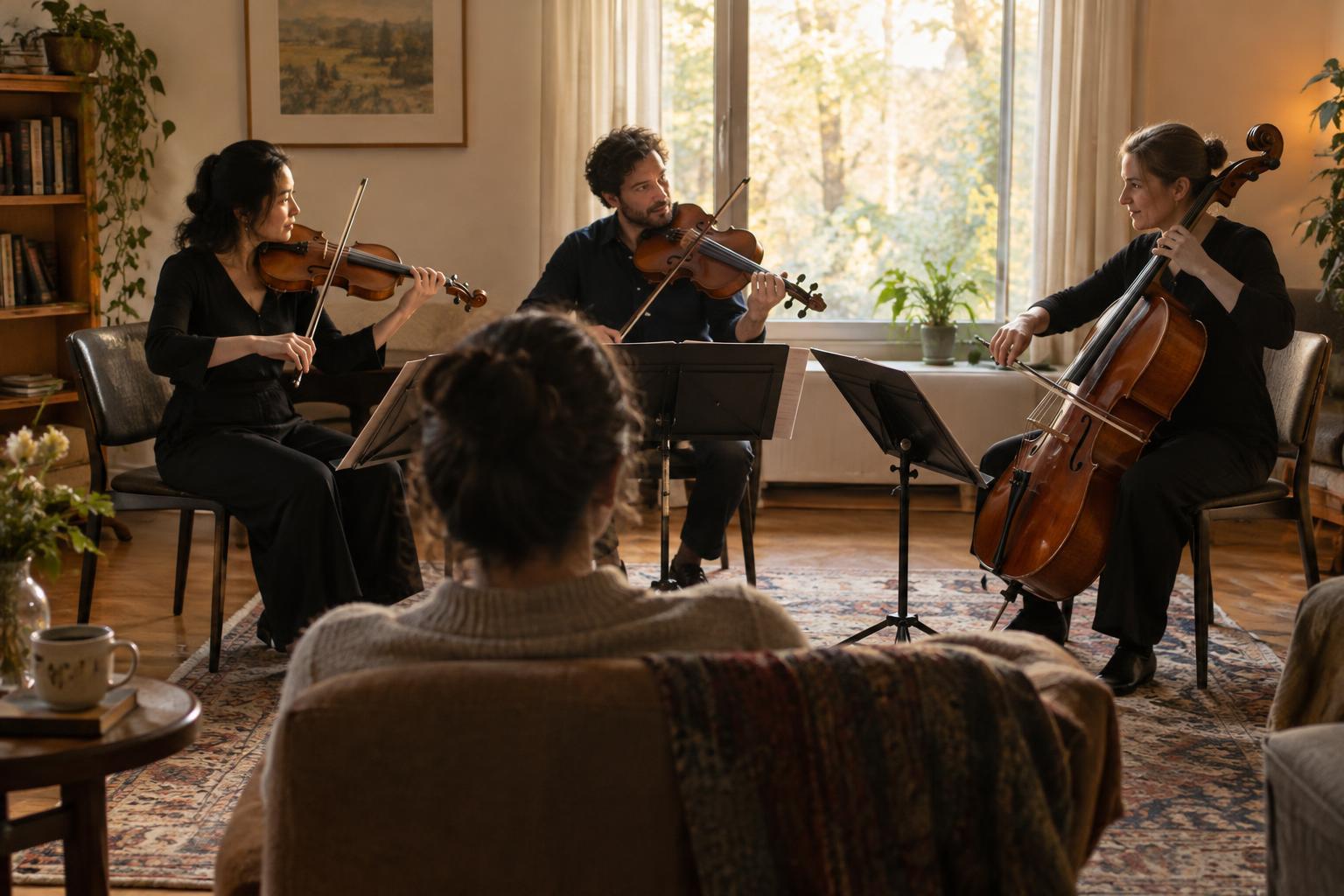
Try listening for resemblance rather than an exact replay. Can you hear the opening rhythm with different pitches? Has a melody been broken into pieces or moved from violin to cello? Chamber music makes these exchanges especially revealing: what first sounded like one player’s statement can become a conversation across the ensemble. If you lose your place, keep listening for how stable or unsettled the music feels. That changing sense of direction is often easier to follow than the details of each key.
Recapitulation: recognition with a difference
The recapitulation usually begins with a recognizable return of the opening material in the home key. It can feel like finding your bearings after a winding route. Yet it is rarely just a recording of the exposition played again. Transitions may be rewritten, themes may appear in new registers, and passages that previously led away now help keep the music close to home.
A useful listening question is: what returns, and what has changed? When a later theme reappears, it is generally brought into the home-key area rather than the contrasting key heard earlier. You may sense that difference as a stronger feeling of arrival, even without knowing the key names. Some movements add a coda after the main return, extending the ending or briefly reviving tension. Others make the return subtle enough that recognizing it takes another listen.
A simple way to practise hearing the form
Choose one movement and listen to it twice. On the first pass, give the opening idea a brief description of your own, such as “three quick notes, then a long one.” Mark in your mind when a contrasting area arrives and when the opening seems to return. Do not worry about naming the exact boundary between sections. Musical form is something you hear unfolding, not a test of how quickly you can label a bar.
On the second pass, follow one instrument for a while, then broaden your attention to the group. Notice who introduces an idea, who takes it over, and whether its mood changes along the way. If the movement does not match the outline neatly, that is useful information rather than a listening failure. Sonata form is a flexible set of expectations. Hearing where a piece fulfills or unsettles them is part of the pleasure.