Start with the feeling of arrival
Some musical moments sound as though they could end a thought. Others seem to ask for something more. That contrast is a useful starting point for hearing harmonic tension and release. Harmony concerns notes sounding together and the relationships among them, but you do not need to identify those notes to hear their effect. Listen instead for a change in your sense of expectation: does the music feel settled, or does it seem to be heading somewhere?
This is not a test with one correct emotional answer. A bright chord can feel restless, and a quiet one can carry considerable strain. The same sound may feel stable in one passage and surprising in another. What matters is its context: what you heard before it, how long it lasts, and what follows.
Listen for leaning, waiting, and landing
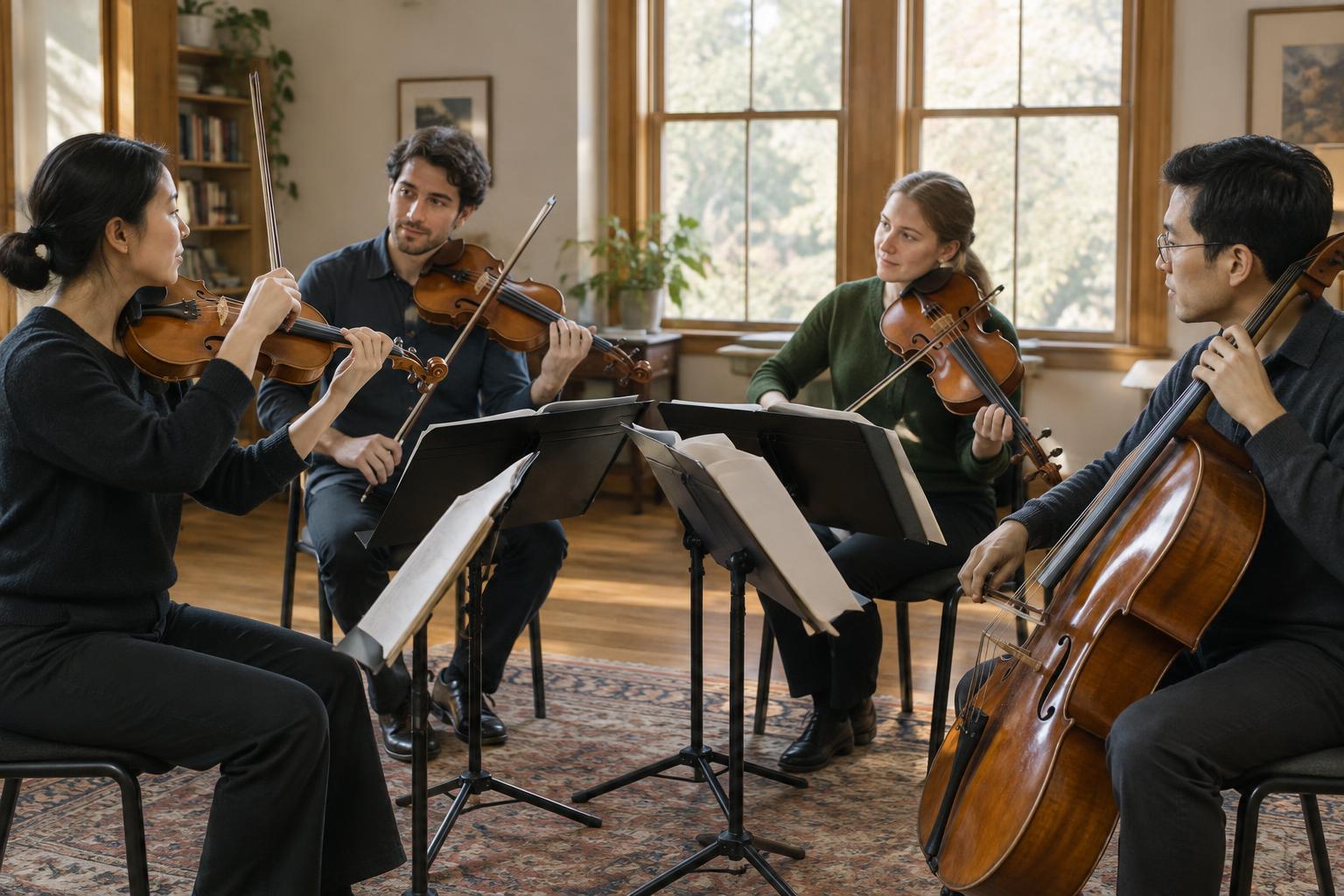
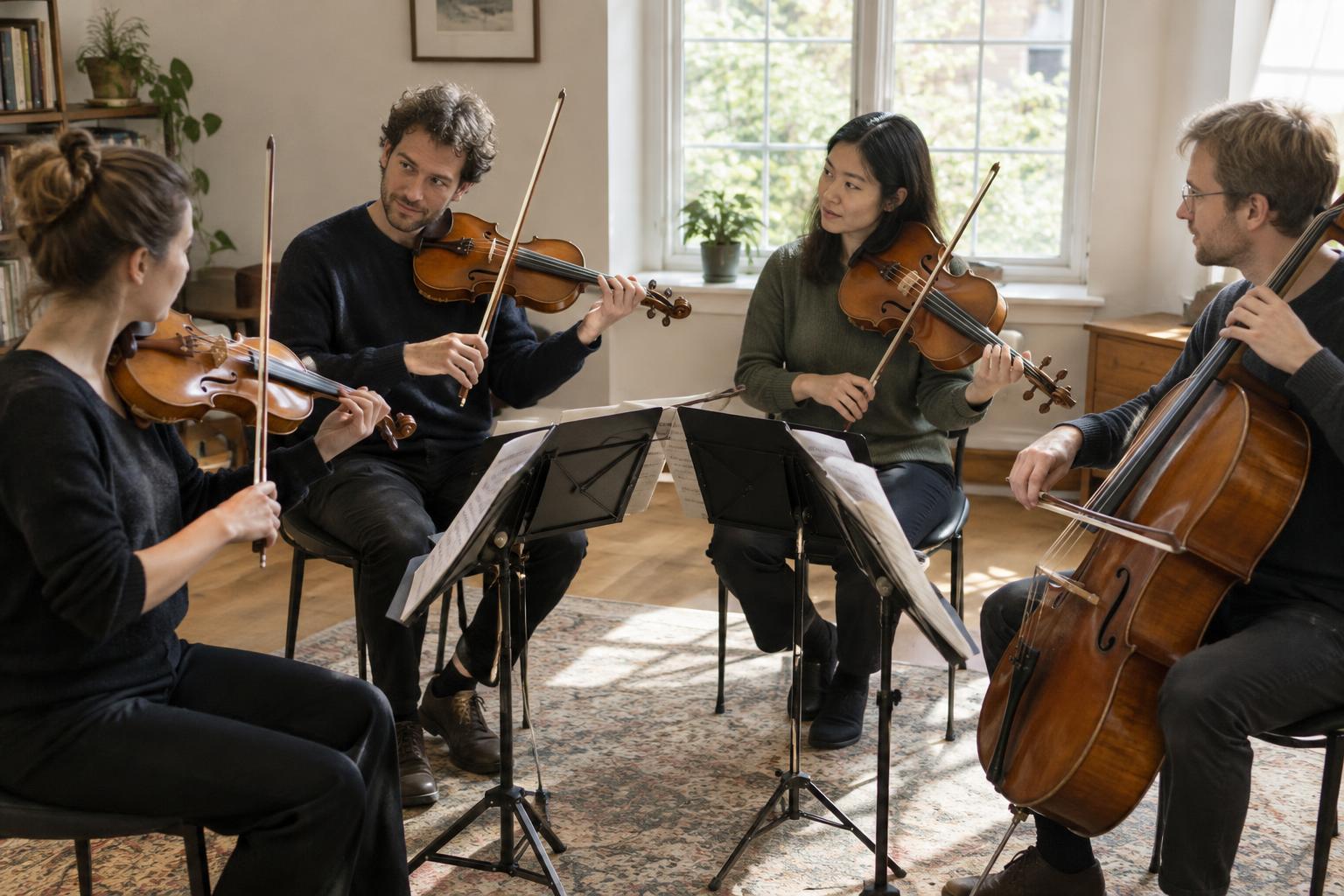
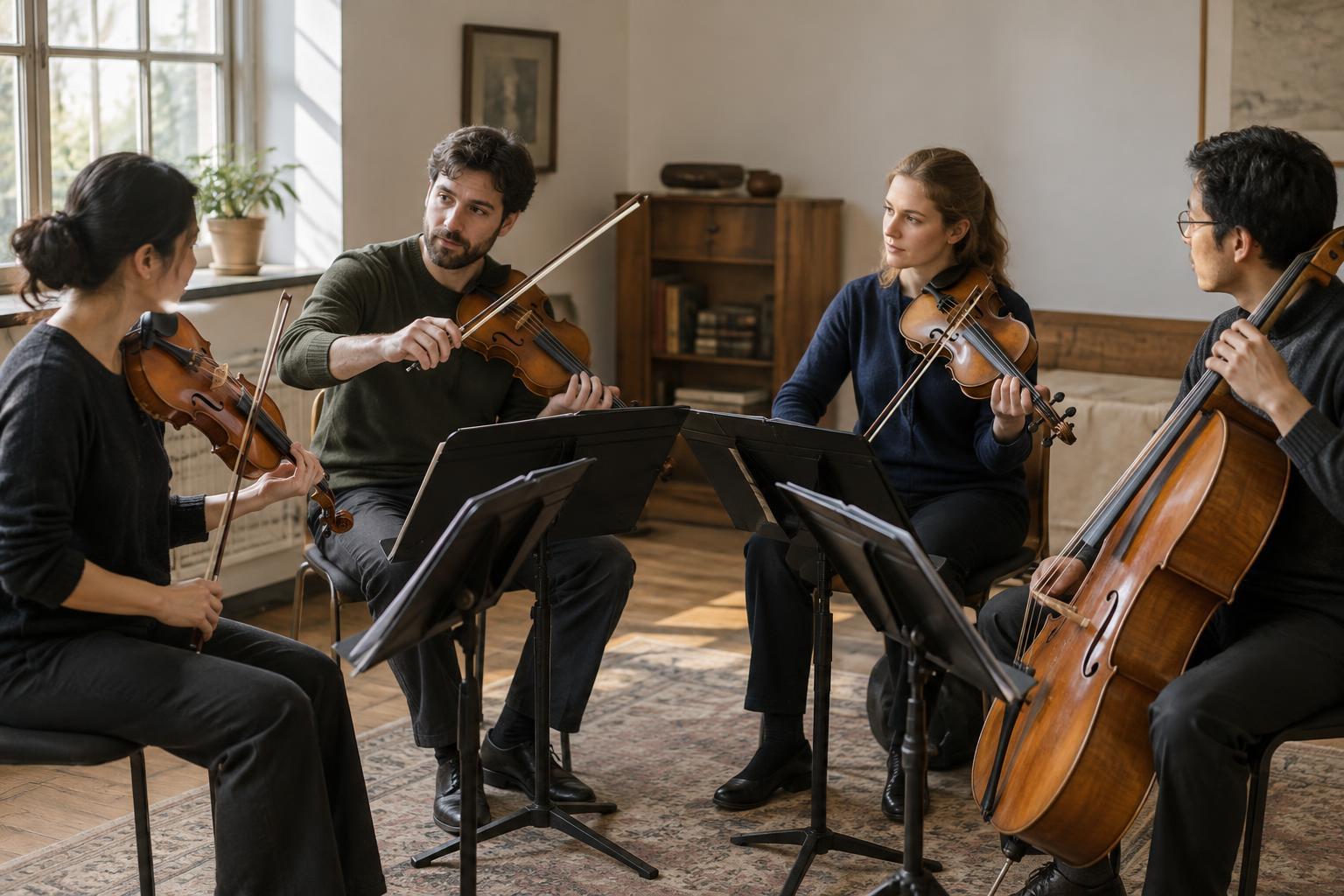
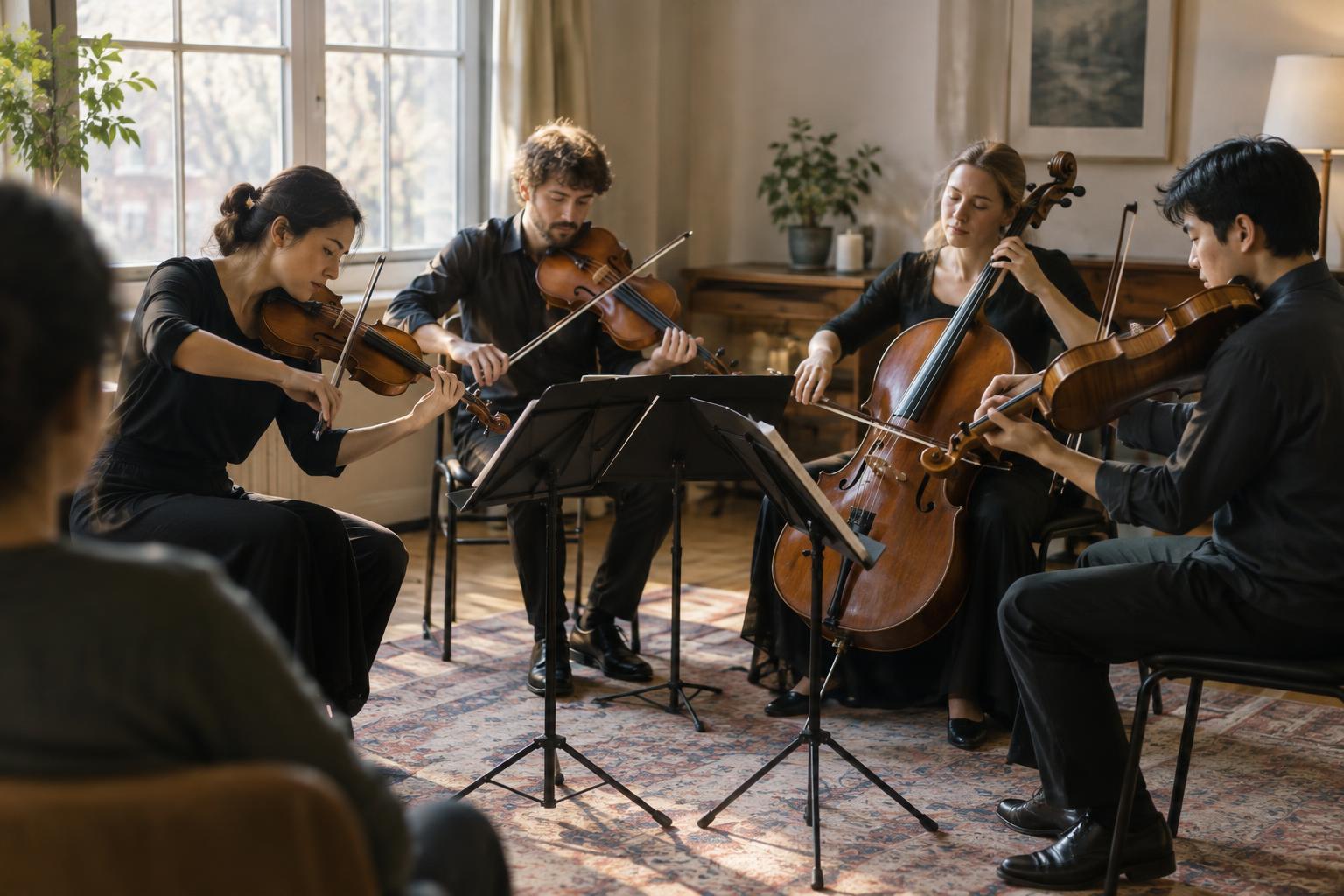
Try playing a short passage of chamber music without looking at a score. As you listen, imagine the music moving through three loose states: leaning forward, waiting, and landing. A phrase may grow more urgent as instruments move away from familiar-sounding material. It may then linger on a sound that feels unfinished before arriving somewhere that offers a pause. You are tracing a journey, not labeling chords.
Pay special attention to endings of phrases. If a passage stops and you find yourself expecting another sound, you may have heard tension that remains unresolved. If a pause feels comfortable, you may have heard a release. Replay the passage and notice whether your expectation changes. Familiarity often makes an arrival easier to hear, even when you cannot explain why it works.
Use the whole ensemble as a clue
In chamber music, several instruments may shape your expectations at once. A violin might hold a note while a cello moves beneath it; the upper note can seem to change character even though it has not moved. A piano chord may make a melody feel suddenly more grounded, or it may introduce a new sense of uncertainty. Follow what happens between the parts rather than listening only to the tune.
Other musical details can strengthen or soften the effect of harmony. A rising melody, a swelling sound, or a faster rhythm can create momentum. A long note, a shared pause, or a gentler texture can make an arrival easier to notice. These are helpful clues, but they are not rules: music can become quieter while its harmony grows more tense. If one clue seems misleading, listen for what the other instruments are doing.
Try a simple two-pass listening exercise
Choose a recording with a passage short enough to remember, perhaps a minute or two. On the first listen, make no notes. Notice one moment that seems to invite a breath and one that seems to hold your attention in suspense. You need not decide whether the suspense is dramatic, delicate, or playful; just locate it.
On the second listen, focus on what changes around those moments. Does a note in the bass move? Do the instruments come together after sounding independent? Is a phrase repeated but given a different ending? If you like, mark the recording’s playback position so you can return to it. Ask yourself what you expected to hear next, then compare that expectation with what actually happens. A surprising turn may delay release; a familiar-sounding return may provide it.
Let the music complicate your expectations
Tension does not always lead to one decisive resolution. A composer may offer a small arrival and then move on, or make a seemingly firm ending sound uncertain in retrospect. In some passages, shifting color and texture may be more noticeable than any clear pattern of tension and release. There is no need to force every moment into one of those categories.
As you listen to more chamber music, you may begin to recognize how a piece teaches you what to expect. A phrase returns, an instrumental pairing becomes familiar, or an earlier sound takes on a new role. Hearing harmony without theory begins with noticing those relationships. Rather than asking, “What is that chord?” try asking, “What did that sound make me expect, and what happened next?”