Why percussion matters in a small ensemble
In chamber music, each player’s sound is easy to notice. A single struck note can change the character of a passage, even when it lasts only a moment. Percussion may carry a tune, mark a steady pulse, interrupt a phrase, or add a color that no string or wind instrument can quite produce. Listening for those roles is often more helpful than trying to identify every instrument at once.
Percussion is commonly divided into pitched and unpitched instruments. A pitched instrument produces notes that listeners can usually recognize as belonging to a melody or harmony. An unpitched instrument is heard more for its rhythm, texture, and attack than for a definite note. The boundary is not absolute: drums can be tuned, and many noisy sounds contain a range of pitches. Think of the labels as a practical guide to how an instrument is being used, not a strict division between musical sound and noise.
Pitched percussion: notes with different kinds of sustain
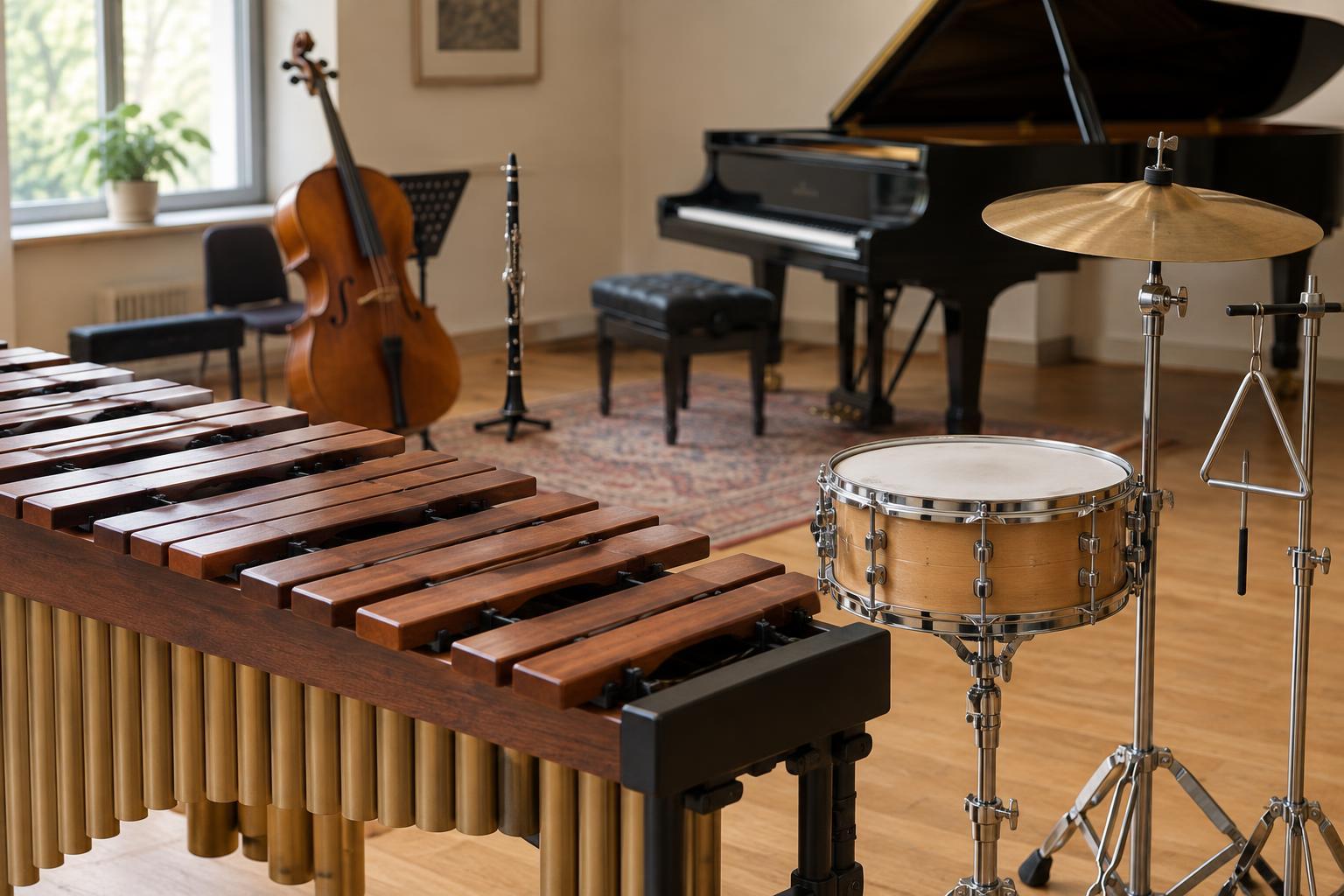
Mallet instruments offer several ways to bring definite notes into an ensemble. The marimba’s wooden bars have a warm, relatively soft-edged sound. Xylophone bars also produce clear notes, often with a sharper, shorter attack. The glockenspiel’s metal bars can sound bright and carry through a dense texture. These differences affect a composer’s choices: a quick figure might stand out on one instrument, while a slower line may benefit from the color of another.
The vibraphone has metal bars and a sustain pedal. By controlling the pedal, a player can let notes overlap or stop them cleanly; some instruments also have a motor that changes the sound’s shimmer. Timpani, when included in a chamber ensemble, can play identifiable notes too. Unlike a keyboard of bars, each drum is adjusted to the pitches needed in a passage. For a listener, the useful question is not just “What note is that?” but “How long does it remain in the room, and what does it blend with?”
Unpitched percussion: shape, pulse, and color
A snare drum can give a passage a crisp edge, while a bass drum may add weight without taking over the melody. Cymbals can provide anything from a brief accent to a sound that expands and slowly fades. A triangle or woodblock can make a small, distinct mark in a busy texture. None of these instruments needs to carry a tune to play an important part in the music.
How the player strikes an instrument matters as much as which instrument is chosen. A soft beater can round off an attack; a harder one can make it more precise. A cymbal struck once and allowed to ring creates a different shape from one stopped immediately by the player’s hand. In a small ensemble, those choices can clarify a rhythm, signal a transition, or leave space for another player’s phrase. Listen to the beginning and ending of each sound, not only its loudest moment.
How percussion fits with strings, winds, and piano
Percussion often shares a musical job with another instrument. A marimba may double a line played by a clarinet, making its rhythm more distinct without replacing the clarinet’s tone. A vibraphone note may linger beside a held string chord. A drum pattern might answer short phrases from a piano rather than provide a continuous beat. These relationships can shift within the same piece, so a percussionist may move from foreground to background in just a few measures.
Balance is especially noticeable in chamber music. A forceful cymbal stroke can cover a quiet instrument, while a delicate strike may add color without obscuring it. The size of the room and the natural decay of each sound also affect what reaches the audience. If a passage feels crowded, follow one instrument for a few seconds, then listen again for the points where percussion joins or releases it. That simple change of attention can make the ensemble’s design easier to hear.
A simple way to listen at a concert or recording
Start by asking whether you hear definite notes, a rhythmic pattern, or a change in texture. Then notice the space between strikes. Does a sound stop quickly, or does it continue underneath the next phrase? If you hear a repeated figure, see whether it stays the same when another instrument enters. These questions work even when you cannot name the percussion instrument.
It can also help to watch a player in performance. Changes of mallets, movement between instruments, and the use of a pedal or hand to stop a ringing sound all reveal decisions that the ear may miss at first. There is no need to sort every sound into a category. Pitched and unpitched percussion often work together: one gives the ear a recognizable note, while the other gives that note an edge, a pulse, or a sense of space.